exercise science
 15:15
WHY Exercise is so Underrated (Brain Power & Movement Link)
4.3M views • 9 years ago
Joseph Everett - WIL
A video arguing that exercise matters for the brain as much as the body, linking movement, the nervous system and BDNF to learning and memory. It draws on research connecting complex movement to brain development.
 6:36
Exercise Is Really Good for You. Like, REALLY Good for You.
292K views • 11 years ago
Healthcare Triage
A Healthcare Triage episode summarizing the evidence on the health benefits of exercise, made in response to people misreading the host's column on exercise and weight. It argues exercise offers large benefits.
 13:08
We Need to Rethink Exercise (Updated Version)
5.9M views • 2 years ago
Kurzgesagt – In a Nutshell
Kurzgesagt explains why exercise alone does little for weight loss, since the body compensates by adjusting its total energy expenditure. It argues exercise is still very valuable for health.
 8:04
Khan Academy and the Effectiveness of Science Videos
1.7M views • 15 years ago
Veritasium
Veritasium examines research suggesting science explainer videos like Khan Academy's make students feel they understand while tests show they have not learned, because misconceptions go unaddressed. It suggests how to partly fix this.
 15:00
The Material Science of Metal 3D Printing
2.7M views • 7 years ago
Real Engineering
Real Engineering explains the materials science behind metal 3D printing, including crystal structure, laser sintering, and why printed parts develop fatigue cracks. It shows how process imperfections limit the strength of printed metal.
 12:50
Fasting vs. Eating Less: What's the Difference? (Science of Fasting)
13.2M views • 9 years ago
Joseph Everett - WIL
A short explainer on the physiological differences between fasting and simply eating less. It covers ketosis, ghrelin and hunger waves, and the hormonal effects of fasting.
 11:47
The Gym of Life
1.3M views • 4 years ago
Not Just Bikes
Not Just Bikes argues that people in walkable, bikeable Dutch cities stay healthy because exercise is built into daily life, which he calls the gym of life. It contrasts this with car-dependent cities that require deliberate workouts.
Topic match · Fitness, sleep & longevity 11:54
Building a Cathedral without Science or Mathematics: The Engineering Method Explained
1.1M views • 3 years ago
engineerguy
Bill Hammack of engineerguy explains how medieval engineers designed stone cathedrals using rules of thumb, with no science, mathematics or literacy. He uses it to define the engineering method.
 10:26
Tiny meteorites are everywhere. Here’s how to find them.
1.2M views • 7 years ago
Verge Science
Verge Science's pilot of its Trial & Error series follows amateur scientist Jon Larsen on a hunt for micrometeorites. It shows how tiny space rocks can be found on rooftops and confirmed under a microscope.
 15:41
How anti-theft tags work - magnetostriction
886K views • 10 years ago
Applied Science
Applied Science explains how retail anti-theft tags work. A tiny magnetostrictive strip acts as a mechanical oscillator excited by a magnetic field, and magnetizing or demagnetizing it arms or disarms the tag.
 10:42
1. Climate Change -- the scientific debate
530K views • 18 years ago
potholer54
The first video in potholer54's climate series, giving a basic look at how climate scientists infer that man-made carbon gases are changing the climate. It is a short explainer meant to present the scientific evidence plainly.
 12:10
The Science of Thinking
9.3M views • 9 years ago
Veritasium
A Veritasium explainer on how the brain works and how we learn. It is inspired by Kahneman's Thinking, Fast and Slow and covers System 1 and System 2 thinking and why harder learning builds skill.
 4:36
Don't Be the Last Person to Die
8.2M views • 9 years ago
CGP Grey
CGP Grey argues that aging and death are a problem worth defeating, using a short animated essay. It is part of a pair with a follow-up from Kurzgesagt.
Topic match · Fitness, sleep & longevity 6:48
Why Age? Should We End Aging Forever?
9M views • 9 years ago
Kurzgesagt – In a Nutshell
Kurzgesagt's short animated video asks whether humanity should try to end aging, and argues the case for curing age-related disease. It is part one of a pair, with a second part by CGP Grey.
Topic match · Fitness, sleep & longevity 7:21
How to Cure Aging – During Your Lifetime?
8M views • 9 years ago
Kurzgesagt – In a Nutshell
A Kurzgesagt animated explainer on whether aging could be cured within our lifetimes, made with Lifespan.io and the LEAF foundation. It introduces the idea of treating aging as a medical problem.
Topic match · Fitness, sleep & longevity 7:19
Cyclists' hearts: can you be so fit that you die?
2.2M views • 8 years ago
Medlife Crisis
Medlife Crisis examines why some elite endurance athletes die in their sleep, covering extremely slow heart rates and the effects of performance-enhancing drugs that thicken blood. It uses cyclist Marco Pantani as an example.
Topic match · Fitness, sleep & longevity 5:17
The IGF-1 Trade-Off: Performance vs. Longevity
517K views • 13 years ago
FoundMyFitness
A short FoundMyFitness explainer on the trade-off between growth hormone/IGF-1 and longevity. Higher IGF-1 helps muscle and cognition, while lower levels are linked to longer lifespan and stress resistance.
Topic match · Fitness, sleep & longevity 9:12
Uncovered - Dangerous Secrets of the DOT Helmet Standard
1.1M views • 8 years ago
FortNine
FortNine argues that the US DOT motorcycle helmet standard (FMVSS 218) is badly outdated and weak. It compares it with Snell and ECE standards and points to where you can look up test reports for your own helmet.
Topic match · Fitness, sleep & longevity 18:39
Resveratrol – The Unfortunate (& Scandalous) Story
208K views • 4 years ago
Dr Brad Stanfield
Dr Brad Stanfield recounts the research history and scandal around resveratrol, the supposed anti-aging supplement, including problems with the original studies.
Topic match · Fitness, sleep & longevity 11:33
A new way to visualize General Relativity
3.6M views • 6 years ago
ScienceClic English
ScienceClic explains why the rubber sheet analogy for general relativity is misleading and offers a new visualization that includes the curvature of time and shows gravity as motion through curved spacetime.
 15:53
Quantum Field Theory visualized
2.7M views • 6 years ago
ScienceClic English
ScienceClic gives a 15-minute animated introduction to quantum field theory, covering fields, spin, conserved quantities, the standard model and interactions.
 11:57
We all move at the Speed of Light
1.4M views • 8 years ago
ScienceClic English
ScienceClic explains why nothing can go faster than light by treating motion through space and time together, so everything moves at the speed of light through spacetime. It uses animated visuals to cover relativity basics in 12 minutes.
 14:53
What would we see if we fell into a Black Hole?
7.5M views • 5 years ago
ScienceClic English
ScienceClic visualizes what you would see falling into a black hole, from the approach and the accretion disc to crossing the horizon, in 15 minutes.
 18:13
Try to Rule Fairly and You'll Be Overthrown
26M views • 10 years ago
CGP Grey
CGP Grey's animated adaptation of The Dictator's Handbook, explaining how rulers stay in power by keeping a small group of key supporters happy rather than ruling fairly. It lays out selectorate theory and how resources shape regimes.
 12:09
I promise this story about microwaves is interesting.
9M views • 5 years ago
Tom Scott
Tom Scott investigates the claim that the microwave was invented to heat hamsters, and interviews James Lovelock about freezing and microwave-thawing hamsters in the 1950s. It traces early magnetron uses beyond radar.
 4:58
You Actually Share Your Brain With a Silent Stranger
20.2M views • 10 years ago
CGP Grey
CGP Grey explains split-brain patients, where severing the corpus callosum lets the two hemispheres act independently. He uses this to explore the idea of two minds in one head.
 10:51
Is olive oil safe at high heat? Does it taste bad?
1.9M views • 6 years ago
Adam Ragusea
Adam Ragusea examines whether olive oil is unsafe for high-heat cooking and whether it tastes bad when heated. He cites studies showing it is among the most stable cooking oils and that smoke-point worries are overblown.
 12:42
How To Terraform Venus (Quickly)
22.8M views • 5 years ago
Kurzgesagt – In a Nutshell
Kurzgesagt lays out a speculative plan to terraform Venus, covering its hostile atmosphere and how it might be made Earth-like, with a sources page linked.
 14:06
Testing 432 Hz Frequencies (and temperaments)
4M views • 7 years ago
Adam Neely
Adam Neely tests the claims for tuning to A=432 Hz by trying the unusual tuning systems that its proponents' numerology requires. He compares how they sound against standard tuning and temperaments.
 13:47
Why Hershey bars taste like vomit (and I love them)
3.1M views • 6 years ago
Adam Ragusea
Adam Ragusea explores why Hershey's chocolate tastes the way it does to many non-Americans, tracing it to butyric acid and Hershey's history, and why familiarity makes Americans love it. He compares it with British Cadbury.
 4:10
Where Do Trees Get Their Mass?
2.5M views • 14 years ago
Veritasium
Veritasium asks people where a tree's mass comes from, then explains that most of a dry tree's mass originates from carbon dioxide in the air. It combines street interviews with a short explanation of photosynthesis.
 6:50
13 Misconceptions About Global Warming
5.9M views • 12 years ago
Veritasium
Veritasium debunks common climate change myths in under seven minutes, with references to NASA and published research. Topics include CO2 sources, sea ice and 1970s predictions of cooling.
 11:48
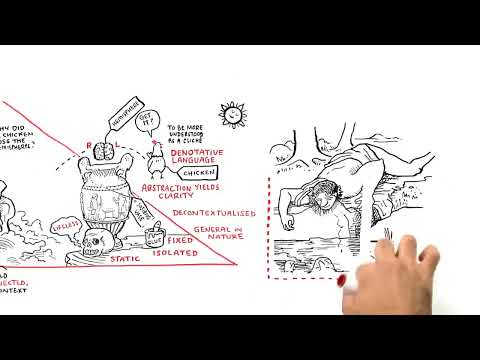
RSA ANIMATE: The Divided Brain
2.2M views • 15 years ago
Royal Society of Arts
An RSA Animate summary of Iain McGilchrist's lecture on the divided brain, arguing the brain's two hemispheres attend to the world differently and that this has shaped culture and society.
 9:55
Everyone is Wrong About Mexican Coke (Even @johnnyharris)
1.2M views • 1 year ago
Reactions
ACS Reactions investigates why Mexican Coke, supposedly cane sugar sweetened, tested as having glucose and fructose, explaining that sucrose breaks down in acidic soda.
 19:27
Quantum Computing Expert Explains One Concept in 5 Levels of Difficulty | WIRED
8M views • 8 years ago
WIRED
IBM's Dr. Talia Gershon explains quantum computing to five people of increasing expertise: a child, teen, college student, grad student and professional. The WIRED series format moves from simple analogies to technical detail.
 6:14
Turing & The Halting Problem - Computerphile
919K views • 12 years ago
Computerphile
A Computerphile video in which Mark Jago of the University of Nottingham explains Turing's halting problem and how it led to the blueprint for the modern computer.
 12:41
My Video Got 2 Companies Shut Down! (And even worse negative ion products)
5.6M views • 5 years ago
The Thought Emporium
The Thought Emporium follows up on his earlier video showing negative ion products are radioactive, reporting that Amazon pulled listings and companies shut down. He tests more radioactive quack products with a Geiger counter and cloud chamber.
 4:45
How playing an instrument benefits your brain - Anita Collins
15.2M views • 12 years ago
TED-Ed
A short TED-Ed animated lesson by Anita Collins on what happens in the brain when people play a musical instrument. It argues that playing engages many brain areas at once, like a full-body workout, with long-term benefits.
 11:05
How to Win an Interstellar War
13.3M views • 2 years ago
Kurzgesagt – In a Nutshell
A Kurzgesagt video exploring how advanced civilizations might wage war across light years. It looks at weapons such as relativistic beams and what they would do.
 13:20
Your Home Can Survive a Wildfire
164K views • 11 years ago
National Fire Protection Association
NFPA video in which wildfire researcher Jack Cohen explains that embers (firebrands), not the flame front, are the main cause of homes igniting in wildfires. He shows how landscaping and removing debris around the home reduce risk.