first class
 11:38
The Economics of Airline Class
12.2M views • 9 years ago
Wendover Productions
Wendover Productions explains how airlines make money from different cabin classes and why premium seats matter so much to profits. It also touches on how this shaped decisions such as the decline of supersonic travel.
 4:51
The UK Election Results Were the Worst in History
8.1M views • 11 years ago
CGP Grey
CGP Grey explains how the 2015 UK general election showed the flaws of first-past-the-post voting, with parties like UKIP winning many votes but few seats.
 10:44
P vs. NP and the Computational Complexity Zoo
3.7M views • 12 years ago
hackerdashery
An 11-minute animated introduction to P vs. NP and the wider landscape of complexity classes, inspired by the Complexity Zoo wiki. It assumes no background in computer science.
 5:06
Ion drive: The first flight
2.4M views • 7 years ago
nature video
Nature video showing MIT researchers flying the first plane with no moving parts, powered by an ion drive that creates an ionic wind from high-powered electrodes. The 5m-wide craft flies across a sports hall.
 6:31
Why Your Vote Doesn't Count
7.9M views • 15 years ago
CGP Grey
CGP Grey explains first-past-the-post voting and why it pushes elections toward two dominant parties. It is the first in his series on electoral systems.
 4:27
The Voting System That Should Replace Every Election
4.7M views • 15 years ago
CGP Grey
A short CGP Grey explainer on the alternative vote (instant runoff voting) versus first past the post, made around the 2011 UK referendum. It shows how ranked ballots are tallied and why they avoid spoiler effects.
 12:02
Nintendo - Putting Play First
997K views • 9 years ago
Game Maker's Toolkit
Game Maker's Toolkit examines Nintendo's design approach of starting from a core play mechanic, making it fun, and building around it. Examples include Mario's jump and Luigi's Mansion's vacuum.
 14:03
Simulating alternate voting systems
4.5M views • 6 years ago
Primer
Primer uses simulations to compare voting systems such as first-past-the-post, approval, ranked choice and others. It shows how each system behaves and can be manipulated, with links to further voting theory resources.
 18:40
But what is a neural network? | Deep learning chapter 1
25.1M views • 9 years ago
3Blue1Brown
3Blue1Brown's first chapter on deep learning explains what neurons and layers are and the math underlying a basic neural network, using handwritten digit recognition with visual animations.
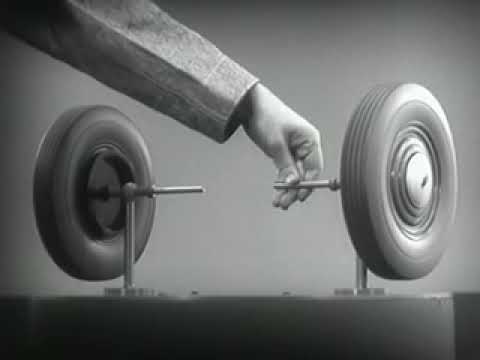 9:31
Around The Corner - How Differential Steering Works (1937)
22.3M views • 17 years ago
US Auto Industry
A 1937 GM-produced film explaining how the automobile differential lets wheels turn at different speeds around a corner. It uses clear animations and cutaway demonstrations to build the idea from first principles.
 5:32
The Truth about American Cities - Part 1 - Strong Towns [ST01]
858K views • 6 years ago
Not Just Bikes
The first video in Not Just Bikes' Strong Towns series explains the financial instability of North American cities, based on Strong Towns research. It argues that low-density suburban growth costs more to maintain than it brings in.
 16:30
"NO CGI" is really just INVISIBLE CGI - 1
1.5M views • 3 years ago
The Movie Rabbit Hole
VFX supervisor Jonas Ussing examines what studios mean by "no CGI", showing how much invisible CGI hides behind practical-effects marketing. It is the first part of a multi-part series that includes analysis of doctored behind-the-scenes footage.
 11:11
The Agricultural Revolution: Crash Course World History #1
17.7M views • 14 years ago
CrashCourse
The first episode of Crash Course World History, in which John Green covers the shift from hunting and gathering to agriculture and how it shaped civilization. It is delivered fast and with jokes.
 9:09
England: South Sea Bubble - The Sharp Mind of John Blunt - Extra History - Part 1
3.5M views • 11 years ago
Extra History
The first part of Extra History's animated miniseries on the South Sea Bubble. It explains how England's government debt led Robert Harley to turn to financier John Blunt, whose schemes began inflating artificial demand for shares.
 4:29
The Voting System That Gives You Two Votes
3.1M views • 15 years ago
CGP Grey
CGP Grey explains Mixed-Member Proportional representation, the system used in New Zealand where voters get two votes. It covers how it differs from first-past-the-post.
 10:36
Renting vs. Buying a Home: The 5% Rule
5.3M views • 7 years ago
Ben Felix
Ben Felix explains how to compare renting and buying a home by looking at unrecoverable costs, and distills it into the 5% rule of thumb. It is framed for a Canadian audience but broadly applicable.
 13:30
Cities: Skylines | Power, Politics, & Planning: Episode 1: Parking
136K views • 8 years ago
donoteat01
The first episode of a Cities: Skylines series on urban politics and planning, focused on parking. It uses the game to show how parking minimums shape cities, drawing on Donald Shoup's book The High Cost of Free Parking.
 6:42
Carl Sagan - Cosmos - Eratosthenes
3M views • 17 years ago
carlsagandotcom
A short clip from Carl Sagan's Cosmos in which he explains how Eratosthenes measured the circumference of the Earth using shadows in two Egyptian cities. It is a clear, visual account of an ancient scientific feat.
 12:35
The Mathematics of Quantum Computers | Infinite Series
718K views • 9 years ago
PBS Infinite Series
A PBS Infinite Series episode explaining the mathematics of quantum computers, including how qubits store complex numbers and how quantum computation differs from classical computation. Hosted by Kelsey Houston-Edwards.
 9:19
How to Understand What Black Holes Look Like
11M views • 7 years ago
Veritasium
Veritasium explains what a black hole should look like, using J.P. Luminet's 1979 work and a cardboard 3D model to show how light bends around it. It was made just as the first black hole image was released.
 10:42
1. Climate Change -- the scientific debate
530K views • 18 years ago
potholer54
The first video in potholer54's climate series, giving a basic look at how climate scientists infer that man-made carbon gases are changing the climate. It is a short explainer meant to present the scientific evidence plainly.
 13:20
How Kodak Exposed Nuclear Testing
6.7M views • 6 years ago
Veritasium
Veritasium tells how Kodak film was fogged by radioactive fallout from the first atomic tests, letting the company detect nuclear testing before anyone announced it. The video also covers the deal to keep it quiet and how fallout contaminated packaging.
 6:33
I, Pencil: The Movie
1.4M views • 13 years ago
I, Pencil
A short film from the Competitive Enterprise Institute adapting Leonard Read's 1958 essay I, Pencil, showing how no one person knows how to make a pencil and how many people cooperate without central planning.
 17:31
How Quantum Computers Break Encryption | Shor's Algorithm Explained
3.4M views • 7 years ago
minutephysics
MinutePhysics explains Shor's algorithm, showing how a quantum computer factors large integers by finding the period of a number modulo N. It walks through the modular arithmetic and number theory that give the exponential speedup over classical factoring, and why this threatens encryption.
 8:30
Deadly Truth of General AI? - Computerphile
941K views • 11 years ago
Computerphile
A Computerphile video in which Rob Miles warns against assuming a general AI will think like a human. He uses the thought experiment of a stamp-collecting AI to show how a goal-driven system could pursue its aim with dangerous results.
 6:23
The Secret Reason Horses Let Us Ride Them
26.6M views • 10 years ago
CGP Grey
CGP Grey explains why horses could be ridden and why other animals like zebras and bears were never domesticated for war or riding. It is a follow-up on the topic of animal domestication.
 4:32
Web 2.0 ... The Machine is Us/ing Us
12.1M views • 19 years ago
Michael Wesch
Michael Wesch's five-minute video about Web 2.0, showing how the read/write web, XML and user-generated content change how people create and share information.
 17:52
Holy Post - Race in America
1.7M views • 6 years ago
Holy Post Media
Phil Vischer of VeggieTales and Holy Post gives an 18-minute history of racial injustice in America, covering why anger persists despite civil rights laws. It is told from an evangelical Christian perspective and adapted from a class he co-taught.
 13:14
How Analog Color TV Works: The Beginnings
503K views • 8 years ago
Technology Connections
Technology Connections explains the early history of analog color television, from the 1954 start of modern color broadcasting, and how shadow masks work in CRTs. It is the first in a series on how analog color TV works.
 9:33
Avoiding Negative Side Effects: Concrete Problems in AI Safety part 1
161K views • 9 years ago
Robert Miles AI Safety
Robert Miles introduces the first of several videos on the paper 'Concrete Problems in AI Safety', focusing on how AI systems can cause accidental negative side effects. It explains the problem in accessible terms.
 7:42
Extremely Large Numbers 1 - Introduction
20K views • 11 years ago
Giroux Studios
The first video in a series on extremely large numbers, introducing the topic with examples. Later parts go deep into the fast-growing hierarchy.
 7:53
Sand Castle Holds Up A Car! - Mechanically Stabilized Earth
5M views • 10 years ago
Practical Engineering
Practical Engineering explains Mechanically Stabilized Earth, where layers of reinforcement make soil strong enough to hold heavy loads, shown with a sand structure supporting a car. It notes that MSE walls are everywhere in infrastructure.
 10:33
Testing if 60 minutes of silence drives you crazy
32.8M views • 12 years ago
Veritasium
Veritasium's Derek Muller spends an hour in a silent, dark anechoic chamber at BYU to test the claim that 45 minutes is the most anyone can bear. He reports on his experience and other people's reactions.
 5:08
How many robots does it take to run a grocery store?
8M views • 5 years ago
Tom Scott
Tom Scott tours Ocado's automated grocery warehouse, where thousands of robots move boxes on a grid called the Hive, and asks whether they are individual robots or a hive mind.
 18:46
A COMPLETELY Upgradeable Laptop? - Framework Laptop Review
6.2M views • 5 years ago
Linus Tech Tips
Linus Tech Tips reviews the first Framework Laptop, a fully repairable and upgradeable machine. The reviewer expected a flimsy chunky device and was happily surprised.
 7:40
The Original Double Slit Experiment
10.2M views • 13 years ago
Veritasium
Veritasium revisits Thomas Young's original double slit experiment with light, showing how interference supports the wave nature of light. It uses a pond-wave demonstration to explain the pattern.
 11:17
Can A Metal Bowling Ball Survive Inside a Nuclear Explosion?
737K views • 6 years ago
Scott Manley
Scott Manley explains the Cold War experiments in which steel and aluminium spheres, known as Lew Allen's Balls, were placed near nuclear detonations. The spheres survived the fireball, and he walks through what the declassified results show.
 10:31
Why We Should NOT Look For Aliens - The Dark Forest
17.7M views • 4 years ago
Kurzgesagt – In a Nutshell
Kurzgesagt animated explainer on the Dark Forest answer to the Fermi Paradox. It argues that if advanced civilizations exist, staying silent may be the safest strategy because revealing yourself invites a first strike.