gpu-driven rendering
No strong matches for “gpu-driven rendering”. Here are the closest videos.
 24:26
The Beauty of Bézier Curves
2.2M views • 5 years ago
Freya Holmér
Freya Holmer explains how Bezier curves work, from the helper-line construction to their uses in animation, text rendering and shapes. It uses visuals from her Unity Shapes plugin and was a SoME1 contest winner.
 55:46
How Much Do Rockets Pollute? Are They Bad For Our Air?
1.3M views • 6 years ago
Everyday Astronaut
Everyday Astronaut's Tim Dodd runs an hour-long, data-driven analysis of what rockets actually emit and how that compares with airliners and other industries. It breaks down exhaust by propellant type, per-passenger and total emissions, and ways launches could be cleaner.
 31:56
Why Russia is Invading Ukraine
21.7M views • 4 years ago
RealLifeLore
RealLifeLore explains with maps why Russia invaded Ukraine, focusing on energy resources, security buffers, Black Sea access and Crimea's strategic value.
 23:29
How Imaginary Numbers Were Invented
22.7M views • 5 years ago
Veritasium
Veritasium tells the history of how imaginary numbers arose from the quest for a general solution to the cubic equation, including the duels and secrecy among Renaissance mathematicians. It argues math had to give up the requirement that it mirror reality.
 22:13
what did you do
1.5M views • 11 months ago
Noodle
Noodle explores how retro pixel art was designed for CRT displays and why games look different on LCDs, with input from pixel artists and CRT researchers.
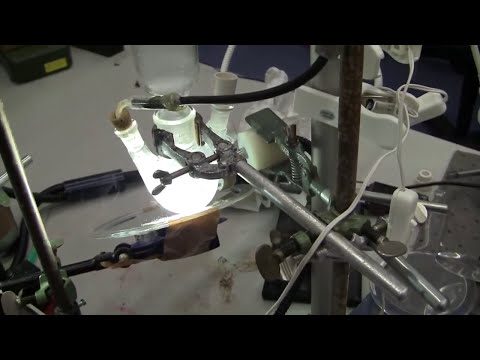 24:59
High speed camera reveals why sodium explodes!
484K views • 11 years ago
Thunderf00t
Thunderf00t presents high-speed camera footage of alkali metals such as sodium and NaK reacting with water. The footage shows that the explosion is not caused by hydrogen ignition, as the usual explanation says. It is a Coulomb explosion driven by electrons leaving the metal.
 22:44
The Art Market is a Scam (And Rich People Run It)
3.2M views • 5 years ago
Wendover Productions
A Wendover Productions video on how the art market works, arguing that prices are driven by wealth, storage and tax mechanics rather than artistic value.