ide
 4:20
Why Snow and Confetti Ruin YouTube Video Quality
10.4M views • 10 years ago
Tom Scott
Tom Scott explains why confetti and snow wreck video quality, using interframe compression and bitrate. He demonstrates it live by changing the quality on screen.
 5:10
Will YouTube Ever Run Out Of Video IDs?
10.1M views • 10 years ago
Tom Scott
Tom Scott explains YouTube's 11-character video IDs, which are base-64 encoded 64-bit numbers, and whether YouTube could ever run out of them. It covers counting systems and base 64 briefly.
 12:24
The 1988 VIDEO Floppy Disk Camera: Canon Xap Shot RC-250
452K views • 8 years ago
LGR
LGR looks at the 1988 Canon Xap Shot, a still video camera that records photos to a floppy disk as analog NTSC signal rather than digital data.
 16:29
Why Sony's Beta Videotape System Failed--and failed hard (Part 1)
1.5M views • 9 years ago
Technology Connections
Part one of Technology Connections' account of the VHS versus Betamax format war. It argues Sony was caught off guard by JVC's cheaper, more practical VHS system.
 12:01
Why Electronic Voting Is Still A Bad Idea
5.1M views • 6 years ago
Tom Scott
Tom Scott explains why electronic voting is a bad idea. Elections must be trusted by everyone and attacks on software scale in ways attacks on paper do not, so open source or blockchain fixes do not solve it.
 8:21
Why Electronic Voting is a BAD Idea - Computerphile
2.3M views • 11 years ago
Computerphile
Tom Scott explains for Computerphile why electronic voting is a bad idea, arguing that paper ballots are transparent, auditable and hard to tamper with at scale. He covers why moving voting to phones, tablets or computers undermines trust and verifiability.
 6:31
You Can Win the Presidency With 22% of the Vote
8.2M views • 15 years ago
CGP Grey
A short CGP Grey animation showing how the US electoral college lets a candidate win the presidency with as little as about 22 percent of the popular vote. It lays out the arithmetic of winning states by narrow margins.
 3:38
The Shortest-Splitline Algorithm: a Gerrymandering Solution [Bonus Video]
692K views • 15 years ago
CGP Grey
A short CGP Grey bonus video explaining the shortest-splitline algorithm, which draws electoral districts by repeatedly splitting a state along its shortest dividing line while balancing population. It is offered as a neutral, algorithmic fix for gerrymandering.
 3:45
The Dutch Solution for Safer Sidewalks - Continuous Sidewalks
452K views • 6 years ago
Not Just Bikes
A short Not Just Bikes video on continuous sidewalks in the Netherlands, where the sidewalk runs unbroken across side streets so cars must visibly cross pedestrian space. It places them within Dutch sustainable safety and Vision Zero efforts.
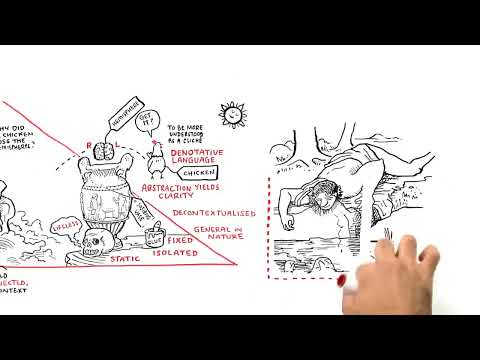 11:48
RSA ANIMATE: The Divided Brain
2.2M views • 15 years ago
Royal Society of Arts
An RSA Animate summary of Iain McGilchrist's lecture on the divided brain, arguing the brain's two hemispheres attend to the world differently and that this has shaped culture and society.
 9:33
Avoiding Negative Side Effects: Concrete Problems in AI Safety part 1
161K views • 9 years ago
Robert Miles AI Safety
Robert Miles introduces the first of several videos on the paper 'Concrete Problems in AI Safety', focusing on how AI systems can cause accidental negative side effects. It explains the problem in accessible terms.
 6:02
OpenAI Plays Hide and Seek…and Breaks The Game! 🤖
11M views • 7 years ago
Two Minute Papers
Two Minute Papers covers OpenAI's multi-agent hide-and-seek experiment, in which agents learned emergent tool use and found ways to break the game's rules. It summarizes the 'Emergent Tool Use from Multi-Agent Interaction' paper.
 15:29
How Time Becomes Space Inside a Black Hole | Space Time
2.5M views • 9 years ago
PBS Space Time
A PBS Space Time episode explaining how space and time swap roles inside a black hole's event horizon. It is part of the channel's black hole series.
 6:43
Explained: "Go Fast" UFO Video - Not Low and Not Fast - Like a Balloon!
156K views • 7 years ago
Mick West
Mick West analyzes the Navy "Go Fast" UFO footage and shows with simple trigonometry and the data overlay that the object is slow and high up, consistent with a balloon. He explains how parallax makes it look fast and argues the original TV claims were wrong.
 8:04
Khan Academy and the Effectiveness of Science Videos
1.7M views • 15 years ago
Veritasium
Veritasium examines research suggesting science explainer videos like Khan Academy's make students feel they understand while tests show they have not learned, because misconceptions go unaddressed. It suggests how to partly fix this.
 5:07
7 Minutes of Terror: Curiosity Rover's Risky Mars Landing | Video
1.2M views • 14 years ago
VideoFromSpace
NASA's animated explanation of the Curiosity rover's Mars landing, which relied on a complex automated sequence taking about seven minutes. It features NASA engineers discussing the risks before the 2012 landing.
 10:09
Dominic Frisby. A simple guide to land value tax
25K views • 11 years ago
Dominic Frisby Comedy Videos
Comedian Dominic Frisby gives a ten-minute explanation of land value tax. He argues it would fix problems of rent-seeking and the economics of land ownership.
 14:25
Do Events Inside Black Holes Happen?
3.2M views • 11 years ago
PBS Space Time
A PBS Space Time episode asking what black holes really are and whether events can happen inside them. It covers event horizons, time dilation and common misconceptions about black holes.
 9:54
Inside Hong Kong’s cage homes
27.3M views • 8 years ago
Vox
A Vox Borders explainer on Hong Kong's housing crisis, the least affordable market in the world, and the tiny cage homes and subdivided flats people squeeze into. It looks at why prices keep climbing and how land policy contributes.
 6:36
Intel ME explained (intel management engine) from insider
12K views • 8 years ago
jessie
A short video explaining the Intel Management Engine, a hidden embedded computer inside Intel machines with deep access to hardware. It is presented from an insider's perspective and raises backdoor and NSA concerns.
 9:41
How Steve Jobs got the ideas of GUI from XEROX
272K views • 12 years ago
Ringo Pebam
A short video telling how Xerox PARC invented the graphical user interface and how Steve Jobs's 1979 visit influenced Apple's Lisa.
 4:21
An elevator that actually goes sideways
4.3M views • 9 years ago
Tom Scott
Tom Scott visits ThyssenKrupp's test tower in Rottweil to see the Multi, a rope-free elevator that uses linear motors to move cabins sideways as well as vertically.
 21:25
Outside In
11.7M views • 15 years ago
ssgelm
A 21-minute animation showing how a sphere can be turned inside out without creases or tears, known as sphere eversion.
 25:13
Thinking outside the 10-dimensional box
3.2M views • 9 years ago
3Blue1Brown
3Blue1Brown visualizes high-dimensional spheres to explain a surprising puzzle about how a sphere fits in a box as dimensions grow. It builds geometric intuition for counterintuitive properties of high-dimensional space.
 7:56
Building a Marsbase is a Horrible Idea: Let’s do it!
21.9M views • 7 years ago
Kurzgesagt – In a Nutshell
A Kurzgesagt animation walking through how a Mars base could be built and why it would be punishing, covering radiation, temperature extremes, toxic dust and the need for shielding.
 4:30
Watching This Video Disqualifies You From Jury Duty for Life
21.2M views • 12 years ago
CGP Grey
CGP Grey explains jury nullification, a juror's power to acquit despite the law, and why mentioning it can get you struck from jury selection.
 9:32
Disney's Practical Guide to Path Tracing
914K views • 10 years ago
Walt Disney Animation Studios
Walt Disney Animation Studios' short introduction to path tracing, showing how rays are traced and bounced through a virtual scene to simulate light. It explains how this approach is used in animated films.
 6:23
The Secret Reason Horses Let Us Ride Them
26.6M views • 10 years ago
CGP Grey
CGP Grey explains why horses could be ridden and why other animals like zebras and bears were never domesticated for war or riding. It is a follow-up on the topic of animal domestication.
 4:17
AI Learns Noise Filtering For Photorealistic Videos | Two Minute Papers #215
65K views • 8 years ago
Two Minute Papers
A Two Minute Papers episode on NVIDIA's recurrent denoising autoencoder, which cleans up noisy Monte Carlo path-traced image sequences. It shows how a neural network can produce usable renders from very few samples.
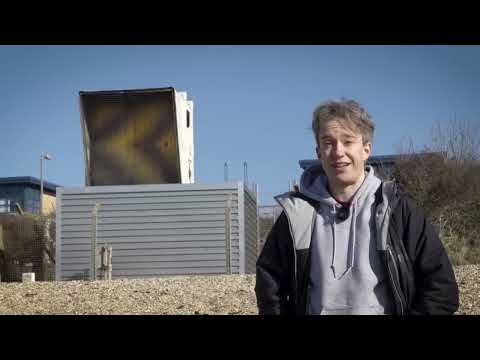 3:54
The moiré effect lights that guide ships home
3.1M views • 8 years ago
Tom Scott
Tom Scott investigates moire-effect beacons, called Inogon leading marks, a Swedish invention from the 1980s that shows different patterns depending on the viewer's position. He visits one used to mark an undersea cable and tracks down its history.
 9:51
Comparing Beta & VHS on Quality: Was Beta Really Better?
710K views • 9 years ago
Technology Connections
Technology Connections compares Betamax and VHS picture quality using footage from a 1979 RCA VCR and argues the Beta quality advantage was largely marketing.
Topic match · Audio & video engineering 7:49
America Keeps Rejecting an ID Card It Already Has
13.6M views • 9 years ago
CGP Grey
CGP Grey explains the history of the US Social Security card and number, and why they became a de facto national ID despite never being meant for it. He also covers why America resists a proper identity card.
Topic match · Social issues & culture 13:09
Moon Landings Faked? Filmmaker Says Not!
1.4M views • 13 years ago
VideoFromSpace
A filmmaker explains why the Apollo moon landing footage could not have been faked in a studio, based on the video and film technology of the late 1960s. He walks through the limits of cameras, frame rates and effects of the era.
Topic match · Audio & video engineering 18:25
How Star Wars was saved in the edit
3.2M views • 8 years ago
RocketJump
A video essay on how the editors of Star Wars: A New Hope recut and rearranged the footage to rescue the film. It walks through specific changes that improved pacing and drama.
Topic match · Filmmaking & video production 9:06
Vancouver Never Plays Itself
2.2M views • 11 years ago
Every Frame a Painting
A video essay from Every Frame a Painting about Vancouver, a major film production city that almost never appears onscreen as itself. It shows clips of films and TV shot there that pass the city off as somewhere else.
Topic match · Filmmaking & video production 8:25
Akira Kurosawa - Composing Movement
10.8M views • 11 years ago
Every Frame a Painting
An Every Frame a Painting video essay on how Akira Kurosawa used movement, weather and composition to tell stories. It draws on clips and interviews with other filmmakers.
Topic match · Film analysis & criticism 8:20
Is Organic Really Better? Healthy Food or Trendy Scam?
12.6M views • 7 years ago
Kurzgesagt – In a Nutshell
A Kurzgesagt explainer asking whether organic food is really healthier or better for the environment. It defines what organic means and looks at pesticide use, nutrition and environmental impact, with sources.
Topic match · Nutrition & diet science 6:36
Exercise Is Really Good for You. Like, REALLY Good for You.
292K views • 11 years ago
Healthcare Triage
A Healthcare Triage episode summarizing the evidence on the health benefits of exercise, made in response to people misreading the host's column on exercise and weight. It argues exercise offers large benefits.
Topic match · Medicine & infectious disease 14:27
Why is TV 29.97 frames per second?
2.2M views • 10 years ago
Stand-up Maths
Matt Parker explains the history behind NTSC television running at 29.97 frames per second rather than 30, tracing it to the backward-compatible addition of color. He walks through the arithmetic behind the odd ratio.
Topic match · Audio & video engineering 5:44
Why Teleportation Would Kill You
7.3M views • 10 years ago
CGP Grey
CGP Grey asks whether Star Trek-style teleportation would kill you and recreate a copy, working through the philosophy of identity and the Ship of Theseus. It is a short animated explainer.