mach-e
 43:00
The step-by-step, mechanical logic of old pinball machines
1.1M views • 2 years ago
Technology Connections
Technology Connections takes apart the step-by-step electromechanical logic of a 1970s pinball machine. He shows how relays, steppers and switches track state and score without electronics.
 50:09
Old pinball machines are amazingly complex
3.5M views • 3 years ago
Technology Connections
Technology Connections takes a long, detailed look at how a 1970s electromechanical pinball machine works, from relays to stepper motors and mechanical logic. It is the first part of a series.
 29:46
The REAL Reason McDonalds Ice Cream Machines Are Always Broken
13.6M views • 5 years ago
Johnny Harris
Johnny Harris investigates why McDonald's ice cream machines are so often broken, covering the Taylor machines, the repair restrictions on franchisees and the Kytch workaround device.
 20:33
Gradient descent, how neural networks learn | Deep Learning Chapter 2
9.7M views • 9 years ago
3Blue1Brown
3Blue1Brown's second neural network chapter explains cost functions and gradient descent, showing how a network learns by minimizing error during training.
Topic match · Machine learning & deep learning 38:31
The $200M Machine that Prints Microchips: The EUV Photolithography System
2.4M views • 1 year ago
Branch Education
Branch Education's animated deep dive into ASML's EUV photolithography machine and how it prints nanometer-scale transistors onto chips. It covers the system's components and the process of chip manufacturing.
 24:52
AlphaFold - The Most Useful Thing AI Has Ever Done
11M views • 1 year ago
Veritasium
A Veritasium video on AlphaFold, DeepMind's protein structure prediction system, and the protein design work it enabled. It features interviews with John Jumper and with David Baker's protein design group and explains why predicting protein folding matters.
Topic match · Machine learning & deep learning 20:41
Training an unbeatable AI in Trackmania
17.7M views • 3 years ago
Yosh
Yosh trains a reinforcement learning agent to drive Trackmania until he can no longer beat it. The video explains how the training works and the design choices involved.
Topic match · Machine learning & deep learning 20:13
The Most Powerful Computers You've Never Heard Of
13.7M views • 4 years ago
Veritasium
Veritasium traces analog computers from the Antikythera mechanism and Kelvin's tide-predicting machines to fire control and modern analog approaches. It explains how these machines computed continuously rather than digitally.
Topic match · Mechanical & precision engineering 45:08
Adam Savage's Epiphany on the Science of Measurement!
1.1M views • 4 years ago
Adam Savage’s Tested
Adam Savage shows a set of Mitutoyo ceramic gauge blocks and uses them to explain metrology, the science of measurement. He argues that accuracy and precision work differently than most people assume, which changes how you think about every measuring tool.
Topic match · Mechanical & precision engineering 27:14
Transformers, the tech behind LLMs | Deep Learning Chapter 5
11.6M views • 2 years ago
3Blue1Brown
3Blue1Brown's visual explanation of how transformers and GPT-style language models work, tracing data through tokens, embeddings and attention.
Topic match · Machine learning & deep learning 23:16
The Machinery Of Freedom: Illustrated summary
164K views • 14 years ago
bitbutter
An illustrated 23-minute summary of David Friedman's talk based on The Machinery of Freedom. It describes how law, police and courts could work as market services in a stateless society, covering private law, polycentric law and objections.
 21:42
Future Computers Will Be Radically Different (Analog Computing)
13.2M views • 4 years ago
Veritasium
Veritasium explains why analog computing may suit AI workloads, covering old analog computers, The Analog Thing and Mythic's analog chips that use flash memory for neural network inference. It argues digital hardware is hitting limits.
Topic match · Machine learning & deep learning 26:10
Attention in transformers, step-by-step | Deep Learning Chapter 6
4.8M views • 2 years ago
3Blue1Brown
3Blue1Brown's visual walkthrough of the attention mechanism inside transformers, covering self-attention, multiple heads and cross-attention. It is chapter 6 of his deep learning series.
Topic match · Machine learning & deep learning 27:07
Attention Is All You Need
814K views • 8 years ago
Yannic Kilcher
Yannic Kilcher walks through the Attention Is All You Need paper, which introduced the Transformer, a sequence model based solely on attention without recurrence or convolutions. He reviews the architecture and the paper's translation results.
Topic match · Machine learning & deep learning 20:39
AI Language Models & Transformers - Computerphile
354K views • 7 years ago
Computerphile
Rob Miles explains on Computerphile how language models generate plausible text and how transformers improved on recurrent networks, with a look at what comes next.
Topic match · Machine learning & deep learning 24:07
AI can't cross this line and we don't know why.
2.5M views • 2 years ago
Welch Labs
A Welch Labs explainer on neural scaling laws and the compute-efficient frontier, asking why model loss seems to hit a line it cannot cross. It draws an analogy to an ideal gas law for AI.
Topic match · Machine learning & deep learning 55:02
GradIEEEnt half decent: The hidden power of imprecise lines
391K views • 3 years ago
suckerpinch
Tom 7 (suckerpinch) delivers a long, comedic digression on gradient descent and floating-point imprecision. He shows how rounding behavior can supply the nonlinearity needed to build a neural network.
Topic match · Machine learning & deep learning 37:20
But how do AI images and videos actually work? | Guest video by Welch Labs
2.2M views • 1 year ago
3Blue1Brown
A guest video by Welch Labs on 3Blue1Brown explaining how text-to-image and video models work. It covers CLIP, shared embedding spaces, diffusion models (DDPM, DDIM), conditioning, guidance and negative prompts.
Topic match · Machine learning & deep learning 25:57
GPT3: An Even Bigger Language Model - Computerphile
446K views • 6 years ago
Computerphile
Rob Miles discusses GPT-3 on Computerphile, covering how scaling parameters kept improving results over GPT-2 and how the model nearly learned arithmetic without anyone knowing exactly how.
Topic match · Machine learning & deep learning 36:29
Drip Coffee Makers — super simple, super cheap
4.7M views • 4 years ago
Technology Connections
Technology Connections explains how the simple American drip coffee maker works, including the bimetal valve and bubble-pump heating, and compares the original Mr. Coffee with modern machines.
Topic match · Mechanical & precision engineering 55:00
The Closest Thing We Have to Alien Technology
64.9M views • 10 months ago
Veritasium
Veritasium explains how ASML's EUV lithography machines make the most advanced computer chips, covering the engineering of the light source, mirrors and the supply chain around them. It is a long-form explainer on the world's most complex commercial machine.
Topic match · Manufacturing & industrial processes 28:28
What is PLUS times PLUS?
2.2M views • 1 year ago
2swap
2swap explores lambda calculus using John Tromp's lambda diagrams, with animated beta-reductions, asking what PLUS times PLUS gives. It touches on Church encodings and the equivalence of Turing machines and lambda calculus.
Topic match · Computability & complexity theory 31:00
How The Economic Machine Works by Ray Dalio
134.5M views • 13 years ago
Principles by Ray Dalio
Ray Dalio's 30-minute animated video explains how the economy works through credit, debt, interest rates, and short- and long-term cycles. It is based on his template for understanding the economy.
 29:35
The IOU Machine: How Currency Is Created | Hidden Secrets of Money Ep. 4
11.1M views • 13 years ago
GoldSilver
Episode 4 of Mike Maloney's Hidden Secrets of Money, explaining how currency is created through a chain of IOUs among the Treasury, banks and the Federal Reserve. It covers bonds, Fed checks, debt, taxes and fractional reserve lending, from a gold-and-silver advocate's viewpoint.
 32:35
Detergent packs are kinda wishy-washy (Dishwashers Explained)
6M views • 5 years ago
Technology Connections
Technology Connections explains how dishwashers work, why detergent pods underperform powder, and how to use the pre-wash and main-wash compartments. It argues you don't need to pre-rinse dishes.
Topic match · Mechanical & precision engineering 34:00
Math's Fundamental Flaw
30.8M views • 5 years ago
Veritasium
Veritasium's explainer on Godel's incompleteness theorems and the limits of mathematical proof, tracing set theory, Hilbert's program and the road to Turing and modern computing.
Topic match · Computability & complexity theory 49:02
Is SpaceX's Raptor engine the king of rocket engines?
5.4M views • 7 years ago
Everyday Astronaut
Everyday Astronaut explains the basic physics of rocket engines, the main engine cycles and fuel types, then compares SpaceX's methane-fueled full-flow staged combustion Raptor to other engines. It runs nearly 50 minutes with chapter markers.
Topic match · Mechanical & precision engineering 35:49
Breaking The Creepy AI in Police Cameras
3.8M views • 1 year ago
Benn Jordan
Benn Jordan explains how Flock Safety's license plate cameras log and share vehicle locations, and explores how adversarial AI can defeat them. It covers weak security and the surveillance risks of private police-camera networks.
Topic match · Computer vision, speech & NLP 31:12
The Insane Engineering of James Webb Telescope
8.8M views • 4 years ago
Real Engineering
Real Engineering explains the engineering behind the James Webb Space Telescope, including its folding mirror, sunshield, orbit and cooling systems, and why deployment was so difficult.
Topic match · Mechanical & precision engineering 28:35
Magnetohydrodynamics - Propelling Liquid Metal with Magnets!
1.1M views • 8 years ago
Tech Ingredients
Tech Ingredients explains the principles of magnetohydrodynamics and builds several demonstrations, including propelling liquid metal and electrolytes with magnets and a railgun-style setup.
Topic match · 3D printing, CNC & maker projects 23:04
The Computer-free Automation of a Jukebox (Electromechanics)
1.3M views • 6 years ago
Technology Connections
Technology Connections takes apart a 1970 Wurlitzer 3400 jukebox to show how electromechanical relays and switches automated its behavior without a computer.
Topic match · Mechanical & precision engineering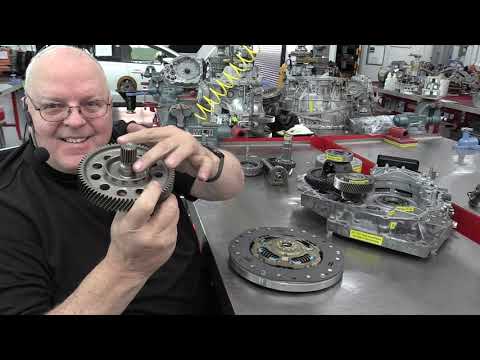 25:15
Understanding the Honda CR-V Hybrid E-Drive
941K views • 5 years ago
WeberAuto
WeberAuto explains how the Honda E-Drive (i-MMD) hybrid transaxle works in the CR-V, Accord, Insight and Clarity hybrids. It walks through the system's three modes of operation.
Topic match · Mechanical & precision engineering 39:34
The Ridiculous Engineering Of Jet Engines
16.8M views • 11 months ago
Veritasium
Veritasium explains how jet engines run hotter than their components' melting points, using cooling air and single-crystal superalloy turbine blades. It covers how the blades are grown as aligned crystals.
Topic match · Mechanical & precision engineering 42:42
Why Are Emulators Legal? Dolphin vs. Nintendo, and the Fate of Emulation [Great Emu War Pt. 1]
410K views • 3 years ago
Moon Channel
Moon Channel, run by a lawyer, explains the legal basis for emulation, including the history of emulation case law and Nintendo's takedown of Dolphin's Steam release. It argues the legality of emulators is more fragile than most people assume.
Topic match · Demoscene & retrocomputing 32:51
Thermoelectric cooling: it's not great.
6.4M views • 2 years ago
Technology Connections
Technology Connections explains in 33 minutes why thermoelectric (Peltier) cooling is far less efficient than compressor-based refrigeration.
Topic match · Mechanical & precision engineering 22:05
Forced-air Furnaces: The What, Why, and How
1.7M views • 6 years ago
Technology Connections
Technology Connections explains what forced-air furnaces are, how they work and why they need electricity. He covers combustion, airflow and the parts of a modern furnace.
Topic match · Mechanical & precision engineering 38:26
Racing the Beam Explained - Atari 2600 CPU vs. CRT Television
400K views • 5 years ago
Retro Game Mechanics Explained
Retro Game Mechanics Explained shows how the Atari 2600 draws images with almost no video memory, by having the CPU race the CRT beam line by line. It walks through the techniques in detail.
Topic match · Demoscene & retrocomputing 37:16
Why it's not possible to synchronize turn signals (but also absolutely is)
3.3M views • 5 years ago
Technology Connections
Technology Connections explains why car turn signals appear to drift out of sync at stoplights and how thermal and other flasher designs work. It also covers how synchronization could be achieved.
Topic match · Mechanical & precision engineering 22:52
A simple water heater is more clever than it seems
2.6M views • 3 years ago
Technology Connections
Technology Connections explains how an ordinary tank water heater works, including twin-element designs, and why it is cleverer than it looks.
Topic match · Mechanical & precision engineering 26:54
Chest Freezers; What they tell us about designing for X
2.9M views • 6 years ago
Technology Connections
Technology Connections explains how refrigerator and freezer design affects energy use, using chest freezers to show why top-opening designs and layout choices matter. It includes thermal-camera footage of cold air spilling out of upright units.
Topic match · Mechanical & precision engineering