rce
 22:05
Forced-air Furnaces: The What, Why, and How
1.7M views • 6 years ago
Technology Connections
Technology Connections explains what forced-air furnaces are, how they work and why they need electricity. He covers combustion, airflow and the parts of a modern furnace.
 17:20
The Extreme Engineering of ASML’s EUV Light Source
698K views • 4 years ago
Asianometry
Asianometry explains the EUV light source inside ASML's lithography machines, where lasers hit falling tin droplets twice to produce 13.5 nm light. It walks through the engineering of the droplet generator, the pre-pulse and main laser, and the plasma that results.
 18:20
FIXING the ENTIRE SM64 Source Code (INSANE N64 performance)
3.2M views • 4 years ago
Kaze Emanuar
Kaze Emanuar explains how he rewrote and optimized the Super Mario 64 source code so it runs far faster on real N64 hardware. He covers performance bottlenecks and fixes in detail for his ROM hacks.
 20:41
Training an unbeatable AI in Trackmania
17.7M views • 3 years ago
Yosh
Yosh trains a reinforcement learning agent to drive Trackmania until he can no longer beat it. The video explains how the training works and the design choices involved.
Topic match · Machine learning & deep learning 7:41
Why Life Seems to Speed Up as We Age
8M views • 10 years ago
Veritasium
Veritasium explores why time seems to speed up as we age, covering chronoception and several competing explanations beyond the common proportional-theory argument.
Topic match · Neuroscience & the brain 22:54
Did People Used To Look Older?
21M views • 4 years ago
Vsauce
Vsauce explores whether people in past decades really looked older than people of the same age today, or whether photographic and cultural factors make them seem so. It draws on old photos, yearbooks and perception research.
Topic match · Neuroscience & the brain 19:40
How I Designed a Free Music Font for 5 Million Musicians (MuseScore 3.6)
608K views • 5 years ago
Tantacrul
Tantacrul explains how he and engraver Simon Smith designed the free music notation font for MuseScore 3.6. It draws on the history of the SCORE notation application by Leland Smith.
Topic match · Linux & open-source ecosystems 9:35
Is Your Red The Same as My Red?
34M views • 13 years ago
Vsauce
Vsauce explores qualia and whether different people experience colors the same way. It draws on color blindness, Mary's room, the explanatory gap and subjective experience.
Topic match · Consciousness & cognition 21:15
Brown; color is weird
5.3M views • 6 years ago
Technology Connections
Technology Connections explains why brown is not a spectral color but a context-dependent perception, essentially dark orange seen against brighter surroundings.
 17:52
Training AI Without Writing A Reward Function, with Reward Modelling
259K views • 6 years ago
Robert Miles AI Safety
Robert Miles explains reward modelling, in which an AI learns what humans want from their preference comparisons instead of a hand-written reward function. He walks through the 2017 paper on deep reinforcement learning from human preferences.
Topic match · Machine learning & deep learning 13:59
MENACE: the pile of matchboxes which can learn
453K views • 8 years ago
Stand-up Maths
Matt Parker of Stand-up Maths demonstrates MENACE, Donald Michie's 1961 machine made of matchboxes that learns to play noughts and crosses through reinforcement. He builds and trains a physical version.
Topic match · Machine learning & deep learning 11:47
We Were Right! Real Inner Misalignment
271K views • 5 years ago
Robert Miles AI Safety
Robert Miles covers a paper where researchers ran real versions of his earlier mesa-optimizer thought experiments. They show inner misalignment, where an AI learns the wrong goal in training and misbehaves when deployed.
Topic match · Machine learning & deep learning 4:44
Debt Metaphor
95K views • 17 years ago
Ward Cunningham
Ward Cunningham explains the history and intent of the debt metaphor, which he coined while refactoring the WyCash product. He says debt means code reflecting an incomplete understanding of the problem, not sloppy programming.
Topic match · Software practice, open source & careers 7:53
Sand Castle Holds Up A Car! - Mechanically Stabilized Earth
5M views • 10 years ago
Practical Engineering
Practical Engineering explains Mechanically Stabilized Earth, where layers of reinforcement make soil strong enough to hold heavy loads, shown with a sand structure supporting a car. It notes that MSE walls are everywhere in infrastructure.
 6:16
The Artificial Intelligence That Deleted A Century
2M views • 7 years ago
Tom Scott
A speculative-fiction video by Tom Scott, framed as coming from a future, about an AI called Earworm that enforces copyright so aggressively that humanity ends up forgetting a century of pop culture. It is animated and narrated as part of his series of videos from a future.
 21:24
The Shotgun Booby Trap (The Case Of)
1.9M views • 6 years ago
LegalEagle
LegalEagle analyzes Katko v. Briney, the Iowa case about a homeowner whose shotgun booby trap injured a burglar, and the limits on deadly force in defending property.
 5:51
This Is Your Brain On Stale Air
4.2M views • 7 years ago
Tom Scott
Tom Scott features Kurtis Baute inside a sealed homemade biodome as carbon dioxide builds up, showing how stale air with elevated CO2 affects cognitive function. Sources include studies on CO2 and cognitive scores.
Topic match · Neuroscience & the brain 4:45
How playing an instrument benefits your brain - Anita Collins
15.2M views • 12 years ago
TED-Ed
A short TED-Ed animated lesson by Anita Collins on what happens in the brain when people play a musical instrument. It argues that playing engages many brain areas at once, like a full-body workout, with long-term benefits.
Topic match · Neuroscience & the brain 7:00
CD / Color
2.9M views • 6 years ago
Captain Disillusion
Captain Disillusion's comedic, fast-paced explainer on how color works in cameras, displays and video. It covers the biology of color perception and what it means for screens.
 18:15
So... the minute hand shows progression — apparently we think of time in wildly different ways
706K views • 4 years ago
Technology Connextras
A Technology Connections video essay on how analog and digital clocks shape different mental models of time, with the minute hand acting as a progress indicator.
 8:41
Invisibility Training for Motorcyclists
1.8M views • 8 years ago
FortNine
FortNine's tongue-in-cheek guide to why drivers fail to see motorcyclists and how riders can make themselves more visible. It touches on perception psychology, including the role of saccades.
 9:11
What is Concrete?
2.5M views • 8 years ago
Practical Engineering
Practical Engineering gives a short introduction to concrete, covering the difference between concrete and cement, the ingredients, and reinforcement. It includes a hydraulic press demonstration of compressive strength.
 6:18
The artificial gravity lab
7.2M views • 7 years ago
Tom Scott
Tom Scott tours the rotating room artificial gravity facility at Brandeis University's Graybiel lab. It shows how humans cope with rotation-based gravity and the odd effects such as Coriolis forces.
 46:01
Exploring Sid Meier's Pirates! - BASIC Code, Quirks, Bugs on Commodore 64
115K views • 5 years ago
8-Bit Show And Tell
8-Bit Show And Tell walks through the BASIC source code of the original Commodore 64 Sid Meier's Pirates!. It covers bugs, quirks and traces of abandoned features and scenarios left in the code.
 18:40
But what is a neural network? | Deep learning chapter 1
25.1M views • 9 years ago
3Blue1Brown
3Blue1Brown's first chapter on deep learning explains what neurons and layers are and the math underlying a basic neural network, using handwritten digit recognition with visual animations.
Topic match · Machine learning & deep learning 27:14
Transformers, the tech behind LLMs | Deep Learning Chapter 5
11.6M views • 2 years ago
3Blue1Brown
3Blue1Brown's visual explanation of how transformers and GPT-style language models work, tracing data through tokens, embeddings and attention.
Topic match · Machine learning & deep learning 4:58
You Actually Share Your Brain With a Silent Stranger
20.2M views • 10 years ago
CGP Grey
CGP Grey explains split-brain patients, where severing the corpus callosum lets the two hemispheres act independently. He uses this to explore the idea of two minds in one head.
Topic match · Neuroscience & the brain 15:12
JPEG DCT, Discrete Cosine Transform (JPEG Pt2)- Computerphile
697K views • 11 years ago
Computerphile
Mike Pound explains the discrete cosine transform and how it underpins JPEG compression. It is part two of Computerphile's JPEG series.
Topic match · Computer vision, speech & NLP 18:31
Fourier Optics used for Optical Pattern Recognition
103K views • 6 years ago
Huygens Optics
Huygens Optics explains the Fourier transform and shows how a lens performs one optically. A DLP projector is used as a Fourier filter to do simple pattern recognition on lithographic character patterns.
Topic match · Computer vision, speech & NLP 4:30
Traffic Has a Perfect Solution. Humans Are the Problem.
44.6M views • 10 years ago
CGP Grey
CGP Grey explains how traffic jams come from human driving behavior such as tailgating and reaction delays, and how leaving gaps and smoothing speed would reduce congestion. It also touches on self-driving cars.
Topic match · Self-driving & autonomous vehicles 26:10
Attention in transformers, step-by-step | Deep Learning Chapter 6
4.8M views • 2 years ago
3Blue1Brown
3Blue1Brown's visual walkthrough of the attention mechanism inside transformers, covering self-attention, multiple heads and cross-attention. It is chapter 6 of his deep learning series.
Topic match · Machine learning & deep learning 27:07
Attention Is All You Need
814K views • 8 years ago
Yannic Kilcher
Yannic Kilcher walks through the Attention Is All You Need paper, which introduced the Transformer, a sequence model based solely on attention without recurrence or convolutions. He reviews the architecture and the paper's translation results.
Topic match · Machine learning & deep learning 15:09
Why you DON'T want Perfect Pitch
2.5M views • 5 years ago
Adam Neely
Adam Neely explains what perfect (absolute) pitch is, how it differs from relative and quasi-absolute pitch, and why he would not want it. He covers its drawbacks, including drift with age.
Topic match · Neuroscience & the brain 16:26
Why Adults Can't Develop Perfect Pitch
1.8M views • 9 years ago
Rick Beato
Rick Beato argues that adults cannot develop true perfect pitch, which he ties to critical-period brain plasticity and language acquisition. He says it can only be developed in young children, and discusses the research behind this.
Topic match · Neuroscience & the brain 12:47
Backpropagation, intuitively | Deep Learning Chapter 3
6.4M views • 9 years ago
3Blue1Brown
3Blue1Brown's third deep learning chapter gives a visual, intuitive account of backpropagation and what happens to a neural network as it learns. A follow-up video covers the underlying calculus.
Topic match · Machine learning & deep learning 20:33
Gradient descent, how neural networks learn | Deep Learning Chapter 2
9.7M views • 9 years ago
3Blue1Brown
3Blue1Brown's second neural network chapter explains cost functions and gradient descent, showing how a network learns by minimizing error during training.
Topic match · Machine learning & deep learning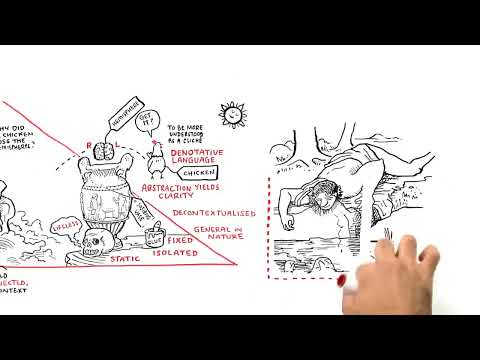 11:48
RSA ANIMATE: The Divided Brain
2.2M views • 15 years ago
Royal Society of Arts
An RSA Animate summary of Iain McGilchrist's lecture on the divided brain, arguing the brain's two hemispheres attend to the world differently and that this has shaped culture and society.
Topic match · Neuroscience & the brain 20:39
AI Language Models & Transformers - Computerphile
354K views • 7 years ago
Computerphile
Rob Miles explains on Computerphile how language models generate plausible text and how transformers improved on recurrent networks, with a look at what comes next.
Topic match · Machine learning & deep learning 8:25
Large Language Models from scratch
375K views • 4 years ago
Graphics in 5 Minutes
A short cartoon explaining how language models like ChatGPT work, from autocomplete and conditional probabilities to neural networks, gradient descent and backpropagation. It shows how networks act as universal function approximators.
Topic match · Machine learning & deep learning 24:52
AlphaFold - The Most Useful Thing AI Has Ever Done
11M views • 1 year ago
Veritasium
A Veritasium video on AlphaFold, DeepMind's protein structure prediction system, and the protein design work it enabled. It features interviews with John Jumper and with David Baker's protein design group and explains why predicting protein folding matters.
Topic match · Machine learning & deep learning