space
 7:35
End of Space – Creating a Prison for Humanity
14.6M views • 7 years ago
Kurzgesagt – In a Nutshell
Kurzgesagt explains how accumulating space junk could trigger a collision cascade (Kessler syndrome) that makes launches too dangerous and traps humanity on Earth.
 10:29
Vertical Landing Rockets Before SpaceX
785K views • 8 years ago
Curious Droid
Curious Droid surveys vertical take-off and landing rockets that predate SpaceX and Blue Origin, including the McDonnell Douglas DC-X of the 1990s. It shows that propulsive landing has about 60 years of history.
 8:55
Are Space and Time An Illusion?
3.3M views • 11 years ago
PBS Space Time
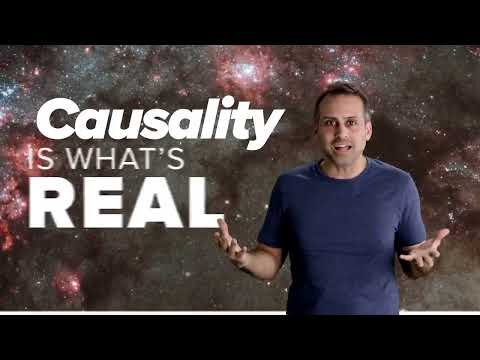
A PBS Space Time episode hosted by Gabe Perez-Giz on the nature of spacetime and whether space and time are fundamental. It builds up reference frames and causality in a short, dense format.
 15:41
Why SpaceX is Making Starlink
7.4M views • 7 years ago
Real Engineering
Real Engineering explains why SpaceX is building Starlink, including the economics of satellite internet. It covers the latency advantage of light in vacuum over fiber for long-distance links.
 14:40
How the Quantum Eraser Rewrites the Past | Space Time | PBS Digital Studios
2.9M views • 10 years ago
PBS Space Time
PBS Space Time explains the quantum eraser experiment, in which erasing which-path information appears to reverse causality in a double-slit setup. It discusses what this means for quantum mechanics.
 9:32
The Higgs Mechanism Explained | Space Time | PBS Digital Studios
2.7M views • 10 years ago
PBS Space Time
PBS Space Time explains the Higgs field and how the Higgs mechanism gives particles mass within quantum field theory. It is a ten-minute overview for a lay audience.
 11:08
Can Spinlaunch Throw Rockets Into Space?
3.2M views • 4 years ago
Scott Manley
Scott Manley looks at SpinLaunch, which aims to throw launch vehicles out of a spinning launcher at hypersonic speed. He covers its recent Mach 1 test of a one-third scale launcher and the engineering problems that remain.
 16:37
Does It Make Sense To Put Data Centers In Space? Can They Really Cost Less To Operate?
502K views • 2 years ago
Scott Manley
Scott Manley analyzes the idea of putting data centers in orbit, prompted by Lumen Orbit's funding. He examines the claimed advantage of constant solar power against launch cost, cooling and mass.
 15:29
How Time Becomes Space Inside a Black Hole | Space Time
2.5M views • 9 years ago
PBS Space Time
A PBS Space Time episode explaining how space and time swap roles inside a black hole's event horizon. It is part of the channel's black hole series.
 11:07
How to achieve nanometer precision in space?
748K views • 4 years ago
Breaking Taps
Breaking Taps explains how the cryogenic mirror actuators on the James Webb Space Telescope achieve nanometer precision using flexures. It shows a 3D-printed replica and how one motor handles both coarse and fine motion.
 16:32
Pilot Wave Theory and Quantum Realism | Space Time | PBS Digital Studios
1.9M views • 9 years ago
PBS Space Time
A PBS Space Time episode introducing de Broglie-Bohm pilot wave theory, an interpretation of quantum mechanics that avoids much of the strangeness of the mainstream views. It is aimed at curious lay viewers.
 14:03
Quantum Entanglement and the Great Bohr-Einstein Debate | Space Time | PBS Digital Studios
2.6M views • 10 years ago
PBS Space Time
PBS Space Time explains the Bohr-Einstein debate over quantum mechanics and how quantum entanglement settled it. It covers the weirdness of measurement and nonlocal correlations.
 10:48
The True Nature of Matter and Mass | Space Time | PBS Digital Studios
1.8M views • 10 years ago
PBS Space Time
A PBS Space Time episode asking what matter, mass, and energy really are, starting with inertial versus gravitational mass and what mass-energy equivalence means.
 10:00
Is The Alcubierre Warp Drive Possible? | Space Time | PBS Digital Studios
2.5M views • 11 years ago
PBS Space Time
PBS Space Time introduces Miguel Alcubierre's warp drive, explaining how spacetime itself could be warped rather than moving a ship through it, and whether it is physically possible.
 19:59
What Happens at the Event Horizon? | Space Time | PBS Digital Studios
3.2M views • 9 years ago
PBS Space Time
PBS Space Time explains what happens as you approach and cross a black hole's event horizon, using Penrose diagrams and light cones as the tool for understanding spacetime there.
 7:37
Satoshi Kon - Editing Space & Time
4M views • 12 years ago
Every Frame a Painting
A video essay from Every Frame a Painting on animator Satoshi Kon and his editing style, which distorts and warps space and time. It draws on his four features and one TV series.
 7:44
Diatoms: Tiny Factories You Can See From Space
811K views • 7 years ago
Journey to the Microcosmos
An episode of Journey to the Microcosmos, hosted by Hank Green, about diatoms, single-celled algae with glass shells. It covers their role in producing a large share of Earth's oxygen and their uses in beer filtering, paint and kitty litter.
 7:00
1,000km Cable to the Stars - The Skyhook
13M views • 6 years ago
Kurzgesagt – In a Nutshell
Kurzgesagt explains the skyhook, a rotating cable with a counterweight that could catapult spacecraft from Earth orbit toward deep space. It covers why it would make space travel cheaper and more efficient.
Topic match · Space exploration & spaceflight 17:32
'Oumuamua Is Not Aliens
790K views • 7 years ago
PBS Space Time
PBS Space Time examines the interstellar object 'Oumuamua and the popular theories about it, including the light-sail hypothesis. It argues that a natural rock is the likeliest explanation.
Topic match · Space exploration & spaceflight 13:03
5 REAL Possibilities for Interstellar Travel
7.1M views • 11 years ago
PBS Space Time
PBS Space Time surveys five realistic options for interstellar travel, from conventional rocket fuel to antimatter and nuclear pulse propulsion. The options rely only on known physics.
Topic match · Space exploration & spaceflight 7:37
Should We Colonize Venus Instead of Mars?
4.8M views • 11 years ago
PBS Space Time
A PBS Space Time episode asking whether Venus would be a better colonization target than Mars. It covers Venus's habitable altitudes, floating balloon habitats, and the term surfacism.
Topic match · Space exploration & spaceflight 14:32
Orbital Data Centers Yes or No
18K views • 1 year ago
Eager Space
Eager Space examines the practicality of putting data centers in orbit, walking through three scenarios with cost calculations and the launch cost reductions that would be required.
Topic match · Space exploration & spaceflight 11:41
TRUE Limits Of Humanity – The Final Border We Will Never Cross
23.6M views • 5 years ago
Kurzgesagt – In a Nutshell
Kurzgesagt explains why, even with science-fiction technology, most of the universe is permanently out of reach because of cosmic expansion and finite resources.
Topic match · Space exploration & spaceflight 19:58
The Genius of 3D Printed Rockets
13.2M views • 5 years ago
Veritasium
A Veritasium video touring Relativity Space and explaining why 3D printing whole rockets cuts tooling costs, allows rapid iteration, reduces part count and enables new designs. It includes an interview with Scott Manley on aerospace engineering.
Topic match · Space exploration & spaceflight 9:17
The Incredible Sounds of the Falcon Heavy Launch (BINAURAL AUDIO IMMERSION) - Smarter Every Day 189
7.2M views • 8 years ago
SmarterEveryDay
Smarter Every Day shares a binaural audio recording of the SpaceX Falcon Heavy launch made by Trevor Mahlmann, with explanations of the sounds including the sonic booms of the landing boosters. It is meant to be heard with headphones.
Topic match · Space exploration & spaceflight 18:04
How the Higgs Mechanism Give Things Mass
1.9M views • 4 years ago
PBS Space Time
A PBS Space Time episode on how the Higgs mechanism gives particles mass, prompted by Fermilab's heavier-than-expected W boson measurement. It goes beyond the usual pop-science treatment without heavy math.
Topic match · Quantum physics 12:06
Hawking Radiation
1.3M views • 8 years ago
PBS Space Time
PBS Space Time explains Stephen Hawking's prediction of Hawking radiation and how black holes can emit radiation and slowly evaporate. It goes beyond the common particle-antiparticle analogy.
Topic match · Quantum physics 18:24
The Holographic Universe Explained
3.5M views • 7 years ago
PBS Space Time
A PBS Space Time episode explaining the holographic principle: the idea that our 3+1 dimensional universe may be described by information on a lower-dimensional boundary. It walks through black hole entropy and the AdS/CFT correspondence.
Topic match · Quantum physics 15:30
The Black Hole Information Paradox
1.1M views • 8 years ago
PBS Space Time
PBS Space Time episode on the black hole information paradox, covering how black holes seem to destroy information, the no-hair conjecture and the proposed role of the event horizon. It is part of a series on black holes.
Topic match · Quantum physics 12:36
Why the Muon g-2 Results Are So Exciting!
1.5M views • 5 years ago
PBS Space Time
A PBS Space Time episode explaining the Fermilab Muon g-2 results and why a discrepancy with the Standard Model prediction could point to new physics.
Topic match · Quantum physics 19:19
Was Penrose Right? NEW EVIDENCE For Quantum Effects In The Brain
1.1M views • 2 years ago
PBS Space Time
PBS Space Time examines Roger Penrose's idea that consciousness arises from quantum processes in the brain, and reviews new evidence about microtubules. It ends with an estimate of what replicating consciousness would demand.
Topic match · Quantum physics 16:29
Are Black Holes Actually Fuzzballs?
1.3M views • 4 years ago
PBS Space Time
A PBS Space Time episode on fuzzballs, the string-theory proposal for black holes that replaces the singularity with a tangle of strings. It explains why black holes seem to both have to exist and break known physics.
Topic match · Quantum physics 10:22
How Far Are The Nearest Stars?
3.7M views • 9 years ago
Cody'sLab
Cody's Lab builds a 200-billionth-scale model to show how far away the nearest stars are, using parallax and light speed. A short astronomy explainer on interstellar distances.
Topic match · Space exploration & spaceflight 12:42
How To Terraform Venus (Quickly)
22.8M views • 5 years ago
Kurzgesagt – In a Nutshell
Kurzgesagt lays out a speculative plan to terraform Venus, covering its hostile atmosphere and how it might be made Earth-like, with a sources page linked.
Topic match · Space exploration & spaceflight 7:56
Building a Marsbase is a Horrible Idea: Let’s do it!
21.9M views • 7 years ago
Kurzgesagt – In a Nutshell
A Kurzgesagt animation walking through how a Mars base could be built and why it would be punishing, covering radiation, temperature extremes, toxic dust and the need for shielding.
Topic match · Space exploration & spaceflight 16:19
KSP Doesn't Teach: Rocket Engine Plumbing
1.1M views • 10 years ago
Scott Manley
Scott Manley explains the plumbing of rocket engines, including pressure-fed, gas generator, expander and staged combustion cycles. He shows why more complex designs exist and what they gain.
Topic match · Space exploration & spaceflight 17:34
The Halo Drive
526K views • 7 years ago
Cool Worlds
Astrophysicist David Kipping presents the halo drive, a proposed way to propel a starship to a good fraction of light speed by gaining energy from a black hole. The video is based on his peer-reviewed paper and explains why energy is the main obstacle to interstellar flight.
Topic match · Space exploration & spaceflight 15:27
Can The Human Body Handle Rotating Artificial Gravity?
3M views • 5 years ago
Scott Manley
Scott Manley surveys the research on whether people can adapt to rotating artificial gravity, from early Soviet centrifuge tests to modern studies. He concludes it is an engineering problem and discusses Coriolis effects and station radius.
Topic match · Space exploration & spaceflight 7:49
How to Build a Dyson Sphere - The Ultimate Megastructure
24.5M views • 7 years ago
Kurzgesagt – In a Nutshell
A Kurzgesagt animated explainer on how humanity could build a Dyson sphere, a swarm of structures capturing the sun's energy. It covers using Mercury's materials and a step-by-step construction approach.
Topic match · Space exploration & spaceflight 6:18
The artificial gravity lab
7.2M views • 7 years ago
Tom Scott
Tom Scott tours the rotating room artificial gravity facility at Brandeis University's Graybiel lab. It shows how humans cope with rotation-based gravity and the odd effects such as Coriolis forces.
Topic match · Space exploration & spaceflight