technique
 9:34
New NES Tetris Technique: Faster Than Hypertapping!
5.1M views • 5 years ago
aGameScout
aGameScout explains rolling, the third major NES Tetris playstyle, in which players tap the back of the controller to move pieces faster than hypertapping. It covers how the technique works and where it comes from.
 48:25
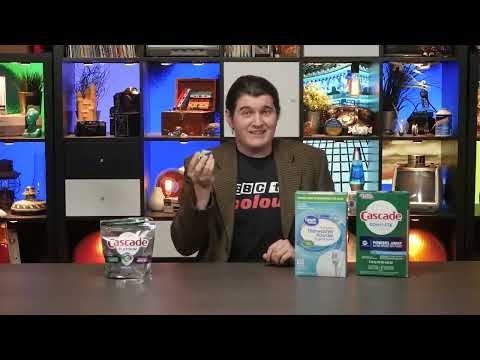
I messed up. You're using too much detergent.
5.4M views • 5 years ago
Technology Connections
Technology Connections explains dishwasher detergent use, arguing people use too much and that powder beats pods and gels. It follows an earlier dishwasher video and covers enzymes, bleach, rinse aids and when salt is needed.
Topic match · Chemistry 16:30
"NO CGI" is really just INVISIBLE CGI - 1
1.5M views • 3 years ago
The Movie Rabbit Hole
VFX supervisor Jonas Ussing examines what studios mean by "no CGI", showing how much invisible CGI hides behind practical-effects marketing. It is the first part of a multi-part series that includes analysis of doctored behind-the-scenes footage.
Topic match · Filmmaking & video production 24:57
The Man Who Accidentally Killed The Most People In History
43.5M views • 4 years ago
Veritasium
Veritasium tells the story of Thomas Midgley Jr., who introduced leaded gasoline and CFCs, and covers the science behind lead exposure and ozone damage. It also touches on isotope geochemistry used to uncover the history.
Topic match · Chemistry 14:27
The Biggest Myth In Education
15.5M views • 5 years ago
Veritasium
Veritasium debunks the idea of learning styles, such as being a visual learner, with an interview with Daniel Willingham and a memory experiment. It argues that a multimodal approach helps everyone.
Topic match · Education & learning 17:59
The Expert Myth
16M views • 4 years ago
Veritasium
Veritasium examines which experts have real expertise, drawing on chess research and work by Klein and Kahneman. It explains that expertise comes from pattern recognition built through deliberate practice in valid, feedback-rich environments.
Topic match · Education & learning 10:51
Is olive oil safe at high heat? Does it taste bad?
1.9M views • 6 years ago
Adam Ragusea
Adam Ragusea examines whether olive oil is unsafe for high-heat cooking and whether it tastes bad when heated. He cites studies showing it is among the most stable cooking oils and that smoke-point worries are overblown.
Topic match · Cooking & food 21:32
Alexander Pope Wrote a 35-Page Takedown of a Historian
10.3M views • 5 years ago
CGP Grey
CGP Grey tells the story of Alexander Pope's long takedown of a historian, Thomas Hearne, framed around the quirks of library books and archival research. It is a funny, digressive video essay about literary feuds and tracking down original sources.
Topic match · Literature & writing craft 36:29
Drip Coffee Makers — super simple, super cheap
4.7M views • 4 years ago
Technology Connections
Technology Connections explains how the simple American drip coffee maker works, including the bimetal valve and bubble-pump heating, and compares the original Mr. Coffee with modern machines.
Topic match · Cooking & food 24:55
Why don't Americans use electric kettles?
5.3M views • 4 years ago
Technology Connections
Technology Connections explains why electric kettles are uncommon in the US, centering on 120V circuits limiting power. He tests ways of boiling water on gas, electric ranges and kettles.
Topic match · Cooking & food 29:34
How Do Nuclear Submarines Make Oxygen?- Smarter Every Day 251
10.4M views • 5 years ago
SmarterEveryDay
A Smarter Every Day episode from aboard a nuclear submarine on how the crew makes breathable air. It covers oxygen generation from seawater, oxygen candles and CO2 scrubbing with amine.
Topic match · Chemistry 13:47
Why Hershey bars taste like vomit (and I love them)
3.1M views • 6 years ago
Adam Ragusea
Adam Ragusea explores why Hershey's chocolate tastes the way it does to many non-Americans, tracing it to butyric acid and Hershey's history, and why familiarity makes Americans love it. He compares it with British Cadbury.
Topic match · Cooking & food 18:32
Homochirality: Why Nature Never Makes Mirror Molecules
1.7M views • 6 years ago
Steve Mould
Steve Mould explains homochirality: why biological molecules like sugars and amino acids come in only one handedness. He covers ideas about how this asymmetry might have arisen, touching on meteorite samples and RNA.
Topic match · Chemistry 14:21
The Antique Microwave Oven that's Better than Yours
2.7M views • 5 years ago
Technology Connections
Technology Connections examines an old feature-rich microwave and shows how it uses a humidity or steam sensor and lookup data to cook food well, arguing it beats many modern ones.
Topic match · Cooking & food 3:01
Why I Cook With Induction
383K views • 5 years ago
Jon Kung
Chef Jon Kung explains why he cooks almost exclusively on induction, citing fast heating, cleanliness and precise temperature control. He shows a rounded induction wok burner.
Topic match · Cooking & food 36:03
Why Gifted Kids Are Actually Special Needs
6.9M views • 4 years ago
HealthyGamerGG
Dr. K of HealthyGamerGG argues that gifted kids can be seen as special needs, tracing a path from the gifted label to burnout and perfectionism.
Topic match · Education & learning 21:44
The Chinese Student Crisis
2.6M views • 4 years ago
PolyMatter
PolyMatter examines how universities, especially in the West, depend on foreign and Chinese student tuition and how rankings and incentives distort institutions around that money.
Topic match · Education & learning 20:47
Decaf Explained
2.1M views • 2 years ago
James Hoffmann
James Hoffmann explains how decaf coffee is made, how the decaffeination processes differ, and why decaf is roasted and stales differently. He also discusses decaf quality and health questions.
Topic match · Cooking & food 12:36
Problems with gas stovetops | weak, dirty and dangerous
925K views • 5 years ago
Adam Ragusea
Food YouTuber Adam Ragusea argues that gas stovetops are weaker than electric burners, dirty to clean, and a health risk from indoor air pollution. He cites Consumer Reports ratings and a literature review on gas stove health effects.
Topic match · Cooking & food 9:55
Everyone is Wrong About Mexican Coke (Even @johnnyharris)
1.2M views • 1 year ago
Reactions
ACS Reactions investigates why Mexican Coke, supposedly cane sugar sweetened, tested as having glucose and fructose, explaining that sucrose breaks down in acidic soda.
Topic match · Chemistry 15:37
Salmon Sushi Is Not Real
465K views • 5 years ago
My Name Is Andong
Andong examines the popular story that Norway invented salmon sushi in Japan in the 1990s. He argues it is largely a myth, pointing to earlier evidence of raw salmon eaten in Japan and elsewhere.
Topic match · Cooking & food 12:41
My Video Got 2 Companies Shut Down! (And even worse negative ion products)
5.6M views • 5 years ago
The Thought Emporium
The Thought Emporium follows up on his earlier video showing negative ion products are radioactive, reporting that Amazon pulled listings and companies shut down. He tests more radioactive quack products with a Geiger counter and cloud chamber.
Topic match · Chemistry 21:56
What If Alien Life Were Silicon-Based?
3.8M views • 3 years ago
PBS Space Time
PBS Space Time considers whether life could be based on silicon instead of carbon, comparing the two elements' chemistry and why silicon is the most plausible alternative.
Topic match · Chemistry 6:39
Why 'The Mandalorian' Uses Virtual Sets Over Green Screen | Movies Insider
7.5M views • 6 years ago
Insider
Insider explains how The Mandalorian replaced green screens with LED walls that project real-time 3D environments behind actors, with over half the show filmed on such virtual sets.
Topic match · Filmmaking & video production 18:42
I Did Caffeine Analysis: Some Unexpected Results!
1.7M views • 3 years ago
James Hoffmann
James Hoffmann runs caffeine analyzer tests comparing filter versus espresso, extraction over time, steep time, instant coffee and light versus dark roast.
Topic match · Cooking & food 20:27
Negative Ion/Anti-5g Products Are Actually RADIOACTIVE
2.2M views • 6 years ago
The Thought Emporium
The Thought Emporium tests so-called negative ion and anti-5G wellness products and finds they are radioactive, with some coated in powdered thorium.
Topic match · Chemistry 1:08:15
Gas stoves aren't really that fast - even standard electric is faster!
827K views • 3 years ago
Technology Connextras
Technology Connections tests how quickly gas, induction and standard electric stoves boil water, with CO2 measurements and a discussion of the advantages and disadvantages of each.
Topic match · Cooking & food 21:46
Surface-Stable Fractal Dithering Explained
646K views • 1 year ago
runevision
Rune Skovbo Johansen explains Surface-Stable Fractal Dithering, a technique he invented and released as open source. It makes dithering stick to 3D surfaces and covers the experiments and shortcomings along the way, inspired by Return of the Obra Dinn.
 8:18
Why the US Drops 14.7 Million Worms On Panama Every Week
3.5M views • 2 years ago
Half as Interesting
A Half as Interesting explainer on the US program that drops millions of sterile screwworm flies over Panama every week to keep the parasite out of North America.
 13:39
How is this Website so fast!?
2.4M views • 2 years ago
Wes Bos
Wes Bos breaks down the techniques behind the McMaster-Carr website's speed: server-rendered HTML, prefetching, CDN and service worker caching, preloading, critical CSS and fixed-size images. He also notes its old-school jQuery and YUI JavaScript.
 19:25
New computers don't speed up old code
187K views • 1 year ago
Matthias random stuff
Matthias Wandel tests old and new code on a range of PCs, including a new mini PC, to measure how much faster modern hardware really is. He also shows optimization techniques such as branchless code, with benchmark programs on GitHub.
 2:12
3D Gaussian Splatting - Why Graphics Will Never Be The Same
2M views • 3 years ago
IndividualKex
A two-minute explainer of 3D Gaussian Splatting, the rendering technique from a 2023 research paper. It outlines why it could change how 3D graphics are made.
 17:40
3D Gaussian Splatting! - Computerphile
273K views • 2 years ago
Computerphile
A Computerphile video in which Dr Mike Pound and PhD student Lewis Stuart explain 3D Gaussian splatting, a quick technique that turns photos of a scene into a 3D model without much compute. It includes a demo and compares the approach to NeRFs.
 12:25
This Invention Made Disney MILLIONS, but Then They LOST It!
7.3M views • 2 years ago
Corridor Crew
Corridor Crew tracks down Disney's lost sodium vapor prism process, used for Mary Poppins-era transparency mattes. They explain how a narrow sodium wavelength and a beam splitter enabled better compositing than green screen.
 38:26
Racing the Beam Explained - Atari 2600 CPU vs. CRT Television
400K views • 5 years ago
Retro Game Mechanics Explained
Retro Game Mechanics Explained shows how the Atari 2600 draws images with almost no video memory, by having the CPU race the CRT beam line by line. It walks through the techniques in detail.
 27:11
The Art Of Poison-Pilling Music Files
1.1M views • 1 year ago
Benn Jordan
Musician Benn Jordan explains and demonstrates adversarial noise that poison-pills music files against AI training and scraping.
 28:47
Someone improved my code by 40,832,277,770%
3.1M views • 4 years ago
Stand-up Maths
Matt Parker follows the community effort to speed up his slow Wordle-solving code, which ended up running hundreds of millions of times faster. He walks through the techniques contributors used.
 21:03
Inadvertant intravenous injections
507K views • 5 years ago
Dr. John Campbell
Dr. John Campbell reviews a mouse study on accidental intravenous injection of an mRNA COVID-19 vaccine and its potential to cause myopericarditis. He walks through the methods and findings and discusses the aspiration technique.
 14:20
Reveal Invisible Motion With This Clever Video Trick
2.8M views • 6 years ago
Steve Mould
Steve Mould explains motion amplification and video magnification, techniques that find tiny changes in video invisible to the eye and exaggerate them. He covers the MIT research and industrial uses such as diagnosing vibrating machinery.