Jeff Hawkins: Thousand Brains Theory of Intelligence | Lex Fridman Podcast #25
Lex Fridman2 HN recommenders · recommended in 2 months, 2019-2021
329K views · 7 years ago · interview · evergreen
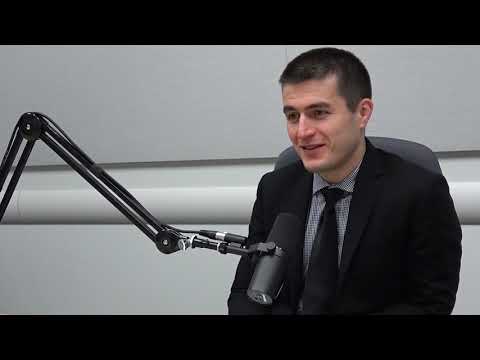
Lex Fridman interviews Jeff Hawkins, founder of Numenta and author of On Intelligence, about the Thousand Brains Theory and reverse-engineering the neocortex. They also cover Hierarchical Temporal Memory and brain-inspired AI architectures.
HN people send others here to hear Hawkins explain his theory in his own words, including reference frames and the old versus new brain.
 1:02:06
Building Brains to Understand the World's Data
Google TechTalks
84K views • 13 years ago
 2:31:30
Bryan Johnson: Kernel Brain-Computer Interfaces | Lex Fridman Podcast #186
Lex Fridman
492K views • 5 years ago
 2:39:15
Jim Keller: The Future of Computing, AI, Life, and Consciousness | Lex Fridman Podcast #162
Lex Fridman
1.3M views • 5 years ago
 3:00:21
Michael Levin: Biology, Life, Aliens, Evolution, Embryogenesis & Xenobots | Lex Fridman Podcast #325
Lex Fridman
5.8M views • 4 years ago
 3:00:18
Joscha Bach: Artificial Consciousness and the Nature of Reality | Lex Fridman Podcast #101
Lex Fridman
2.2M views • 6 years ago
 2:50:45
Edward Gibson: Human Language, Psycholinguistics, Syntax, Grammar & LLMs | Lex Fridman Podcast #426
Lex Fridman
471K views • 2 years ago
 2:52:56
Douglas Lenat: Cyc and the Quest to Solve Common Sense Reasoning in AI | Lex Fridman Podcast #221
Lex Fridman
139K views • 5 years ago
 23:00
Consciousness is Not a Computation (Roger Penrose) | AI Podcast Clips
Lex Fridman
2.3M views • 6 years ago
 2:23:57
Sam Altman: OpenAI CEO on GPT-4, ChatGPT, and the Future of AI | Lex Fridman Podcast #367
Lex Fridman
6.8M views • 3 years ago
 2:48:13
Max Tegmark: The Case for Halting AI Development | Lex Fridman Podcast #371
Lex Fridman
1.7M views • 3 years ago
 1:39:56
Marcus Hutter: Universal Artificial Intelligence, AIXI, and AGI | Lex Fridman Podcast #75
Lex Fridman
126K views • 6 years ago
 3:38:43
Stephen Wolfram: Complexity and the Fabric of Reality | Lex Fridman Podcast #234
Lex Fridman
4.8M views • 5 years ago
 1:34:44
Jim Keller: Moore's Law, Microprocessors, and First Principles | Lex Fridman Podcast #70
Lex Fridman
742K views • 6 years ago
 1:27:57
Roger Penrose: Physics of Consciousness and the Infinite Universe | Lex Fridman Podcast #85
Lex Fridman
2.7M views • 6 years ago
 3:08:46
George Hotz: Hacking the Simulation & Learning to Drive with Neural Nets | Lex Fridman Podcast #132
Lex Fridman
1.6M views • 6 years ago
 3:17:51
Eliezer Yudkowsky: Dangers of AI and the End of Human Civilization | Lex Fridman Podcast #368
Lex Fridman
2.2M views • 3 years ago
 4:23:39
Stephen Wolfram: Fundamental Theory of Physics, Life, and the Universe | Lex Fridman Podcast #124
Lex Fridman
501K views • 6 years ago
 3:05:25
Travis Oliphant: NumPy, SciPy, Anaconda, Python & Scientific Programming | Lex Fridman Podcast #224
Lex Fridman
812K views • 5 years ago
 1:55:10
Sam Altman: OpenAI, GPT-5, Sora, Board Saga, Elon Musk, Ilya, Power & AGI | Lex Fridman Podcast #419
Lex Fridman
2.5M views • 2 years ago
 4:05:51
Lee Cronin: Origin of Life, Aliens, Complexity, and Consciousness | Lex Fridman Podcast #269
Lex Fridman
1.1M views • 4 years ago
4 comments from Hacker News
I wouldn't say that the Triune brain theory is a 'myth'. It's just not accurate, but it's not a complete lie either. There certainly are different parts of the brain that have evolved at different times, and have different functions. The older parts have evolved to specific functions, while neocortex, which is found in mammals, has a uniform structure and is capable of learning and adapting to different tasks. 75% of human brain is neocortex. Jeff Hawkings explains the difference between the 'old parts' and 'new parts' pretty well in this interview: ▶ this video
Highly recommend the Lex Fridman interview to listen to Jeff explain live: ▶ this video While Numenta doesn't have the amazing results of DeepMind and friends, I think they are doing really great stuff in the space of biologically plausible intelligence.
Has anyone (beyond maybe self-driving software) tried using object tagging as a way to start introducing physics into a scene? E.g. human and bicycle have same motion vector, increases likelihood that human is riding bicycle. Bicycle and human have size and weight ranges that could be used to plot trajectory. Bicycles riding in a straight line and trees both provide some cues as to the gravity vector in the scene. Etc. etc. Seems like the camera motion is probably already solved with optical flow/photogrammetry stuff, but you might be able to use that to help scale the scene and start filtering your tagging based on geometric likelihood. The idea of hierarchical reference frames (outlined a bit by Jeff Hawkins here ▶ this video ) seems pretty compelling to me for contextualizing scenes to gain comprehension. Particularly if you build a graph from those reference frames and situate models tuned to the type of object at the root of each each frame (vertex). You could use that to help each model learn, too. So if a bike model projects a 'riding' edge towards the 'person' model, there wouldn't likely be much learning. e.g. [Person]-(rides)->[Bike] would have likely been encountered already. However if the [Bike] projects the (rides) edge towards the [Capuchin] sitting in the seat, the [Capuchin] model might learn that capuchins can (ride) and furthermore they can (ride) a [Bike].
There's a youtube generated one if you go to ▶ this video and click the three dots under the vid. I don't know if there's a way to get those things into an easy to read format? Clicking select all and pasting to the text editor sort of works but could be better.