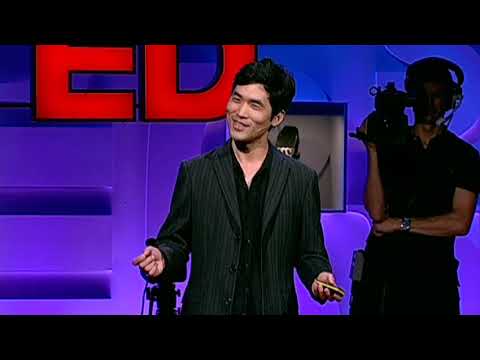
You aren't at the mercy of your emotions -- your brain creates them | Lisa Feldman Barrett
TED1 HN recommender · recommended in 1 month, 2018-2019
3.2M views · 8 years ago · talk · evergreen
Psychology professor Lisa Feldman Barrett presents her research on what emotions are, arguing that the brain constructs them rather than reading them off faces. She says this means we have more control over our emotions than we think.
HN commenters mention it as an accessible introduction to the theory of constructed emotions.
 1:28:44
14. Limbic System
Stanford
2M views • 15 years ago
 21:20
The surprising science of happiness | Dan Gilbert
TED
4.7M views • 14 years ago
 1:25:27
Neuroscience of Personality | Dario Nardi | Talks at Google
Talks at Google
163K views • 15 years ago
 1:22:47
Dr. Robert Sapolsky's lecture about Biological Underpinnings of Religiosity
Aprendiendo Juntos
874K views • 14 years ago
 1:01:40
Joscha: Computational Meta-Psychology
media.ccc.de
85K views • 10 years ago
 9:02
Why hierarchy creates a destructive force within the human psyche (by dr. Robert Sapolsky)
TheSymposionNights
322K views • 14 years ago
 52:07
What Bodies Think About: Bioelectric Computation Outside the Nervous System - NeurIPS 2018
The Artificial Intelligence Channel
103K views • 7 years ago
 57:15
1. Introduction to Human Behavioral Biology
Stanford
20.5M views • 15 years ago
 1:02:31
How Your Brain Works & Changes
Andrew Huberman
2.1M views • 5 years ago
 21:03
Your Body Language May Shape Who You Are | Amy Cuddy | TED
TED
29.4M views • 14 years ago
 1:13:13
Robert Sapolsky: The Biology of Humans at Our Best and Worst
Stanford Iranian Studies Program
1.5M views • 8 years ago
 22:35
Sebastian Seung: I am my connectome
TED
267K views • 16 years ago
 17:01
Your Brain Hallucinates Your Conscious Reality | Anil Seth | TED
TED
12M views • 9 years ago
 52:29
Stanford's Sapolsky On Depression in U.S. (Full Lecture)
Stanford
6.4M views • 17 years ago
 1:17:16
Matter to Mind:Bioelectricity, Body Intelligence, Future of Regenerative Medicine- Dr. Michael Levin
Harvard Extension Student Psychological Club
23K views • 3 years ago
 53:33
Your Brain: Who's in Control? | Full Documentary | NOVA | PBS
NOVA PBS Official
11.6M views • 3 years ago
 53:24
Breakthrough with Healing Chronic Pain | Howard Schubiner | Talks at Google
Talks at Google
500K views • 8 years ago
 2:53
Brené Brown on Empathy
Royal Society of Arts
24.1M views • 12 years ago
 1:16:22
If Brains are Computers, Who Designs the Software? - with Daniel Dennett
The Royal Institution
873K views • 9 years ago
 11:24
Q&A with a person who does not have an internal monologue
PA Struggles
9.7M views • 6 years ago
3 comments from Hacker News
Great to see these views are becoming more mainstream. The talk does not mention it, but it's likely convergent with neuroscience ideas of: - Bayesian Brain - Theory of constructed emotions ( ▶ this video ) - Free energy principle and Active Inference ( link ) A good overview is also here: link The issue to be reconciled is though that some of those ideas are talking about "keeping uncertainty in the sweet spot, not too high or low" while others about "minimising uncertainty/prediction error". I think the difference will turn out to be only in relation to how far of a future/prediction we are talking about. So optimising for long-term vs the short-term.
I am surprised that the article does not mention the word epigenetics. - Epigenetics and the influence of our genes | Courtney Griffins link But there are also other, probably more important, ways to "inherit": - Placebo Effect VS No-Cebo Effect link - Dr. Bruce Lipton Explains HOW WE ARE PROGRAMMED AT BIRTH (an eye opening video) link - Biology of Belief - by Bruce Lipton (full documentary) link - Depression and anxiety: Have we gotten it wrong? | UpFront link - Causes of Psychosis link - 2011 - Liz Mullinar - Treating the core problem of childhood trauma. link About brain circuits regarding emotions: - You aren't at the mercy of your emotions -- your brain creates them | Lisa Feldman Barrett ▶ this video - Cultivating Wisdom: The Power Of Mood | Lisa Feldman Barrett link
I agree because unfortunately scientists do not know very much yet. I like the talks by Lisa Feldman Barrett although it might seem to contradict what I wrote. link link link link ▶ this video