Apollo Launch Abort System Test
oisiaa1 HN recommender · recommended in 1 month, 2015-2023
267K views · 16 years ago · demo · evergreen
Footage of an unmanned Apollo boilerplate capsule launched on a Little Joe II booster to test the launch escape system. The booster went out of control and broke up, but the escape system worked and the capsule was recovered undamaged.
HN cites it as the classic example of a launch abort test that proved the design even though the rocket failed.
 2:08
SpaceX Pad Abort Test
SpaceX
12.7M views • 11 years ago
 1:11
Soyuz Launch Escape Tower System
Bruno Leal
235K views • 18 years ago
 24:43
Space Shuttle RTLS Abort Challenge - Without The Manual
Scott Manley
478K views • 9 years ago
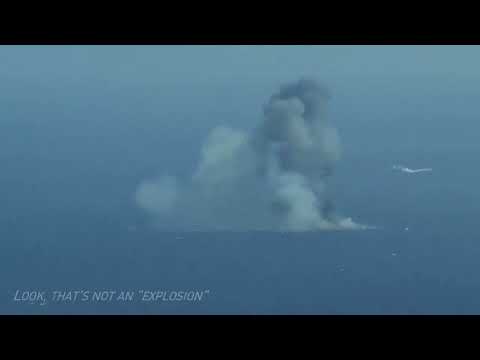 2:09
How Not to Land an Orbital Rocket Booster
SpaceX
31.2M views • 9 years ago
 0:17
Mercury-Redstone 1 Launch failure (MR-1)
vogonford
305K views • 15 years ago
 1:53
Falcon Heavy & Starman
SpaceX
9.7M views • 8 years ago
 2:31
DC-X Flight 8
Spaceman Sam Coniglio
141K views • 18 years ago
 1:35
XRS-2200 Linear Aerospike Engine Test fire at NASA Stennis Space Center (SSC)
Barrel Roll
1.5M views • 14 years ago
 3:58
SpaceX Reusable Launch System
Clark Lindsey
472K views • 15 years ago
 3:28
Space Suit Testing
NaOHKDBO
786K views • 16 years ago
 34:19
Falcon Heavy Test Flight
SpaceX
34.3M views • 8 years ago
 1:37
Grasshopper 744m Test | Single Camera (Hexacopter)
SpaceX
6.6M views • 13 years ago
 1:59:32
Starship High Altitude Test - SN8
SpaceX
9.8M views • 5 years ago
 8:43
Apollo 11 Saturn V Launch Camera E-8
Mark Gray
10.5M views • 13 years ago
 1:36
Grasshopper 325m Test | Single Camera (Hexacopter)
SpaceX
3.8M views • 13 years ago
 30:36
Orbital Rings
Isaac Arthur
421K views • 9 years ago
 5:21
EKV/KV/KW/KKV/LEAP (Exoatmospheric Kill Vehicles) Hover Test - Compilation Video (SM-3, GBI, etc.)
CR0wm p
3M views • 6 years ago
 3:58
Reusable Falcon 9 Launcher from Space-X!
Devon
124K views • 15 years ago
 5:04
Why Can't we Remake the Rocketdyne F1 Engine?
Curious Droid
4.2M views • 8 years ago
 7:05
I Landed A Rocket Like SpaceX - Scout F
BPS.space
10.1M views • 4 years ago
8 comments from Hacker News
> If a test flight doesn't achieve the testing objectives, that's a failure. Incorrect. Examples: ▶ this video is a Saturn launch abort test that failed. It failed in a way that they were able to determine that intended test would have worked, though. link also failed to achieve its objectives; "Despite the engine failures, the flight provided NASA with enough confidence to use the Saturn V for crewed launches; a potential third uncrewed flight was cancelled." All that aside, SpaceX was quite clear that the latest Starship test had multiple objectives, and that "successfully splashdown near Hawaii" was deemed quite unlikely. It successfully demonstrated a number of items, including fairly critically the launchpad changes.
> how come people with sliding rulers and navigation computers 'knitted' by local grannies have lost 0 Saturn rockets. The fuck? NASA lost people in production hardware multiple times. link link "The damaged third-stage engine failed to restart for trans-lunar injection... Despite the engine failures, the flight provided NASA with enough confidence to use the Saturn V for crewed launches..." link link link Here's a fun one: They tested the Saturn crew escape system. The booster was supposed to blow up, and demonstrate the crew would survive... but the test went wrong , and it blew up early , when it shouldn't have. The crew abort worked, so test failed successfully . ▶ this video
It might seem a little sketchy but it worked well. When they flew it on a small rocket to test it, the rocket accidentally broke apart but the escape tower system then performed perfectly: ▶ this video
Red is kerosene, blue is liquid oxygen, orange is liquid hydrogen, the fuel that looks like fire is solid fuel (think compressed gunpowder). Left to right: Saturn V, Space Shuttle, Falcon 9 Heavy, SLS (still under construction). 2:22, you hear Neil Armstrong say "inboard cutout," that is the center engine shutting off to limit the thrust, and therefore G-forces the astronauts felt. As fuel ran out, the rocket stack would weigh less and so the rocket would push harder. By the time the main engine cutoff, the Saturn V was pulling 4 and a half Gs. Also, just noticed the SLS keeps its launch escape tower (the big needle on the top of the rocket - see this: ▶ this video ) - this wouldn't happen in a real flight. The flight plan calls for ditching than when it's not longer useful - you can hear the Apollo 11 call saying, "tower jettisoned."
Satellites usually need to point their solar panels and high-gain antennas properly in order to stay powered to be able to communicate with ground stations, although this particular satellite seems to have been unable to use its high-gain antenna anyway and relied on an omnidirectional one anyway. Another issue would be thermal management as it is possible that not all parts of the satellite were designed to deal with direct sunlight. I would be more worried about all the sensors, though. The days of secondary electron conduction tubes [1] might be long over, but many instruments still prefer not to be pointed directly at the sun. Speaking of those other sensors, spinning the satellite would mean pointing all of them away from where they are supposed to be looking – not necessarily a net win. Finally, trying to spin the satellite at anything approaching 360 RPM might end up dramatically shortening the mission [2]. [1] link [2] ▶ this video EDIT: In case you do not feel like watching the video, [2] shows a Little Joe II rocket ( link ) breaking up due to an excessive roll rate (around 56 RPM) ( link ).
The tower style launch escape system works in flight as well. Here's a video explaining how it works, with footage of it being tested during the Apollo era. ▶ this video
Spinning's entirely possible to survive. The Saturn missions tested it (and it was a really good test - something went wrong and the rocket actually went out of control) - ▶ this video A tumble should be fairly trivial to detect and fire only when the capsule's in its upwards pointing portion of the tumble. Plus, you'd only be firing into the ground if you're pretty early in the launch - the Dragon launch abort only sent it up a kilometer or so. Finally , the launch abort is pretty sensitive - deviating not far off the right direction should trigger it, before a full-on tumble.
Apollo's launch escape system was tested using a rocket called Little Joe II, which started spiraling unexpectedly due to a gyro problem causing the rocket to fail. Fortunately the escape system worked as intended. [1] ▶ this video