1. Introduction for 15.S12 Blockchain and Money, Fall 2018
MIT OpenCourseWare2 HN recommenders · recommended in 2 months, 2021-2022
7.2M views · 6 years ago · lecture · evergreen
The opening lecture of MIT's Blockchain and Money course taught by Gary Gensler, covering the course plan, the history of failed digital currencies, cryptography and what a blockchain is.
Recommended as a solid, level-headed academic introduction to blockchain, often noted because Gensler later led the SEC.
 1:06:36
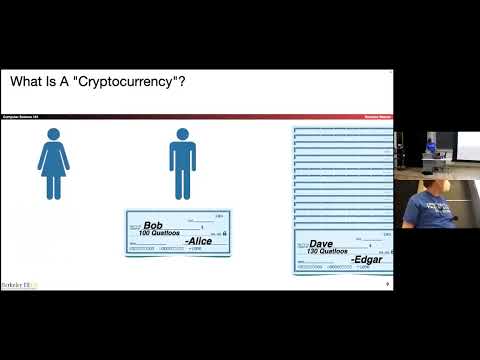
Computer Security 161 Cryptocurrency Lecture
Nicholas C Weaver
128K views • 4 years ago
 17:50
Blockchain 101 - A Visual Demo
Anders Brownworth
3.3M views • 10 years ago
 1:07:13
Ses 1: Introduction and Course Overview
MIT OpenCourseWare
2.8M views • 13 years ago
 30:20
Blockchain vs. Bullshit: Thoughts on the Future of Money [Classic Bitcoin & Open Blockchain Talk]
aantonop
383K views • 9 years ago
 28:19
Bitcoin 2012 London: Mike Hearn
Independent POV
79K views • 14 years ago
 1:44
What is Bitcoin? (v1)
WeUseCoins
10.3M views • 15 years ago
 53:30
Lec 1 | MIT 6.00 Introduction to Computer Science and Programming, Fall 2008
MIT OpenCourseWare
6.6M views • 17 years ago
 25:16
But how does bitcoin actually work?
3Blue1Brown
18.1M views • 9 years ago
 1:19:35
Lecture 1: Introduction
MIT 6.824: Distributed Systems
921K views • 6 years ago
 1:30:50
Lecture 7: Introduction to Galois Fields for the AES by Christof Paar
Introduction to Cryptography by Christof Paar
278K views • 12 years ago
 4:30
Matthew Driver “Trust Is A Critical Component” | Perspectives | Channel NewsAsia
CNA Insider
27K views • 11 years ago
 1:12:56
Lecture 1A | MIT 6.001 Structure and Interpretation, 1986
MIT OpenCourseWare
995K views • 17 years ago
 17:12
Cryptocurrency Explained: Money as a System-of-Control
aantonop
144K views • 9 years ago
 1:12:56
Lecture 1A: Overview and Introduction to Lisp
MIT OpenCourseWare
420K views • 7 years ago
 2:18:23
Line Goes Up – The Problem With NFTs
Folding Ideas
19M views • 4 years ago
 51:47
Lecture 19: Dynamic Programming I: Fibonacci, Shortest Paths
MIT OpenCourseWare
2.9M views • 13 years ago
 32:35
CNBC TechCheck+ chats with Tether's CTO and general counsel — 7/21/21
CNBC Television
42K views • 5 years ago
 44:09
Lec 1 | MIT 6.042J Mathematics for Computer Science, Fall 2010
MIT OpenCourseWare
2.8M views • 13 years ago
 27:08
Peter Rizun, Andrew Stone -- 1 GB Block Tests -- Scaling Bitcoin Stanford.
OnChain Scaling
12K views • 8 years ago
 22:36
Computer Scientist Explains One Concept in 5 Levels of Difficulty | WIRED
WIRED
7.2M views • 4 years ago
4 comments from Hacker News
> Regulators have been slow and ineffective when it comes to crypto, which has lent itself to the crypto v SEC narrative, but all the adults in the room known there is a need for some regulation It's a "damned if you do, damned if you don't" situation. Mainly because of the outsized lobbying power of the wealthy folks backing VC's backing crypto. Clamp down on crypto with regulations and many, many wealthy political contributors are going to be pissed off by stifling growth. Don't clamp down and you get the situation we're in now where everyone is losing their shirts. What about the middle ground? I think we can only now talk about it because enough wealthy people also lost big chunks of their investment in these last few months. BTW, despite whatever implied connections to FTX Gary Gensler has, his series of talks at MIT on blockchain[0] technologies leads me to believe that there are few people better equipped to navigate this from a political perspective. [0] ▶ this video
Yes and before becoming Chair at the SEC, Professor Gary Gensler taught a course at MIT called "Blockchain And Money."[1][2] Given that both SBF's parents are Professors at Stanford, this couple were very much ivory tower children. It would really be something if Gary Gensler was part of the SEC probe looking into the FTX collapse.[3] It's practically a Hollywood screenplay that almost writes itself. 1. link 2. ▶ this video 3. link
Because there's no benefit over a central system. If you trust the central bank (which a vast majority of participants in the financial system do), you don't need distributed anything. Blockchains are for trustless systems. The US financial and capital systems are built on legal and regulatory trust. Your smart contract will never override a judge or a regulatory body. The federal government need not deploy a crypto token in order to kill Tether. They will simply regulate it out of existence. It is clear this is the path we're on from Yellen's statements and the nomination of Gary Gensler to the SEC (who previously taught about cryptocurrency systems at MIT) [1]. Globally, China is cracking down hard, and Europe seems to be preparing to do so. None of this should be unexpected to an educated scholar of history and nation state mechanics. > It is important to note that a CBDC might not be the only way to address some of these problems; for example, in the US we might improve financial inclusion by requiring commercial banks to provide free, no-minimum accounts to users [2] [3], or by limiting or eliminating fees, as these were some of the reasons listed when the US unbanked were asked why they don’t have bank accounts. So, instant payments are coming in the next 18 months [3] (it is actively in testing currently with a handful of participants), and free accounts for everyone is a stroke of legislative pen. What's blockchain solving? [1] ▶ this video (MIT 15.S12 Blockchain and Money
Well at least take a look around and see if it's interesting to you. I've been enjoying a playlist of blockchain lectures by Gary Gensler, current chair of the SEC. Lecture 6 is smart contracts with Lawrence Lessig guest speaking. [0]/[1] I've been avoiding smart contracts since hearing about hacks like these (similar to the Multisig Parity Bug years ago, neglected to initialize, let someone else become the owner and kill the contract) - but I've been educating myself the past week and find that there are really cool things that can be done, maybe cooler a year or 15 in the future when ETH finally gets its fees under control. As a programmer, you'd probably be interested to see the ethereum virtual machine's "assembly" language [2], I'm pretty impressed with how little code underlies all these ERC20 tokens. [0] link [1] ▶ this video [2] link