World's first manned flight with an electric multicopter
forschungsbueroCited 3× on HN, 2016-2022
27.4M views · 15 years ago · demo · evergreen
Footage of the first manned flight of an electric multicopter, flown by Volocopter (then e-volo) in October 2011. The 90-second flight was a Guinness World Record.
HN points to it as proof that manned multicopters and eVTOL craft existed well before the current hype.
 2:24
World's First Human-Powered Ornithopter
OrnithopterProject
1.1M views • 16 years ago
 5:06
Ion drive: The first flight
nature video
2.4M views • 7 years ago
 13:43
HomeMade Electric Airplane
PeterSripol
6M views • 8 years ago
 17:43
Electroflight | Fully Charged
Everything Electric CARS
1.2M views • 10 years ago
 1:43
A Swarm of Nano Quadrotors
TheDmel
8.5M views • 14 years ago
 0:15
Grasshopper Takes Its First Hop / 9-21-12
SpaceX
220K views • 14 years ago
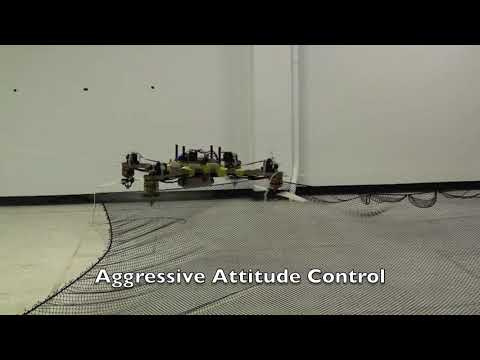 2:54
MIT ACL - Variable Pitch Quadrotor
AerospaceControlsLab
133K views • 15 years ago
 8:30
Aircraft Development Update
Lilium
151K views • 4 years ago
 2:03
GE Walking Truck - Cybernetic Anthropomorphous Machine (CAM) 1969.
Reuben Hoggett
248K views • 16 years ago
 3:05
New World Record RC Airplane Speed 548mph
sll914
1.1M views • 5 years ago
 10:24
Are Electric Planes Possible?
Real Engineering
2.3M views • 8 years ago
 1:06
Tesla Bot Update
Tesla
5.2M views • 3 years ago
 6:18
The Voder: 1939, the worlds first electronic voice synthesizer
Brian Roemmele
332K views • 9 years ago
 1:44
Optimus - Gen 2 | Tesla
Tesla
10.8M views • 2 years ago
 0:56
ATTOL: Autonomous Taxiing, Take-Off and Landing test flight
Airbus
394K views • 6 years ago
 2:47
Ernst Dickmanns’ VaMoRs Mercedes Van, 1986-2003
Computer History Museum
38K views • 10 years ago
 3:02
New York City
Team BlackSheep
2.3M views • 15 years ago
 16:09
The astounding athletic power of quadcopters | Raffaello D'Andrea
TED
10.8M views • 13 years ago
 13:14
How to Make/Build a Lifter or Ionocraft
RimstarOrg
851K views • 14 years ago
 10:29
Vertical Landing Rockets Before SpaceX
Curious Droid
785K views • 8 years ago
3 comments from Hacker News
eHang was not the first, but they do seem to have good marketing. German company Volocopter flew a manned demonstration rig in 2011 (the famous pilates ball [1]), and had the first manned flight of the Volocopter multicopter (certified, 18 rotors) in February 2016, with the CEO himself flying [2]. I don't know when the eHang 184 flew first (a video on youtube says Feb 2018 [3]). Personally, I find the design (with 8 rotors in a quadratic arrangement at knee-height, perfect for decapitating pedestrians) atrocious. (The Volocopter blades are above the cabin, as in a helicopter.) And where do you get the 30 minutes endurance for the eHang from? When I divide the range by the cruise speed from Wikipedia, I get about 8 minutes endurance. [1] ▶ this video [2] link [3] link
>50+ years and $100m in R&D tell this to fusion guys :) >no viable prototypes i find this for example as looking very viable back at the time link and actually if you add more props (possible with electric today not so much with gas engines back then) and much-much better control electronics you'll get the modern multi-copters : volocopter prototype ▶ this video and pre-production link >Maybe the approach was doomed from the start, but that didn't stop Moller from promising that you would be commuting to work by air in 10 years for decade after decade. only the last one, m400 was doomed as i mentioned above (and it wasn't actually that clear from the start, m400 was actually pretty logical and reasonable move forward - only after first tests one could see it clear). Put yourself at his place at any point in the history of his flying car development and those 10 years would look like a reasonable estimate. I personally actually say today that in 5 years we'll have the Volocopter likes flying around.
Manned multicopters have already happened. [1] MIT has also demonstrated a variable pitch quadcopter. [2] If they can use plasma laminar detachment and reattachment to somehow simulate a variable pitch propeller, while still getting some weight savings over a design with multiple swashplates, then yes I think it should help the quadcopter design scale up to larger propellers. That's a big if though, since to simulate a negative angle of attack I'm guessing your propeller design would have to be pretty inefficient with all plasma turned off. I'm not entirely sure why you want this though, since the single large rotor is more efficient. There was a novel design a few years ago with one large rotor for lift and three smaller ones to counter torque and provide control. [3] [1] ▶ this video [2] link [3] link