Why Japan had NO Chance in WW2
Military History Visualized3 HN recommenders · recommended in 2 months, 2020-2023
835K views · 7 years ago · explainer · evergreen
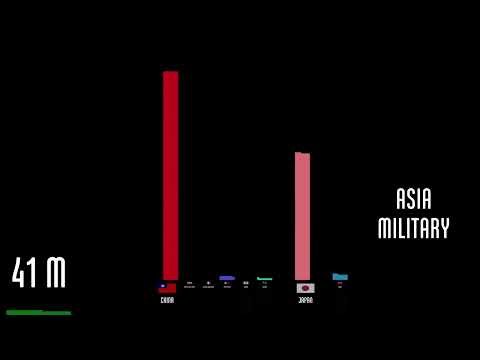
Military History Visualized charts ship production by the United States and Japan from December 1941 to September 1945. The growing numbers show why Japan, despite a stronger starting navy, could not win a long war.
Cited as one of the best visualizations of how overwhelmingly dominant US industrial output was in the Pacific war.
 1:12:19
Kursk: The Epic Armored Engagement (2013)
The National WWII Museum
535K views • 12 years ago
 41:46
The Battle of Midway 1942: Told from the Japanese Perspective (1/3)
Montemayor
19.7M views • 7 years ago
 19:37
Why is Japan So Weak in Software?
Asianometry
968K views • 2 years ago
 58:49
Why our generals were more successful in World War II than in Korea, Vietnam or Iraq/Afghanistan
UC Berkeley Events
2.2M views • 15 years ago
 17:49
How Japan Learned Semiconductors
Asianometry
228K views • 4 years ago
 10:00
Nuclear Detonation Timeline "1945-1998"
Don't Blink
1.2M views • 16 years ago
 18:31
The Fallen of World War II
Neil Halloran
15.1M views • 10 years ago
 18:08
What Eating the Rich Did For Japan
Asianometry
2.8M views • 5 years ago
 2:20:19
Dropping the Bomb: Hiroshima & Nagasaki
Shaun
3.6M views • 5 years ago
 22:00
Desert Storm - The Air War, Day 1 - Animated
The Operations Room
14M views • 6 years ago
 42:26
Forgotten wrecks are a time bomb | DW Documentary
DW Documentary
1.9M views • 6 years ago
 40:43
Birth of The Transistor: A video history of Japan's electronic industry. (Part 1)
RC286
1.2M views • 12 years ago
 2:24:33
Sarah C. M. Paine — Why dictators keep making the same fatal mistake
Dwarkesh Patel
5.4M views • 3 years ago
 19:10
China's Invasion Barges, Leading Indicator Of Plans For Taiwan
H I Sutton
176K views • 1 year ago
 12:48
America's Iron Giants - The World's Most Powerful Metalworkers
Machine Thinking
2.9M views • 8 years ago
 4:06
That scene from War Games
Greg Granito
2.3M views • 19 years ago
 1:12:52
SHIPBREAKERS | Would you risk your life dismantling the world’s largest ships just to survive? | NFB
NFB
5.8M views • 9 years ago
 3:17
Japan, Tsunami. Coast Guard ship rides over the tsunami waves. 日本 - 津波
aro004
4.2M views • 15 years ago
 3:34
Gulf of Tonkin: McNamara admits It didn't happen.
compelled2283
169K views • 18 years ago
 4:40
This 1970s tank simulator drives through a tiny world
Tom Scott
12M views • 4 years ago
6 comments from Hacker News
This vastly, vastly oversells the stakes of Midway. Japan lost before the war ever began[1]. By the end of the war the US produced 17 fleet carriers, 9 light carriers, and 76 escort carriers. US strength at Midway was 3 fleet carriers. By the end of 1945 the US would still have built several new Navies as well as the atomic bomb. Japan was struggling to finish China on their side of the Pacific, their armed forces would be totally incapable of securing the sea lanes to the US let alone land such a massive invasion force as to sweep across the whole continent. The Japanese war plan was strategically inept from the outset - hit the US really hard, then sue for peace from a position of strength. But even if they got the carriers at Pearl Harbor, it was only a matter of time before US industrial output buried them and they failed to account for an enemy committed to total war. The turning point happened at Midway but the specific time and place don't really matter - it was inevitable. For Japan to win the war they would have had to walk an improbable golden path from victory to decisive victory while suffering no irreplaceable losses. By the way, Germany displayed similar strategic ineptitude. Even if Germany won the Battle of Britain, they would not have been able to supply any invasion force they managed to land on Britain. They had no surface fleet, and they were staring down the largest navy in the world! All the Royal Navy needs to do is contest the Channel for a critical we
I had no idea how asymmetrical naval production was in the Pacific theater of WWII until I watched this: ▶ this video With these numbers the relative merits of the actual warfighters had little effect on the outcome. The war with Japan was won in U.S. shipyards.
Probably Military History Visualized's " Why Japan had NO Chance in WW2 ": ▶ this video . Go to the 12:30 mark for the the near-final ship totals.
Midway had it's fortunate moments, but IJN didn't have much of a chance from the get go due to the absurd USN ship production: ▶ this video
▶ this video One of the best visualizations I've come across of just how dominant the US industrial base was in the 1940s under full mobilization.
My understanding is that while the US losing her carriers at Midway would have allowed Japan free reign in the South Pacific for a few months, that was already the case for anywhere that all 6 fleet carriers showed up. Nothing the US had - combined, worldwide - could match those 6. Killing the US carriers at Midway was just to turn it from a 6v3 to a 6v0 - instead it ended up 2v2, but so goes war. Japan invading Hawaii would have caused a famine if they succeeded - it'd be even harder to keep supplied than Midway, but with dozens of times the population. In my opinion Midway marked the turning point of the war in the Pacific, but that turning point was inevitable as long as the US could credibly say "we're going to commission 6 fleet carriers with a full suite of aircraft over a 12 month period". There's a great video here [0] that illustrates the differences in production over the course of the war. For instance, the US commissioned 17 fleet carriers and 9 light carriers from 1941 on - Japan commissioned 7 and 1, respectively. 0: ▶ this video