Dropping Things Into The Sun is Hard....
Scott Manley1 HN recommender · recommended in 1 month, 2016-2019
519K views · 10 years ago · demo · evergreen
Scott Manley uses a realistically scaled Kerbal Space Program setup to show why dropping something into the Sun is far harder than it sounds. It demonstrates the need to cancel orbital velocity.
Cited whenever someone suggests launching nuclear waste or other junk into the Sun, as a clear demonstration of the orbital mechanics involved.
 3:13
Hitting the Sun is HARD
minutephysics
3M views • 10 years ago
 11:08
Can Spinlaunch Throw Rockets Into Space?
Scott Manley
3.2M views • 5 years ago
 28:11
Why Everyone Is Talking About Data Centers In Space
Scott Manley
408K views • 10 months ago
 16:37
Does It Make Sense To Put Data Centers In Space? Can They Really Cost Less To Operate?
Scott Manley
502K views • 2 years ago
 24:30
Is It Really Impossible To Cool A Datacenter In Space?
Scott Manley
1.1M views • 7 months ago
 27:20
How GPS Works, And How It Got Better Than The Designers Ever Imagined
Scott Manley
943K views • 3 years ago
 16:19
KSP Doesn't Teach: Rocket Engine Plumbing
Scott Manley
1.1M views • 10 years ago
 24:43
Space Shuttle RTLS Abort Challenge - Without The Manual
Scott Manley
478K views • 9 years ago
 15:27
Can The Human Body Handle Rotating Artificial Gravity?
Scott Manley
3M views • 5 years ago
 28:46
Space Shades: Humanity's Last Hope | Answers With Joe
Joe Scott
1.1M views • 6 years ago
 7:35
End of Space – Creating a Prison for Humanity
Kurzgesagt – In a Nutshell
14.6M views • 7 years ago
 13:13
The Nuclear Salt Water Rocket - Possibly the Craziest Rocket Engine Ever Imagined.
Scott Manley
970K views • 5 years ago
 5:30
The Moon's Orbit is WEIRD
minutephysics
1.9M views • 2 years ago
 2:09
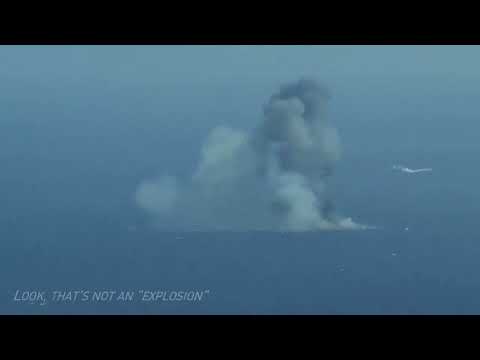
How Not to Land an Orbital Rocket Booster
SpaceX
31.2M views • 9 years ago
 18:07
Spinlaunch: BUSTED!
Thunderf00t
851K views • 4 years ago
 1:53
Falcon Heavy & Starman
SpaceX
9.7M views • 8 years ago
 19:58
The Genius of 3D Printed Rockets
Veritasium
13.2M views • 5 years ago
 30:36
Orbital Rings
Isaac Arthur
421K views • 9 years ago
 17:49
How to Land the Space Shuttle... from Space
Bret
12.6M views • 10 years ago
 13:03
5 REAL Possibilities for Interstellar Travel
PBS Space Time
7.1M views • 11 years ago
4 comments from Hacker News
Also, what happens to the stuff we toss into space? People still seem to make the same mistake our ancestors did regarding tossing stuff into the ocean. To be more precise: achieving a velocity high enough to e.g. detonate on the surface of the sun (in particular carrying tons of nuclear waste) won't be cheap for a long time. [1] Stuff we "toss out there" would probably just keep floating in an uncontrolled (in the long run) earth bound orbit and might come back at some point. [1] ▶ this video
> play Kerbal Space Program. Or watch Scott Manley demonstrate the unreasonable orbital dynamics you just described. ▶ this video
My idea is just figure out a way to nudge earth towards the sun and inertia will do the rest ARRGH! This is about as big a misunderstanding as not knowing the difference between sending a rocket to space vs. getting to orbit: ▶ this video tl;dr -- the Earth is whizzing around the Sun at a really high speed. You'd have to cancel most of that velocity to get a spacecraft to get anywhere near the Sun. It would actually be less energy to send the Earth to Jupiter than to drop it into the Sun. You've repeatedly re-read this article, but never delved into basic orbital mechanics all that time!? I'm going to have to remember this in my chronicles of "Stuff I've actually seen posted in comments on HN."
> You could potentially dump some energy with a gravitational assist off of Venus (transfer some of our momentum into speeding up its orbit while slowing ours down) I've heard that a hard turn around Jupiter is even better. I remember Scott Manley dropping a probe into Kerbol via Jool gravity assist in one video[0]. Actually, now I want to make a simulation with Earth doing Jupiter flybys. What's good for that nowadays? Universe Sandbox? [0] - ▶ this video