agent-based model
 4:34
This giant model stopped a terrible plan
10M views • 9 years ago
Tom Scott
Tom Scott tells how John Reber's plan to dam San Francisco Bay was disproved by the Army Corps of Engineers' giant hydraulic Bay Model in Sausalito. The model showed the plan would have been dangerously wrong.
 8:25
Large Language Models from scratch
375K views • 4 years ago
Graphics in 5 Minutes
A short cartoon explaining how language models like ChatGPT work, from autocomplete and conditional probabilities to neural networks, gradient descent and backpropagation. It shows how networks act as universal function approximators.
 13:23
Simulating Green Beard Altruism
4.5M views • 5 years ago
Primer
Primer simulates green beard altruism, where individuals recognize and help others carrying a shared marker, and shows how imposters affect its evolution. It is an animated evolution simulation based on published papers.
 12:08
Tesla Model 3's motor - The Brilliant Engineering behind it
8M views • 5 years ago
Sabin Civil Engineering
An engineering explainer on why Tesla abandoned the induction motor for the Model 3 and used an IPM-SynRM design. It covers the reluctance torque and permanent magnet principles behind the choice.
 16:39
Feeding Bill Gates a Fake Burger (to save the world)
83.4M views • 6 years ago
Mark Rober
Mark Rober makes a plant-based burger for Bill Gates and explains why meat production strains the environment. Gates also appears and discusses his worry about steel and cement.
 17:52
Training AI Without Writing A Reward Function, with Reward Modelling
259K views • 6 years ago
Robert Miles AI Safety
Robert Miles explains reward modelling, in which an AI learns what humans want from their preference comparisons instead of a hand-written reward function. He walks through the 2017 paper on deep reinforcement learning from human preferences.
 16:43
The Equation That Explains (Nearly) Everything!
1.6M views • 4 years ago
PBS Space Time
PBS Space Time explains the Standard Model Lagrangian, the single equation encapsulating the particle physics theory, and visualizes what its terms mean.
 10:56
Model Y E36: The Octovalve Episode
317K views • 6 years ago
Munro Live
Munro Live's Model Y episode 36 has Sandy Munro walk through the disassembled Tesla Octovalve and heat pump system. He explains how the components are made and what each one does.
 12:27
Mach-E Thermal System Part 2: A Detailed Comparison to the Model Y
225K views • 5 years ago
Munro Live
Munro Live's team breaks down the thermal management system of the Ford Mustang Mach-E and compares it with the Tesla Model Y. They look at parts count, coolant loops and heating approaches.
 4:47
Noam Chomsky: The five filters of the mass media machine | The Listening Post
2.9M views • 9 years ago
Al Jazeera English
A short Al Jazeera animation narrated by Amy Goodman presenting Noam Chomsky's five filters of the mass media: ownership, advertising, media elite sourcing, flak and a common enemy. It is part of the MediaTheorised series.
 9:26
CBTC: Communications-Based Train Control
767K views • 11 years ago
mtainfo
An MTA video on communications-based train control, the system meant to replace the New York City subway's century-old signaling. It also shows the mechanical interlocks and signals in use today.
 10:22
How Far Are The Nearest Stars?
3.7M views • 9 years ago
Cody'sLab
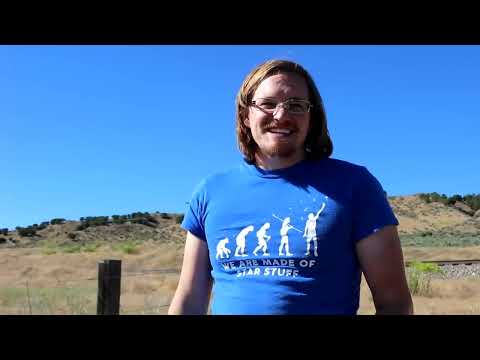
Cody's Lab builds a 200-billionth-scale model to show how far away the nearest stars are, using parallax and light speed. A short astronomy explainer on interstellar distances.
 4:07
Why do competitors open their stores next to one another? - Jac de Haan
7.4M views • 14 years ago
TED-Ed
A short animated TED-Ed lesson in which two competing ice cream vendors on a beach illustrate why rival shops cluster together. It introduces game theory and the Nash equilibrium through the Hotelling model.
 18:15
So... the minute hand shows progression — apparently we think of time in wildly different ways
706K views • 4 years ago
Technology Connextras
A Technology Connections video essay on how analog and digital clocks shape different mental models of time, with the minute hand acting as a progress indicator.
 10:56
Tesla Is Lightyears Ahead Of... Tesla
1.4M views • 5 years ago
SuperfastMatt
SuperfastMatt looks at how the Tesla Model S retracting door handles were redesigned over time, from many parts to a motor plus sensor, with a focus on engineering and reliability.
 6:02
OpenAI Plays Hide and Seek…and Breaks The Game! 🤖
11M views • 7 years ago
Two Minute Papers
Two Minute Papers covers OpenAI's multi-agent hide-and-seek experiment, in which agents learned emergent tool use and found ways to break the game's rules. It summarizes the 'Emergent Tool Use from Multi-Agent Interaction' paper.
 15:53
Quantum Field Theory visualized
2.7M views • 6 years ago
ScienceClic English
ScienceClic gives a 15-minute animated introduction to quantum field theory, covering fields, spin, conserved quantities, the standard model and interactions.
 12:36
Why the Muon g-2 Results Are So Exciting!
1.5M views • 5 years ago
PBS Space Time
A PBS Space Time episode explaining the Fermilab Muon g-2 results and why a discrepancy with the Standard Model prediction could point to new physics.
 19:48
How Dollar Stores Quietly Consumed America
4.2M views • 3 years ago
Wendover Productions
A Wendover Productions video on how dollar store chains expanded across America and why they displace grocery stores in small towns. It covers their business model and supplier leverage.
 4:12
Correlation CAN Imply Causation! | Statistics Misconceptions
744K views • 9 years ago
minutephysics
A four-minute minutephysics video arguing that causal models and causal networks let statistics infer causation from correlation. It touches on Reichenbach's principle, common causes, feedback and quantum causal discovery.
 9:41
Spinning Levers - How A Transmission Works (1936)
11.5M views • 14 years ago
US Auto Industry
A 1936 Chevrolet-sponsored film that explains how a car transmission works by treating gears as spinning levers. It uses physical models to make the mechanism clear.
 18:04
How the Higgs Mechanism Give Things Mass
1.9M views • 4 years ago
PBS Space Time
A PBS Space Time episode on how the Higgs mechanism gives particles mass, prompted by Fermilab's heavier-than-expected W boson measurement. It goes beyond the usual pop-science treatment without heavy math.
 16:45
How Airlines Quietly Became Banks
7.4M views • 4 years ago
Wendover Productions
A Wendover Productions explainer arguing that major airlines make much of their profit from loyalty programs and co-branded credit cards rather than flying. It frames airlines as quasi-banks that sell points in bulk, using United's pandemic-era loan as a hook.
 13:52
Ch(e)at GPT? - Computerphile
617K views • 3 years ago
Computerphile
Computerphile video in which Mike Pound explains a University of Maryland paper on watermarking LLM output. The method biases token choices so generated text can later be detected statistically.
 10:18
How to Stop a Riot
5.2M views • 9 years ago
Wendover Productions
Wendover Productions explains counterintuitive riot control techniques based on research, showing that effective tactics tend to avoid violence.
 16:31
The TRUTH About How LTT Makes Money
1.9M views • 1 year ago
Linus Tech Tips
Linus Tech Tips breaks down the company's income streams, including sponsors, YouTube Premium, merch and other products. It gives percentages for each revenue source.
 6:59
The Problem With Facebook
3.1M views • 12 years ago
2veritasium
Veritasium's Derek Muller argues that Facebook's business model works against pages and creators, because it charges them to reach the audiences they built. He explains how filtering and paid promotion undermine the value of likes.
 5:43
The EU Has Orbits, and the UK Fell Out of All of Them
0 views • 7 years ago
CGP Grey
CGP Grey's six-minute explainer of the relationships the UK could have with the EU, based on Barnier's slide, shown as orbits of different closeness. It explains why the UK's red lines ruled out the closer options.
 5:32
The Truth about American Cities - Part 1 - Strong Towns [ST01]
858K views • 6 years ago
Not Just Bikes
The first video in Not Just Bikes' Strong Towns series explains the financial instability of North American cities, based on Strong Towns research. It argues that low-density suburban growth costs more to maintain than it brings in.
 14:48
The Biggest Misconception About Electricity
28.2M views • 4 years ago
Veritasium
Veritasium argues that electric energy is carried by fields around the wires rather than by electrons moving through them, using a thought experiment with a large circuit.
 13:03
Intelligence and Stupidity: The Orthogonality Thesis
710K views • 8 years ago
Robert Miles AI Safety
Robert Miles explains the orthogonality thesis: how an agent can be highly intelligent while pursuing goals that seem stupid or alien to humans. He separates intelligence from goals and touches on the stamp-collector example.
 8:28
The Fastest Way to Board a Plane Feels Like the Slowest
37.5M views • 7 years ago
CGP Grey
CGP Grey compares airplane boarding methods, based on an arXiv paper, and shows why the intuitive back-to-front approach is slow while random or outside-in boarding does better.
 14:34
Visualization of Quantum Physics (Quantum Mechanics)
2.8M views • 9 years ago
udiprod
An animated visualization of basic quantum mechanics using a free particle, with simulations based on the actual equations. It covers waves, particles, and how measurement collapses the wavefunction.
 18:48
Connecting Solar to the Grid is Harder Than You Think
2.4M views • 2 years ago
Practical Engineering
Practical Engineering explains why connecting solar and other inverter-based generation to the grid is hard. It covers grid stability, load balancing and the behind-the-scenes engineering challenges of renewables.
 13:47
Are Electric Cars Worse For The Environment? Myth Busted
2.2M views • 8 years ago
Engineering Explained
Engineering Explained works through whether electric cars are really worse for the environment than gasoline cars. It covers battery production emissions, the electricity mix used to charge, and how long an EV takes to break even on lifetime emissions.
 6:43
Explained: "Go Fast" UFO Video - Not Low and Not Fast - Like a Balloon!
156K views • 7 years ago
Mick West
Mick West analyzes the Navy "Go Fast" UFO footage and shows with simple trigonometry and the data overlay that the object is slow and high up, consistent with a balloon. He explains how parallax makes it look fast and argues the original TV claims were wrong.
 5:15
The Milk-Industrial Complex: Why You Don't Need to Drink Milk
422K views • 12 years ago
Healthcare Triage
A short Healthcare Triage episode by Aaron Carroll arguing that milk gets an undeserved pass in efforts to improve diets. It examines claims about calcium and bone strength and concludes you don't need to drink milk.
 9:19
How to Understand What Black Holes Look Like
11M views • 7 years ago
Veritasium
Veritasium explains what a black hole should look like, using J.P. Luminet's 1979 work and a cardboard 3D model to show how light bends around it. It was made just as the first black hole image was released.
 18:01
California's Renewable Energy Problem
1.6M views • 7 years ago
Real Engineering
Real Engineering looks at the numbers for running California on renewables, focusing on the large energy storage needed. It argues about the cost of batteries and the role of other sources.
 10:31
Wendelstein 7-X – from concept to reality
497K views • 12 years ago
Max-Planck-Institut für Plasmaphysik
A CAD-based animation from the Max Planck Institute for Plasma Physics showing how the Wendelstein 7-X stellarator is configured and what its fusion research aims to achieve. It runs about 11 minutes.