algorithmic trading
 1:00:07
CppCon 2017: Carl Cook “When a Microsecond Is an Eternity: High Performance Trading Systems in C++”
357K views • 9 years ago
CppCon
Optiver's Carl Cook explains how to build high-frequency trading systems in C++, where the critical path runs rarely but must be extremely fast. He covers techniques for low and predictable latency, including avoiding main memory and cache misses.
 1:12:43
Caml Trading
55K views • 14 years ago
Yaron Minsky
Yaron Minsky explains how Jane Street moved from mainstream languages to developing almost entirely in OCaml. He covers trading systems, research infrastructure, tooling and hiring.
 43:23
AI Ethics, Impossibility Theorems and Tradeoffs - Chris Stucchio | Crunch 2018
2K views • 7 years ago
CraftHub Events
Chris Stucchio presents the ethical principles behind algorithmic decision making and shows with examples from lending, criminology and education that they cannot all be satisfied at once. The talk frames AI fairness as a set of quantitative tradeoffs.
 22:56
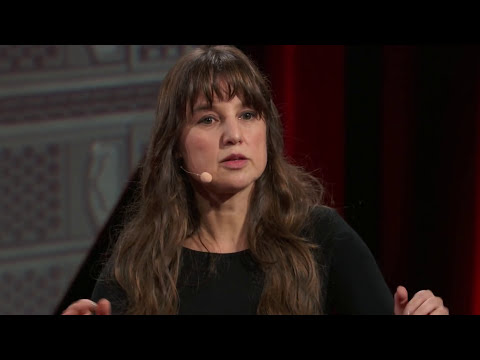
We're building a dystopia just to make people click on ads | Zeynep Tufekci
771K views • 8 years ago
TED
Technosociologist Zeynep Tufekci argues that the machine-learning systems used to serve ads also decide what political and social information people see. She explains how opaque algorithms can nudge, segment and manipulate users, and warns that the real danger is powerful people using AI to control populations.
 1:23:56
Stanford Seminar - Unethical Algorithms of Massive Scale
15K views • 9 years ago
Stanford Online
Psychologist Robert Epstein presents a Stanford EE380 colloquium on how internet algorithms such as search rankings can manipulate opinions, purchases and votes at massive scale. He also describes a new monitoring system for tracking such influence.
 44:45
Python at Massive Scale - Stephen Simmons, Neil Slinger
10K views • 8 years ago
PyData
A PyData London 2018 talk on how JPMorgan scaled its Athena Python platform over ten years to about 35 million lines of code and thousands of developers. It covers infrastructure, tooling and culture for analytics and visualization at that scale.
 1:09:20
Don Knuth - Constraint Based Composition
9K views • 11 years ago
ccrmalite1
Donald Knuth explains at Stanford's CCRMA the constraint-based methods he is using to compose a major work for pipe organ.
 17:58
Copyrighting all the melodies to avoid accidental infringement | Damien Riehl | TEDxMinneapolis
346K views • 6 years ago
TEDx Talks
Lawyer and musician Damien Riehl argues that music is math with a finite number of melodies, and describes how he and programmer Noah Rubin generated every possible melody and released them under CC0 to avoid accidental infringement claims.
 55:17
Google I/O 2009 - The Myth of the Genius Programmer
1.2M views • 17 years ago
Google for Developers
Brian Fitzpatrick and Ben Collins-Sussman argue that the 'genius programmer' ideal harms collaboration. They advocate trading ego for growth, sharing work early, and understanding how tools shape social behavior.
 36:18
"Data Driven UIs, Incrementally" by Yaron Minsky
20K views • 8 years ago
Strange Loop Conference
Yaron Minsky of Jane Street shows how the OCaml Incremental library lets trading UIs express data transformations that are easy to read and efficient on streaming data. It includes a live table demo.
 59:34
There is No Algorithm for Truth - with Tom Scott
2.7M views • 7 years ago
The Royal Institution
Tom Scott's Royal Institution discourse on science communication in the age of social media, how recommendation algorithms shape popularity, and why view counts can matter more than truth. It includes a segment on parasocial relationships.
 9:05
Beware online "filter bubbles" | Eli Pariser
1.7M views • 15 years ago
TED
Eli Pariser's TED talk argues that personalized web services trap users in filter bubbles, limiting exposure to challenging information. He says this is bad for individuals and for democracy.
 16:33
The nightmare videos of childrens' YouTube — and what's wrong with the internet today | James Bridle
6M views • 8 years ago
TED
Writer and artist James Bridle shows how strange and disturbing children's videos on YouTube, from surprise eggs to algorithmic mashups, are produced for ad revenue. He argues they reveal problems in a data-driven internet.