augmented reality
 13:02
Noether's Theorem and The Symmetries of Reality
1.1M views • 8 years ago
PBS Space Time
PBS Space Time explains Noether's theorem: conservation laws such as energy and momentum are consequences of deeper symmetries. It also covers why those laws hold only under certain conditions.
 10:31
Wendelstein 7-X – from concept to reality
497K views • 12 years ago
Max-Planck-Institut für Plasmaphysik
A CAD-based animation from the Max Planck Institute for Plasma Physics showing how the Wendelstein 7-X stellarator is configured and what its fusion research aims to achieve. It runs about 11 minutes.
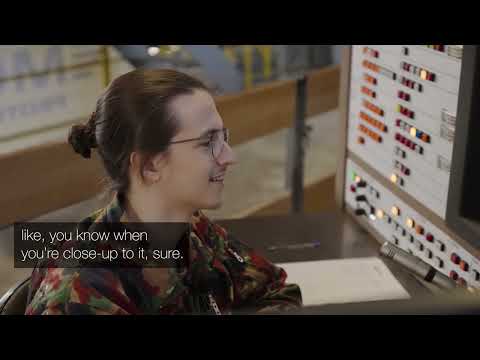 4:40
This 1970s tank simulator drives through a tiny world
12M views • 4 years ago
Tom Scott
Tom Scott visits the Swiss Military Museum to see the last surviving 1970s tank-driving simulator. It uses a real camera moving over a miniature model landscape rather than any computer graphics.
Topic match · VR, AR & spatial computing 4:48
Hans Rosling's 200 Countries, 200 Years, 4 Minutes - The Joy of Stats - BBC
11.5M views • 15 years ago
BBC
Hans Rosling uses augmented-reality animation to show 200 countries over 200 years in four minutes, built from 120,000 data points. It tracks life expectancy and income to show the world's development.
 12:50
How close is nuclear fusion power?
764K views • 5 years ago
Sabine Hossenfelder
Sabine Hossenfelder explains how close nuclear fusion really is to break-even, and why headlines about ITER and lab milestones are misleading. She distinguishes plasma gain (Q plasma) from whole-system gain (Q total) and shows the latter is still far below one.
 23:29
How Imaginary Numbers Were Invented
22.7M views • 5 years ago
Veritasium
Veritasium tells the history of how imaginary numbers arose from the quest for a general solution to the cubic equation, including the duels and secrecy among Renaissance mathematicians. It argues math had to give up the requirement that it mirror reality.