biocomputing
No strong matches for “biocomputing”. Here are the closest videos.
 4:58
You Actually Share Your Brain With a Silent Stranger
20.2M views • 10 years ago
CGP Grey
CGP Grey explains split-brain patients, where severing the corpus callosum lets the two hemispheres act independently. He uses this to explore the idea of two minds in one head.
Topic match · Neuroscience & the brain 15:09
Why you DON'T want Perfect Pitch
2.5M views • 5 years ago
Adam Neely
Adam Neely explains what perfect (absolute) pitch is, how it differs from relative and quasi-absolute pitch, and why he would not want it. He covers its drawbacks, including drift with age.
Topic match · Neuroscience & the brain 16:26
Why Adults Can't Develop Perfect Pitch
1.8M views • 9 years ago
Rick Beato
Rick Beato argues that adults cannot develop true perfect pitch, which he ties to critical-period brain plasticity and language acquisition. He says it can only be developed in young children, and discusses the research behind this.
Topic match · Neuroscience & the brain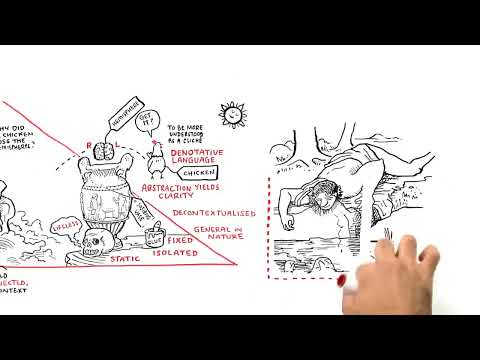 11:48
RSA ANIMATE: The Divided Brain
2.2M views • 15 years ago
Royal Society of Arts
An RSA Animate summary of Iain McGilchrist's lecture on the divided brain, arguing the brain's two hemispheres attend to the world differently and that this has shaped culture and society.
Topic match · Neuroscience & the brain 7:41
Why Life Seems to Speed Up as We Age
8M views • 10 years ago
Veritasium
Veritasium explores why time seems to speed up as we age, covering chronoception and several competing explanations beyond the common proportional-theory argument.
Topic match · Neuroscience & the brain 5:51
This Is Your Brain On Stale Air
4.2M views • 7 years ago
Tom Scott
Tom Scott features Kurtis Baute inside a sealed homemade biodome as carbon dioxide builds up, showing how stale air with elevated CO2 affects cognitive function. Sources include studies on CO2 and cognitive scores.
Topic match · Neuroscience & the brain 3:47
Your Coffee Addiction Is Probably Good for You
9.6M views • 15 years ago
CGP Grey
CGP Grey's short explainer arguing that caffeine addiction is mostly harmless and may even be beneficial. It covers what caffeine does in the body.
Topic match · Neuroscience & the brain 9:35
Is Your Red The Same as My Red?
34M views • 13 years ago
Vsauce
Vsauce explores qualia and whether different people experience colors the same way. It draws on color blindness, Mary's room, the explanatory gap and subjective experience.
Topic match · Neuroscience & the brain 15:15
WHY Exercise is so Underrated (Brain Power & Movement Link)
4.3M views • 9 years ago
Joseph Everett - WIL
A video arguing that exercise matters for the brain as much as the body, linking movement, the nervous system and BDNF to learning and memory. It draws on research connecting complex movement to brain development.
Topic match · Neuroscience & the brain 4:45
How playing an instrument benefits your brain - Anita Collins
15.2M views • 12 years ago
TED-Ed
A short TED-Ed animated lesson by Anita Collins on what happens in the brain when people play a musical instrument. It argues that playing engages many brain areas at once, like a full-body workout, with long-term benefits.
Topic match · Neuroscience & the brain 5:50
You Need to Be Bored. Here's Why.
17.9M views • 1 year ago
Harvard Business Review
Harvard professor Arthur Brooks explains why boredom is useful rather than something to avoid. He describes how a wandering mind engages the brain's default mode network, which supports creativity and curiosity, and suggests it may protect against depression.
Topic match · Neuroscience & the brain 22:19
The Weird World in RGB
2.7M views • 7 years ago
Technology Connections
Technology Connections explains how RGB light and color work, from hue and saturation to color vision and how objects appear under different lighting. It uses a studio setup with colored lights to demonstrate the effects.
Topic match · Neuroscience & the brain 22:54
Did People Used To Look Older?
21M views • 4 years ago
Vsauce
Vsauce explores whether people in past decades really looked older than people of the same age today, or whether photographic and cultural factors make them seem so. It draws on old photos, yearbooks and perception research.
Topic match · Neuroscience & the brain