boiling water
 39:22
Who’s Taking America’s Water? | Climate Town
888K views • 2 years ago
Climate Town
A Climate Town episode on who uses America's water, particularly Western water. It looks at agriculture such as alfalfa and animal feed, and at water-rights rules that discourage conservation.
 22:52
A simple water heater is more clever than it seems
2.6M views • 3 years ago
Technology Connections
Technology Connections explains how an ordinary tank water heater works, including twin-element designs, and why it is cleverer than it looks.
 24:55
Why don't Americans use electric kettles?
5.3M views • 4 years ago
Technology Connections
Technology Connections explains why electric kettles are uncommon in the US, centering on 120V circuits limiting power. He tests ways of boiling water on gas, electric ranges and kettles.
 13:52
Ch(e)at GPT? - Computerphile
617K views • 3 years ago
Computerphile
Computerphile video in which Mike Pound explains a University of Maryland paper on watermarking LLM output. The method biases token choices so generated text can later be detected statistically.
 13:13
The Nuclear Salt Water Rocket - Possibly the Craziest Rocket Engine Ever Imagined.
970K views • 5 years ago
Scott Manley
Scott Manley explains the nuclear salt water rocket, Robert Zubrin's concept of a rocket fueled by a rapid nuclear reaction in uranium salt dissolved in water. He covers its extraordinary performance and the dangers of managing it.
 1:08:15
Gas stoves aren't really that fast - even standard electric is faster!
827K views • 3 years ago
Technology Connextras
Technology Connections tests how quickly gas, induction and standard electric stoves boil water, with CO2 measurements and a discussion of the advantages and disadvantages of each.
 10:24
Why does light slow down in water?
1.3M views • 7 years ago
Fermilab
Fermilab's Don Lincoln explains why light travels slower in water and glass. He knocks down common wrong explanations such as absorption and re-emission, then gives the wave-mechanics reason tied to refractive index.
 24:59
High speed camera reveals why sodium explodes!
484K views • 11 years ago
Thunderf00t
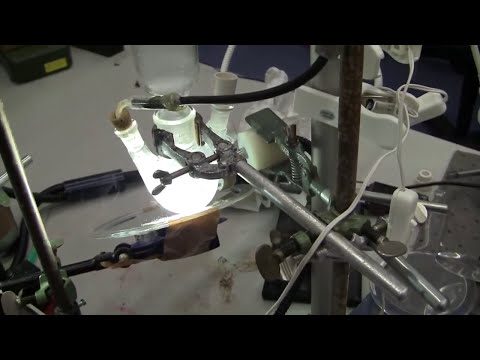
Thunderf00t presents high-speed camera footage of alkali metals such as sodium and NaK reacting with water. The footage shows that the explosion is not caused by hydrogen ignition, as the usual explanation says. It is a Coulomb explosion driven by electrons leaving the metal.
 10:37
The Surprising Efficiency of Canal Locks
2M views • 6 years ago
Practical Engineering
Practical Engineering explains how canal locks work, including the water-saving basins of the new Panama Canal locks.
 7:38
Does Hot Water Freeze Faster Than Cold Water?
5M views • 9 years ago
Sciencium
Sciencium examines the Mpemba effect, the claim that hot water freezes faster than cold water. It walks through experiments and a published paper questioning the effect.
 23:11
Eating less Meat won't save the Planet. Here's Why
5.8M views • 5 years ago
Joseph Everett - WIL
Joseph Everett, with Dr. Frank Mitloehner, argues that eating less meat will not do much for the climate. He covers beef's water footprint, land and feed use, and methane.
 7:23
How Trees Bend the Laws of Physics
5M views • 14 years ago
Veritasium
Veritasium explains how trees lift water from roots to the top of tall trunks, using transpiration pull and the negative pressure that liquid water can sustain. It explains why trees do not need pumps or valves.
 2:58
Why Britain Uses Separate Hot and Cold Taps
6.8M views • 12 years ago
Tom Scott
Tom Scott explains why Britain historically has separate hot and cold taps rather than mixer taps, tracing it to how water was stored in tanks. He notes why the hot tap is not safe to drink from.
 3:58
The centuries-old debt that's still paying interest
9.3M views • 9 years ago
Tom Scott
Tom Scott visits Yale's archives to look at a 367-year-old bond from a Dutch water authority that is still paying interest. Finance professor Geert Rouwenhorst explains how it works.
 2:17
The Most Dangerous Stretch of Water in the World: The Strid at Bolton Abbey, Yorkshire
7.8M views • 10 years ago
Tom Scott
Tom Scott visits the Strid at Bolton Abbey in Yorkshire, a deceptively narrow stretch of river with dangerous currents. He covers its reputation and the 12th-century legend of the Boy of Egremont.
 30:48
A New Way to Achieve Nuclear Fusion: Helion
8.4M views • 3 years ago
Real Engineering
Real Engineering's Brian McManus explains Helion's approach to nuclear fusion: colliding two plasma rings, compressing them magnetically, and capturing energy directly from the changing magnetic flux rather than boiling water. It covers why this pulsed design sidesteps problems of tokamaks and laser fusion.
 12:07
Why Are 96,000,000 Black Balls on This Reservoir?
112.9M views • 7 years ago
Veritasium
Veritasium rides a boat across the Los Angeles reservoir covered in 96 million black plastic balls. He explains why they were really introduced, which was not primarily to reduce evaporation.
 16:39
Feeding Bill Gates a Fake Burger (to save the world)
83.4M views • 6 years ago
Mark Rober
Mark Rober makes a plant-based burger for Bill Gates and explains why meat production strains the environment. Gates also appears and discusses his worry about steel and cement.
 29:34
How Do Nuclear Submarines Make Oxygen?- Smarter Every Day 251
10.4M views • 5 years ago
SmarterEveryDay
A Smarter Every Day episode from aboard a nuclear submarine on how the crew makes breathable air. It covers oxygen generation from seawater, oxygen candles and CO2 scrubbing with amine.
 23:33
Why Do Mainframes Still Exist? What's Inside One? 40TB, 200+ Cores, AI, and more!
1.2M views • 3 years ago
Dave's Garage
Dave Plummer tours the IBM z16 mainframe from design through factory assembly, test lab, accelerators and water cooling. He explains why mainframes still exist and what makes them reliable.
 7:31
I thought this rotating house was impossible.
8.3M views • 3 years ago
Tom Scott
Tom Scott visits a rotating house near San Diego and explains how electricity, gas and water keep working on the rotating part. It includes a 3D render of the utility connection system.
 9:34
Was Roman Concrete Better?
2.7M views • 8 years ago
Practical Engineering
Practical Engineering compares modern concrete with that of the Roman Empire, covering modern techniques like roller compacted concrete and water-reducing admixtures. It explains the tradeoffs of Roman construction versus reinforced concrete.