commit graph
 18:24
The Holographic Universe Explained
3.5M views • 7 years ago
PBS Space Time
A PBS Space Time episode explaining the holographic principle: the idea that our 3+1 dimensional universe may be described by information on a lower-dimensional boundary. It walks through black hole entropy and the AdS/CFT correspondence.
 12:36
Why PlayStation 1 Graphics Warped and Wobbled so much | MVG
2.3M views • 6 years ago
Modern Vintage Gamer
Modern Vintage Gamer explains why PlayStation 1 graphics warped and jittered, comparing it with the Nintendo 64. The causes are affine texture mapping and the lack of sub-pixel vertex precision.
 8:38
Diffie-Hellman Key Exchange
938K views • 14 years ago
Art of the Problem
A short explainer on the history and mechanics of public key cryptography and the Diffie-Hellman key exchange. It uses a mixing-paint-colors analogy to show how two parties can agree on a shared secret in public.
 11:27
CGA Graphics - Not as bad as you thought!
2.4M views • 10 years ago
The 8-Bit Guy
The 8-Bit Guy covers IBM's 1981 CGA graphics system, including how composite output and artifacting produced extra colors beyond the nominal palette. He argues CGA looked better in period than it does on RGB monitors.
 12:04
Anagrams, but where you can break apart letters: "Anagraphs"
256K views • 8 years ago
suckerpinch
Tom Scott-style exploration by suckerpinch (Tom7) of generalized anagrams where letters can be broken into pieces, called anagraphs, with a whimsical computational approach.
 7:08
How "oldschool" graphics worked Part 1 - Commodore and Nintendo
5.7M views • 11 years ago
The 8-Bit Guy
The 8-Bit Guy explains the color limitations of 1980s computers and consoles such as the NES and Commodore 64. It shows how sprites, attributes and palettes shaped the look of old games.
 4:10
'Zombie' Parasite Cordyceps Fungus Takes Over Insects Through Mind Control | National Geographic
6M views • 7 years ago
National Geographic
National Geographic footage showing the cordyceps fungus infecting ants and other insects and steering their behavior so it can reproduce.
 5:15
The UK Is a Country Made of Countries
25.1M views • 15 years ago
CGP Grey
CGP Grey's quick, witty explainer on the differences between the United Kingdom, Great Britain and England, and the countries that make up the UK.
 5:06
How secure is 256 bit security?
3.7M views • 9 years ago
3Blue1Brown
3Blue1Brown illustrates how enormous the 256-bit search space is, showing how infeasible it is to find a hash or key by guessing and checking.
 12:20
I Solved Klotski
2.1M views • 1 year ago
2swap
2swap explains how he solved the Klotski sliding-block puzzle by mapping its full state space as a graph and visualizing it. The video includes footage of the Guinness world-record solve and links to an interactive graph.
 17:20
The Extreme Engineering of ASML’s EUV Light Source
698K views • 4 years ago
Asianometry
Asianometry explains the EUV light source inside ASML's lithography machines, where lasers hit falling tin droplets twice to produce 13.5 nm light. It walks through the engineering of the droplet generator, the pre-pulse and main laser, and the plasma that results.
 8:34
Was YOUR vote counted? (feat. homomorphic encryption) - Numberphile
198K views • 10 years ago
Numberphile
Numberphile interviews cryptographer Ron Rivest about end-to-end verifiable voting. He explains how homomorphic encryption and receipts let a voter confirm their ballot was counted without being able to prove how they voted to anyone else.
 7:49
Your Post Code Is the Directions, Not the Destination
3.9M views • 1 year ago
CGP Grey
CGP Grey explains that postal codes are routing instructions for mail rather than geographic regions. He looks at the quirks and problems this causes.
 16:36
Hacking at Quantum Speed with Shor's Algorithm | Infinite Series
238K views • 9 years ago
PBS Infinite Series
PBS Infinite Series explains how Shor's algorithm lets a quantum computer break RSA encryption, building on earlier episodes about cryptography and the math of quantum computers. It works through the idea step by step.
 11:21
How does a whip break the sound barrier? (Slow Motion Shockwave formation) - Smarter Every Day 207
6.5M views • 7 years ago
SmarterEveryDay
Smarter Every Day uses high-speed and Schlieren photography to show how a whip crack is a supersonic shockwave formed at the tip. It references academic papers on whip physics.
 9:04
Jackie Chan - How to Do Action Comedy
25.4M views • 11 years ago
Every Frame a Painting
Every Frame a Painting analyzes how Jackie Chan stages action comedy, with nine principles such as starting from a disadvantage, using the environment, clear shots, and keeping action and reaction in the same frame.
 8:25
Akira Kurosawa - Composing Movement
10.8M views • 11 years ago
Every Frame a Painting
An Every Frame a Painting video essay on how Akira Kurosawa used movement, weather and composition to tell stories. It draws on clips and interviews with other filmmakers.
 10:58
Flaw in the Enigma Code - Numberphile
5.4M views • 13 years ago
Numberphile
Numberphile's Dr James Grime explains the flaw in the Enigma machine, namely that a letter could never be encrypted to itself, and how that helped the Allies break the code. It touches on the Bombe and Alan Turing.
 8:14
Why are British place names so hard to pronounce?
6.6M views • 5 years ago
Map Men
The Map Men explain why British place names are so hard to pronounce, tracing it to layers of Viking, Anglo-Saxon, Celtic and Norman influence, with a pronunciation guide.
 8:42
Michael Bay - What is Bayhem?
3.3M views • 12 years ago
Every Frame a Painting
An Every Frame a Painting video essay on Michael Bay's style, 'Bayhem', covering his camera movement, composition, color and editing. It argues that even if you dislike his films, they teach something about visual perception.
 17:51
Does "land area" assume a country is perfectly flat?
859K views • 6 years ago
Stand-up Maths
Matt Parker of Stand-up Maths asks whether a country's reported land area accounts for hills and mountains, working through how surface area depends on the resolution of elevation data. It follows up on a question from a viewer and work by researchers who measured it.
 11:33
Light Waves Visualized using Photon Sieves.
69K views • 6 years ago
Huygens Optics
Huygens Optics shows how DIY photon sieves shape a laser's wave front, explaining how they differ from zone plates and how aperture count affects the focal point, with time-resolved visualizations of the diffraction.
 9:32
Disney's Practical Guide to Path Tracing
914K views • 10 years ago
Walt Disney Animation Studios
Walt Disney Animation Studios' short introduction to path tracing, showing how rays are traced and bounced through a virtual scene to simulate light. It explains how this approach is used in animated films.
 17:31
How Quantum Computers Break Encryption | Shor's Algorithm Explained
3.4M views • 7 years ago
minutephysics
MinutePhysics explains Shor's algorithm, showing how a quantum computer factors large integers by finding the period of a number modulo N. It walks through the modular arithmetic and number theory that give the exponential speedup over classical factoring, and why this threatens encryption.
 4:42
The US-Canada Border Is 5,500 Miles of Pure Nonsense
37.4M views • 13 years ago
CGP Grey
CGP Grey walks through the odd history and quirks of the US-Canada border, including how it was surveyed and its irregularities such as exclaves.
 5:24
Diffie-Hellman Key Exchange
547K views • 14 years ago
Art of the Problem
A short Art of the Problem clip explaining Diffie-Hellman key exchange, using a paint mixing analogy for one-way functions and touching on modular arithmetic and discrete logarithms.
 15:30
The Black Hole Information Paradox
1.1M views • 8 years ago
PBS Space Time
PBS Space Time episode on the black hole information paradox, covering how black holes seem to destroy information, the no-hair conjecture and the proposed role of the event horizon. It is part of a series on black holes.
 11:13
What if you could only see the world in UV?
5.6M views • 8 years ago
Veritasium
Veritasium shows what the world looks like through a UV camera. It covers how pigments absorb UV, how fluorescence works, and how UV imaging reveals sunscreen effectiveness and skin damage.
 11:54
The Most Complex International Borders in the World
7.9M views • 12 years ago
WonderWhy
WonderWhy surveys complex international borders, including enclaves like Vatican City, San Marino and Lesotho, the enclave-within-enclave town of Baarle, and the India-Bangladesh Cooch Behar region.
 12:24
The 1988 VIDEO Floppy Disk Camera: Canon Xap Shot RC-250
452K views • 8 years ago
LGR
LGR looks at the 1988 Canon Xap Shot, a still video camera that records photos to a floppy disk as analog NTSC signal rather than digital data.
 12:24
Elliptic Curve Back Door - Computerphile
554K views • 8 years ago
Computerphile
Dr Mike Pound explains the suspected backdoor in the Dual_EC_DRBG random number generator and how elliptic curve constants could let someone predict its output.
 4:31
Why Photos of the Eiffel Tower at Night are Illegal
12.1M views • 9 years ago
Half as Interesting
Half as Interesting explains why the Eiffel Tower's night-time lighting is under copyright, which makes publishing photos of it at night legally problematic.
 4:00
The Netherlands Is Not 'Holland.' It Never Was.
13.9M views • 13 years ago
CGP Grey
A short CGP Grey explainer on why 'Holland' is wrong as a name for the whole country of the Netherlands. It covers the country's provinces and its constituent territories.
 8:25
Large Language Models from scratch
375K views • 4 years ago
Graphics in 5 Minutes
A short cartoon explaining how language models like ChatGPT work, from autocomplete and conditional probabilities to neural networks, gradient descent and backpropagation. It shows how networks act as universal function approximators.
 18:31
Fourier Optics used for Optical Pattern Recognition
103K views • 6 years ago
Huygens Optics
Huygens Optics explains the Fourier transform and shows how a lens performs one optically. A DLP projector is used as a Fourier filter to do simple pattern recognition on lithographic character patterns.
 8:25
Why Trains Suck in America
6M views • 10 years ago
Wendover Productions
Wendover Productions explains why US passenger rail lags behind other countries. It covers freight companies owning most of the track, geography and population density, and the economics of competing with flying.
 9:13
World's Largest Batteries - (Pumped Storage)
1.9M views • 7 years ago
Practical Engineering
Practical Engineering explains pumped storage hydropower, which makes up most grid-scale electricity storage. It covers how it works and why it fits only certain geographies.
 11:11
RSA ANIMATE: Crises of Capitalism
3.3M views • 16 years ago
Royal Society of Arts
An RSA Animate video that illustrates a talk by geographer David Harvey on the crises of capitalism. It covers creative destruction, wage stagnation masked by credit, and the search for a more just economic order.
 4:40
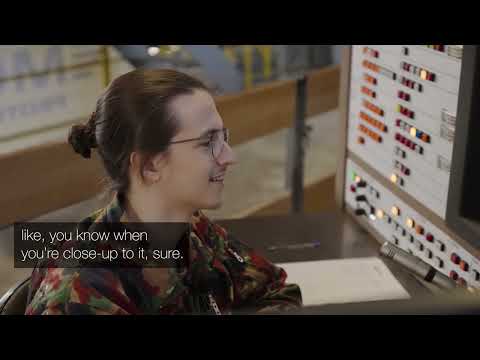
This 1970s tank simulator drives through a tiny world
12M views • 4 years ago
Tom Scott
Tom Scott visits the Swiss Military Museum to see the last surviving 1970s tank-driving simulator. It uses a real camera moving over a miniature model landscape rather than any computer graphics.
 9:41
How Steve Jobs got the ideas of GUI from XEROX
272K views • 12 years ago
Ringo Pebam
A short video telling how Xerox PARC invented the graphical user interface and how Steve Jobs's 1979 visit influenced Apple's Lisa.