computational chemistry
 21:56
What If Alien Life Were Silicon-Based?
3.8M views • 3 years ago
PBS Space Time
PBS Space Time considers whether life could be based on silicon instead of carbon, comparing the two elements' chemistry and why silicon is the most plausible alternative.
 10:44
P vs. NP and the Computational Complexity Zoo
3.7M views • 12 years ago
hackerdashery
An 11-minute animated introduction to P vs. NP and the wider landscape of complexity classes, inspired by the Complexity Zoo wiki. It assumes no background in computer science.
 9:55
Everyone is Wrong About Mexican Coke (Even @johnnyharris)
1.2M views • 1 year ago
Reactions
ACS Reactions investigates why Mexican Coke, supposedly cane sugar sweetened, tested as having glucose and fructose, explaining that sucrose breaks down in acidic soda.
 5:13
Overview of Illumina Sequencing by Synthesis Workflow | Standard SBS chemistry
2.7M views • 10 years ago
Illumina
Illumina's 3D animation of its sequencing-by-synthesis workflow, from sample preparation and cluster generation to sequencing on a flow cell and data analysis.
 10:45
The 5 Most Dangerous Chemicals on Earth
11.9M views • 11 years ago
SciShow
A SciShow episode in which Hank Green introduces five of the most dangerous chemicals, from lethal toxins to substances that explode on contact. It is an entertaining overview of extreme chemical hazards.
 18:32
Homochirality: Why Nature Never Makes Mirror Molecules
1.7M views • 6 years ago
Steve Mould
Steve Mould explains homochirality: why biological molecules like sugars and amino acids come in only one handedness. He covers ideas about how this asymmetry might have arisen, touching on meteorite samples and RNA.
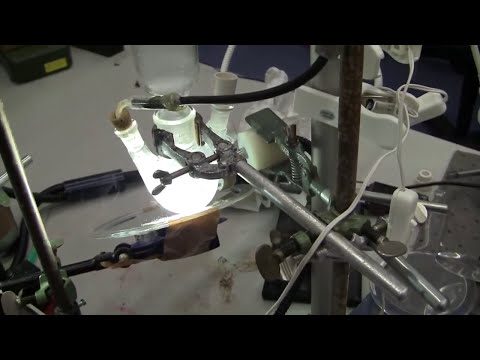 24:59
High speed camera reveals why sodium explodes!
484K views • 11 years ago
Thunderf00t
Thunderf00t presents high-speed camera footage of alkali metals such as sodium and NaK reacting with water. The footage shows that the explosion is not caused by hydrogen ignition, as the usual explanation says. It is a Coulomb explosion driven by electrons leaving the metal.
 24:57
The Man Who Accidentally Killed The Most People In History
43.5M views • 4 years ago
Veritasium
Veritasium tells the story of Thomas Midgley Jr., who introduced leaded gasoline and CFCs, and covers the science behind lead exposure and ozone damage. It also touches on isotope geochemistry used to uncover the history.
 12:04
Anagrams, but where you can break apart letters: "Anagraphs"
256K views • 8 years ago
suckerpinch
Tom Scott-style exploration by suckerpinch (Tom7) of generalized anagrams where letters can be broken into pieces, called anagraphs, with a whimsical computational approach.
 26:48
Algorithmic Redistricting: Elections made-to-order
584K views • 5 years ago
AlphaPhoenix
AlphaPhoenix uses Monte Carlo simulation and annealing-style methods to draw North Carolina congressional district maps, both gerrymandered and fair. He focuses on the fascinating computational problem rather than the politics.
 23:55
Matrioshka Brains: Star-Powered Computers
505K views • 10 years ago
Isaac Arthur
Isaac Arthur explains the Matrioshka Brain, a hypothetical computer or artificial mind powered by an entire star using nested shells. It covers how such megastructures relate to Dyson spheres and superintelligence.