d-wave
 9:07
The Absurdity of Detecting Gravitational Waves
7.9M views • 9 years ago
Veritasium
Veritasium explains in detail how LIGO detects gravitational waves, with a laser interferometer measuring displacements smaller than a proton. The video focuses on the extreme precision and the techniques needed rather than the general discovery story.
 16:32
Pilot Wave Theory and Quantum Realism | Space Time | PBS Digital Studios
1.9M views • 9 years ago
PBS Space Time
A PBS Space Time episode introducing de Broglie-Bohm pilot wave theory, an interpretation of quantum mechanics that avoids much of the strangeness of the mainstream views. It is aimed at curious lay viewers.
 11:21
How does a whip break the sound barrier? (Slow Motion Shockwave formation) - Smarter Every Day 207
6.5M views • 7 years ago
SmarterEveryDay
Smarter Every Day uses high-speed and Schlieren photography to show how a whip crack is a supersonic shockwave formed at the tip. It references academic papers on whip physics.
 7:41
Is This What Quantum Mechanics Looks Like?
6.2M views • 10 years ago
Veritasium
Veritasium shows silicone oil droplets bouncing on a vibrating bath, a physical analogue of pilot wave theory that reproduces quantum-like behavior such as double-slit patterns.
Topic match · Quantum physics 12:00
Do we have to accept Quantum weirdness? De Broglie Bohm Pilot Wave Theory explained
125K views • 9 years ago
Looking Glass Universe
Looking Glass Universe explains de Broglie-Bohm pilot wave theory (Bohmian mechanics) as an alternative to the standard interpretation of quantum mechanics. The video lays out the pros and cons of the theory and links to related videos on contextuality and entanglement.
 18:07
The more general uncertainty principle, regarding Fourier transforms
2.3M views • 8 years ago
3Blue1Brown
3Blue1Brown shows how the uncertainty principle arises from Fourier transforms. A wave packet cannot be narrow in both position and frequency, so the principle is a property of waves rather than of measurement.
Topic match · Quantum physics 14:34
Visualization of Quantum Physics (Quantum Mechanics)
2.8M views • 9 years ago
udiprod
An animated visualization of basic quantum mechanics using a free particle, with simulations based on the actual equations. It covers waves, particles, and how measurement collapses the wavefunction.
Topic match · Quantum physics 7:40
The Original Double Slit Experiment
10.2M views • 13 years ago
Veritasium
Veritasium revisits Thomas Young's original double slit experiment with light, showing how interference supports the wave nature of light. It uses a pond-wave demonstration to explain the pattern.
Topic match · Quantum physics 11:07
The music theory of V A P O R W A V E
1.8M views • 10 years ago
Adam Neely
Adam Neely analyzes vaporwave through music theory, timbre and nostalgia, and includes a parody track made for the video. He also touches on the phenomenology of music.
 15:48
How to Detect Extra Dimensions
1.6M views • 8 years ago
PBS Space Time
A PBS Space Time episode on how gravitational wave observations of a neutron star merger, GW170817, can limit the number of spacetime dimensions. It is based on a 2018 paper.
Topic match · Cosmology & astrophysics 5:13
DR. QUANTUM - DOUBLE SLIT EXPERIMENT
1.6M views • 15 years ago
Angel Art
A short animated lesson, featuring Dr. Quantum, on the double slit experiment and how observing electrons seems to change their behavior.
Topic match · Quantum physics 16:30
Why is light slower in glass? - Sixty Symbols
848K views • 13 years ago
Sixty Symbols
Professor Mike Merrifield of Nottingham explains in a mostly uncut conversation why light travels slower in glass. He treats light as a wave and describes how the material's electrons produce secondary waves that combine to slow it.
 10:24
Why does light slow down in water?
1.3M views • 7 years ago
Fermilab
Fermilab's Don Lincoln explains why light travels slower in water and glass. He knocks down common wrong explanations such as absorption and re-emission, then gives the wave-mechanics reason tied to refractive index.
 30:14
Power Satellites & Space Based Solar Power
254K views • 8 years ago
Isaac Arthur
Isaac Arthur explores space-based solar power, in which satellites beam energy down via microwaves to rectennas on Earth. He discusses feasibility, profitability and its role in spurring space colonization.
 9:16
Quantum Entanglement & Spooky Action at a Distance
4.5M views • 11 years ago
Veritasium
Veritasium explains quantum entanglement and spooky action at a distance, walking through Bell's inequality and the experiments that rule out hidden variables, in under ten minutes.
Topic match · Quantum physics 6:51
Star Size Comparison 2
48.7M views • 10 years ago
morn1415
A visual scale comparison of stars and cosmic objects, from planets up to some of the largest known stars, set to music. It is meant to convey the vastness of the universe.
Topic match · Cosmology & astrophysics 10:22
How Far Are The Nearest Stars?
3.7M views • 9 years ago
Cody'sLab
Cody's Lab builds a 200-billionth-scale model to show how far away the nearest stars are, using parallax and light speed. A short astronomy explainer on interstellar distances.
Topic match · Cosmology & astrophysics 13:02
Noether's Theorem and The Symmetries of Reality
1.1M views • 8 years ago
PBS Space Time
PBS Space Time explains Noether's theorem: conservation laws such as energy and momentum are consequences of deeper symmetries. It also covers why those laws hold only under certain conditions.
Topic match · Quantum physics 43:57
Civilizations at the End of Time: Iron Stars
2.1M views • 9 years ago
Isaac Arthur
An Isaac Arthur episode on civilizations in the far future, past the Black Hole Era. It covers iron stars, Boltzmann brains, reversible computing and the idea of reversing entropy.
Topic match · Cosmology & astrophysics 29:52
Turning Earth Into a Telescope | The Terrascope
613K views • 7 years ago
Cool Worlds
David Kipping presents his proposed Terrascope, a telescope that uses Earth's atmosphere as a lens to achieve enormous magnification. He covers the history of telescopes and his path to the idea, plus Sol-scope and Jupiter-scope variants.
Topic match · Cosmology & astrophysics 17:35
Bell's Theorem: The Quantum Venn Diagram Paradox
8.1M views • 9 years ago
minutephysics
MinutePhysics, with 3Blue1Brown, explains Bell's theorem using a Venn diagram paradox and polarizing filters. It shows why no local hidden variable theory can reproduce quantum correlations.
Topic match · Quantum physics 8:39
How to Move the Sun: Stellar Engines
19.5M views • 6 years ago
Kurzgesagt – In a Nutshell
Kurzgesagt explains stellar engines such as the Shkadov thruster and Caplan thruster, which could move the Sun and solar system across the galaxy over millions of years to avoid hazards and reach new regions.
Topic match · Cosmology & astrophysics 15:29
How Time Becomes Space Inside a Black Hole | Space Time
2.5M views • 9 years ago
PBS Space Time
A PBS Space Time episode explaining how space and time swap roles inside a black hole's event horizon. It is part of the channel's black hole series.
Topic match · Cosmology & astrophysics 36:06
Civilizations at the End of Time: Black Hole Farming
934K views • 10 years ago
Isaac Arthur
An Isaac Arthur episode on civilizations in the dark, post-stellar universe, including black hole farming, accretion disks and the Penrose process as energy sources.
Topic match · Cosmology & astrophysics 6:51
Your Mass is NOT From the Higgs Boson
3.4M views • 13 years ago
Veritasium
Veritasium explains that the Higgs boson accounts for only a small fraction of everyday mass. Most of a proton's mass comes from the energy of the gluon field binding its quarks.
Topic match · Quantum physics 9:19
How to Understand What Black Holes Look Like
11M views • 7 years ago
Veritasium
Veritasium explains what a black hole should look like, using J.P. Luminet's 1979 work and a cardboard 3D model to show how light bends around it. It was made just as the first black hole image was released.
Topic match · Cosmology & astrophysics 14:40
How the Quantum Eraser Rewrites the Past | Space Time | PBS Digital Studios
2.9M views • 10 years ago
PBS Space Time
PBS Space Time explains the quantum eraser experiment, in which erasing which-path information appears to reverse causality in a double-slit setup. It discusses what this means for quantum mechanics.
Topic match · Quantum physics 7:37
Should We Colonize Venus Instead of Mars?
4.8M views • 11 years ago
PBS Space Time
A PBS Space Time episode asking whether Venus would be a better colonization target than Mars. It covers Venus's habitable altitudes, floating balloon habitats, and the term surfacism.
Topic match · Cosmology & astrophysics 1:10:52
The Fermi Paradox Compendium
815K views • 10 years ago
Isaac Arthur
Isaac Arthur surveys the popular proposed solutions to the Fermi Paradox in a 71-minute compendium. He weighs the strengths and weaknesses of each argument.
Topic match · Cosmology & astrophysics 18:05
The Crisis in Cosmology
1.1M views • 7 years ago
PBS Space Time
PBS Space Time explains the Hubble constant tension, in which two precise, independent methods of measuring the universe's expansion rate disagree. It covers why this calls some standard cosmology into question.
Topic match · Cosmology & astrophysics 10:00
Is The Alcubierre Warp Drive Possible? | Space Time | PBS Digital Studios
2.5M views • 11 years ago
PBS Space Time
PBS Space Time introduces Miguel Alcubierre's warp drive, explaining how spacetime itself could be warped rather than moving a ship through it, and whether it is physically possible.
Topic match · Cosmology & astrophysics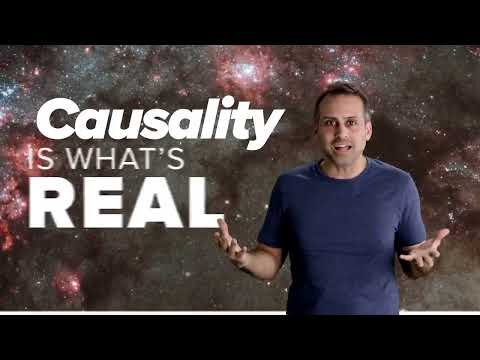 8:55
Are Space and Time An Illusion?
3.3M views • 11 years ago
PBS Space Time
A PBS Space Time episode hosted by Gabe Perez-Giz on the nature of spacetime and whether space and time are fundamental. It builds up reference frames and causality in a short, dense format.
Topic match · Cosmology & astrophysics 19:59
What Happens at the Event Horizon? | Space Time | PBS Digital Studios
3.2M views • 9 years ago
PBS Space Time
PBS Space Time explains what happens as you approach and cross a black hole's event horizon, using Penrose diagrams and light cones as the tool for understanding spacetime there.
Topic match · Cosmology & astrophysics 12:06
Hawking Radiation
1.3M views • 8 years ago
PBS Space Time
PBS Space Time explains Stephen Hawking's prediction of Hawking radiation and how black holes can emit radiation and slowly evaporate. It goes beyond the common particle-antiparticle analogy.
Topic match · Cosmology & astrophysics 17:34
The Halo Drive
526K views • 7 years ago
Cool Worlds
Astrophysicist David Kipping presents the halo drive, a proposed way to propel a starship to a good fraction of light speed by gaining energy from a black hole. The video is based on his peer-reviewed paper and explains why energy is the main obstacle to interstellar flight.
Topic match · Cosmology & astrophysics 3:12
Why is the Solar System Flat?
9.5M views • 12 years ago
minutephysics
A minutephysics explainer on why the planets orbit in a flat plane. It shows how conserved angular momentum flattens a collapsing cloud of matter into a disk.
Topic match · Cosmology & astrophysics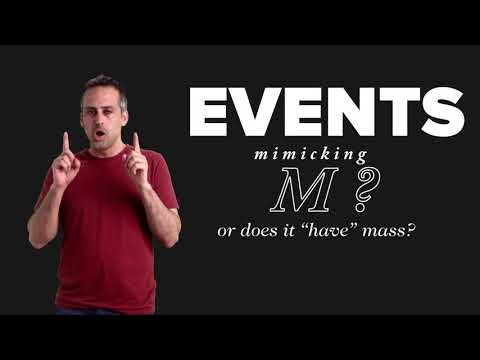 14:25
Do Events Inside Black Holes Happen?
3.2M views • 11 years ago
PBS Space Time
A PBS Space Time episode asking what black holes really are and whether events can happen inside them. It covers event horizons, time dilation and common misconceptions about black holes.
Topic match · Cosmology & astrophysics 17:32
'Oumuamua Is Not Aliens
790K views • 7 years ago
PBS Space Time
PBS Space Time examines the interstellar object 'Oumuamua and the popular theories about it, including the light-sail hypothesis. It argues that a natural rock is the likeliest explanation.
Topic match · Cosmology & astrophysics 17:55
The Fermi Paradox: Dark Forest Theory
412K views • 7 years ago
Isaac Arthur
Isaac Arthur examines the Dark Forest theory, Cixin Liu's proposed solution to the Fermi Paradox in which civilizations stay silent and may destroy any that reveal themselves. He tests the theory's underlying assumptions and arguments.
Topic match · Cosmology & astrophysics 28:44
Arcologies
397K views • 10 years ago
Isaac Arthur
An Isaac Arthur episode on arcologies, self-sufficient habitats that could house whole cities, on Earth or on harsh worlds. It covers how such structures might work and what limits their size.
Topic match · Cosmology & astrophysics