early internet
 4:31
why typing like this is sometimes okay.
5.4M views • 7 years ago
Tom Scott
Tom Scott makes a short descriptivist argument that language keeps changing and that casual internet writing conventions, like lowercase typing and dropped full stops, are legitimate. It is part of his Language Files series, written with Gretchen McCulloch.
Topic match · Internet culture & memes 1:20
Paul Otlet, visioning a web in 1934
102K views • 18 years ago
Attila Gárdos
A one-minute clip about Paul Otlet, the Belgian bibliographer who in 1934 imagined users accessing a remote database through an electric telescope over a phone line. It presents his vision as a precursor of the web.
Topic match · Internet culture & memes 9:52
AI Slop Is Destroying The Internet
11.4M views • 1 year ago
Kurzgesagt – In a Nutshell
Kurzgesagt examines how AI-generated content is flooding the internet, from video and music to news and books. It looks at how this makes verifying what is real harder.
 28:09
How does Starlink Satellite Internet Work?📡☄🖥
9.9M views • 4 years ago
Branch Education
Branch Education explains how Starlink works, from the ground dish and satellites to phased-array beam steering and data routing. Animations cover how a beam stays connected to a satellite moving at 27,000 km/h.
 1:14
Sound of the dialup modem explained
512K views • 13 years ago
bialasiczek
A short animation that pairs the sound of a dialup modem handshake with a graphic explaining what each phase of the sound means.
Topic match · Internet culture & memes 9:57
Black Hole Star – The Star That Shouldn't Exist
15.8M views • 3 years ago
Kurzgesagt – In a Nutshell
Kurzgesagt explains black hole stars, a hypothesized kind of giant star with a black hole at its core that could be a route to early supermassive black holes.
 9:20
An astonishing old calculator - Numberphile
794K views • 8 years ago
Numberphile
Cliff Stoll shows and explains his two Friden EC-132 electronic calculators for Numberphile. The video covers how these early machines worked, including their unusual acoustic delay line memory.
 3:59
The Lava Lamps That Help Keep The Internet Secure
4.3M views • 9 years ago
Tom Scott
Tom Scott visits Cloudflare's San Francisco office to show the wall of lava lamps whose camera feed is used as a source of entropy for random number generation. It is a short explainer on how this helps secure internet encryption.
 7:27
This clock was famous, but the internet ruined it.
4.7M views • 4 years ago
Tom Scott
Tom Scott explains the famous Dutch flower auction clock at Royal FloraHolland in Aalsmeer, a literal Dutch auction, and how the internet changed it. It is a short look at how the system worked then and now.
 11:24
The Tube Map nearly looked very different
2.6M views • 4 years ago
Map Men
Map Men's Jay Foreman tells the story of how the London Tube map nearly looked very different, including Harry Beck's design and TfL's initial rejection of it. A short, witty history of a design icon.
 6:24
You Need a Theme, Not a Goal
5.5M views • 6 years ago
CGP Grey
CGP Grey argues for picking a theme for the year or season instead of setting goals or new year's resolutions. He explains how a theme gives direction without a pass/fail target.
 15:41
Why SpaceX is Making Starlink
7.4M views • 7 years ago
Real Engineering
Real Engineering explains why SpaceX is building Starlink, including the economics of satellite internet. It covers the latency advantage of light in vacuum over fiber for long-distance links.
 11:32
The Internet is Worse Than Ever – Now What?
9.1M views • 2 years ago
Kurzgesagt – In a Nutshell
A Kurzgesagt video arguing that social media's problem is information flooding and tribal polarization. It suggests a return to smaller online communities and more in-person interaction.
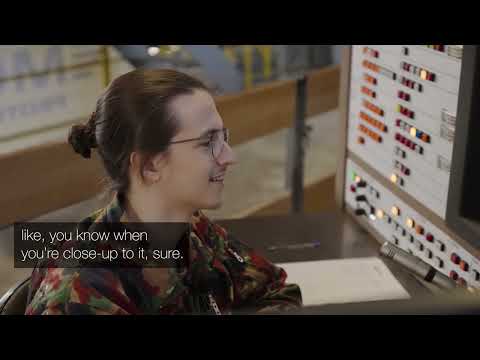 4:40
This 1970s tank simulator drives through a tiny world
12M views • 4 years ago
Tom Scott
Tom Scott visits the Swiss Military Museum to see the last surviving 1970s tank-driving simulator. It uses a real camera moving over a miniature model landscape rather than any computer graphics.
 16:43
The Equation That Explains (Nearly) Everything!
1.6M views • 4 years ago
PBS Space Time
PBS Space Time explains the Standard Model Lagrangian, the single equation encapsulating the particle physics theory, and visualizes what its terms mean.
 22:10
Why Don't You Want To Do Anything After Binging 4 Hours of YouTube Videos...
2.3M views • 3 years ago
HealthyGamerGG
Dr. K of HealthyGamerGG explains why people feel unmotivated and unable to start tasks after hours of YouTube or similar distractions. He frames it as a result of how social media is designed to capture attention, and says not to blame yourself.
 15:14
The most deadly project on the Internet
6.8M views • 4 years ago
bigclivedotcom
BigClive explains why microwave oven transformer projects are extremely dangerous, since the high voltage and high current can kill. He contrasts them with spot welder builds where the secondary is replaced by low-voltage heavy wire.
 9:35
Ancient Life as Old as the Universe
8.6M views • 3 years ago
Kurzgesagt – In a Nutshell
Kurzgesagt explores the idea that life might have arisen shortly after the Big Bang, when the whole universe was warm enough to be habitable. It discusses what that would mean for the origin and spread of life.
 13:12
The 2.7% Rule for Retirement Spending
404K views • 3 years ago
Ben Felix
Ben Felix examines whether the well-known 4% retirement withdrawal rule holds up, drawing on academic papers. He argues that a safe rate may be closer to 2.7%, especially for early retirees.
 15:15
why Japan's internet is weirdly designed
5.2M views • 3 years ago
Answer in Progress
Answer in Progress investigates why Japanese websites look different from those elsewhere, using an AI clustering approach to test the 2013 claim. It then looks at possible explanations.
 42:29
YouTube's copyright system isn't broken. The world's is.
9M views • 6 years ago
Tom Scott
Tom Scott's long explainer on YouTube's copyright system, Content ID and the DMCA. He argues the platform's system is a workaround for a broader copyright system that does not fit the modern world.
Topic match · Internet culture & memes 6:59
The Problem With Facebook
3.1M views • 12 years ago
2veritasium
Veritasium's Derek Muller argues that Facebook's business model works against pages and creators, because it charges them to reach the audiences they built. He explains how filtering and paid promotion undermine the value of likes.
Topic match · Internet culture & memes 6:17
Can You Watch This Without Getting Angry?
12.1M views • 11 years ago
CGP Grey
CGP Grey explains how ideas spread like germs, and why content that triggers outrage spreads fastest, using a study on what makes online content viral. He argues that opposing outrage-driven memes feed each other.
Topic match · Internet culture & memes 9:00
Facebook Fraud
6.6M views • 12 years ago
Veritasium
Veritasium argues that Facebook's ad revenue relies partly on fake likes, after paying to promote his page and gaining tens of thousands of followers in developing countries who never engaged. He shares his experiment and cites other cases.
Topic match · Internet culture & memes 18:57
Manipulating the YouTube Algorithm - (Part 1/3) Smarter Every Day 213
2.7M views • 7 years ago
SmarterEveryDay
Part 1 of Smarter Every Day's three-part series on manipulating the YouTube algorithm. It features Renee DiResta and examples of how social media platforms can be manipulated.
Topic match · Internet culture & memes 4:32
Web 2.0 ... The Machine is Us/ing Us
12.1M views • 19 years ago
Michael Wesch
Michael Wesch's five-minute video about Web 2.0, showing how the read/write web, XML and user-generated content change how people create and share information.
Topic match · Internet culture & memes 10:39
This Video Has 77,321,815 Views
77.3M views • 6 years ago
Tom Scott
Tom Scott's video whose title shows its own live view count, and the story of how he made that work. It explains why open APIs were once common and why they largely disappeared.
Topic match · Internet culture & memes 21:24
Why are people mean on Twitter? - Smarter Every Day 214
957K views • 7 years ago
SmarterEveryDay
Destin Sandlin of Smarter Every Day examines how bad actors and bots use Twitter, drawing on the released Russian IRA dataset and interviews. It asks why interactions on the platform turn hostile.
Topic match · Internet culture & memes 5:10
Will YouTube Ever Run Out Of Video IDs?
10.1M views • 10 years ago
Tom Scott
Tom Scott explains YouTube's 11-character video IDs, which are base-64 encoded 64-bit numbers, and whether YouTube could ever run out of them. It covers counting systems and base 64 briefly.
Topic match · Internet culture & memes 9:48
Why do YouTube views freeze at 301?
301 views • 14 years ago
Numberphile
Numberphile visits YouTube to learn why view counts on new videos used to freeze at 301. It explains that YouTube holds counts while it verifies views aren't from bots or fakes.
Topic match · Internet culture & memes 16:31
The TRUTH About How LTT Makes Money
1.9M views • 1 year ago
Linus Tech Tips
Linus Tech Tips breaks down the company's income streams, including sponsors, YouTube Premium, merch and other products. It gives percentages for each revenue source.
Topic match · Internet culture & memes 7:09
What Is the RNA World Hypothesis?
886K views • 10 years ago
Stated Clearly
Stated Clearly explains the RNA world hypothesis, which resolves the chicken-or-egg problem of genes versus enzymes by proposing that RNA once did both jobs. It outlines how evolution could begin with RNA chains alone.
 6:47
Starlink revisions, Nov 2018
173K views • 8 years ago
Mark Handley
Mark Handley of UCL looks at how SpaceX's November 2018 revisions to the Starlink constellation affect network behavior. The video visualizes the orbits and routing and estimates latencies, building on his earlier video and research paper.
 9:39
What Happened Before History? Human Origins
24.3M views • 10 years ago
Kurzgesagt – In a Nutshell
Kurzgesagt's animated overview of human origins and the vast prehistory before recorded history. It covers how modern humans emerged and spread.
 8:57
Exponential growth and epidemics
6.1M views • 6 years ago
3Blue1Brown
A short 3Blue1Brown primer on exponential and logistic growth, using early COVID-19 case data to show how epidemics grow and eventually level off. It explains why small changes in growth rate make enormous differences in outcomes.
 20:21
Vitamin D and immunity
1.6M views • 6 years ago
Dr. John Campbell
Dr. John Campbell reviews studies on vitamin D and immunity, including research on respiratory infections, during the early COVID-19 period.
 33:43
TSP #183 - Starlink Dish Phased Array Design, Architecture & RF In-depth Analysis
171K views • 5 years ago
The Signal Path
The Signal Path takes apart a Starlink dish layer by layer, analyzing the phased array RF design, system architecture and integrated circuits, with an X-ray of the RF stack.
 10:13
The Problem with Time & Timezones - Computerphile
4.4M views • 12 years ago
Computerphile
Tom Scott explains for Computerphile why handling time and timezones in code is so hard, walking through a simple web app that computes how long ago something happened. It covers the quirks of timezones and calendars and ends in an exasperated rant.
 12:01
Why Electronic Voting Is Still A Bad Idea
5.1M views • 6 years ago
Tom Scott
Tom Scott explains why electronic voting is a bad idea. Elections must be trusted by everyone and attacks on software scale in ways attacks on paper do not, so open source or blockchain fixes do not solve it.
 12:50
How close is nuclear fusion power?
764K views • 5 years ago
Sabine Hossenfelder
Sabine Hossenfelder explains how close nuclear fusion really is to break-even, and why headlines about ITER and lab milestones are misleading. She distinguishes plasma gain (Q plasma) from whole-system gain (Q total) and shows the latter is still far below one.