early vr
 4:40
This 1970s tank simulator drives through a tiny world
12M views • 4 years ago
Tom Scott
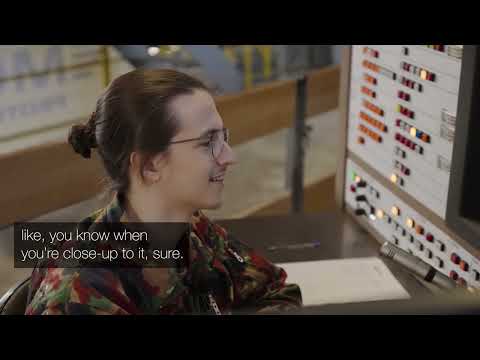
Tom Scott visits the Swiss Military Museum to see the last surviving 1970s tank-driving simulator. It uses a real camera moving over a miniature model landscape rather than any computer graphics.
 20:22
Boeing 737 Stall Escape manoeuvre, why MAX needs MCAS!!
1.2M views • 7 years ago
Mentour Pilot
Mentour Pilot, a 737 instructor, explains the approach-to-stall and escape manoeuvre and why the 737 MAX needs MCAS while the 737NG did not. He covers the jackscrew and pitch behavior in terms a general viewer can follow.
 9:57
Black Hole Star – The Star That Shouldn't Exist
15.8M views • 3 years ago
Kurzgesagt – In a Nutshell
Kurzgesagt explains black hole stars, a hypothesized kind of giant star with a black hole at its core that could be a route to early supermassive black holes.
 9:20
An astonishing old calculator - Numberphile
794K views • 8 years ago
Numberphile
Cliff Stoll shows and explains his two Friden EC-132 electronic calculators for Numberphile. The video covers how these early machines worked, including their unusual acoustic delay line memory.
 11:24
The Tube Map nearly looked very different
2.6M views • 4 years ago
Map Men
Map Men's Jay Foreman tells the story of how the London Tube map nearly looked very different, including Harry Beck's design and TfL's initial rejection of it. A short, witty history of a design icon.
 6:24
You Need a Theme, Not a Goal
5.5M views • 6 years ago
CGP Grey
CGP Grey argues for picking a theme for the year or season instead of setting goals or new year's resolutions. He explains how a theme gives direction without a pass/fail target.
 16:43
The Equation That Explains (Nearly) Everything!
1.6M views • 4 years ago
PBS Space Time
PBS Space Time explains the Standard Model Lagrangian, the single equation encapsulating the particle physics theory, and visualizes what its terms mean.
 9:35
Ancient Life as Old as the Universe
8.6M views • 3 years ago
Kurzgesagt – In a Nutshell
Kurzgesagt explores the idea that life might have arisen shortly after the Big Bang, when the whole universe was warm enough to be habitable. It discusses what that would mean for the origin and spread of life.
 1:20
Paul Otlet, visioning a web in 1934
102K views • 18 years ago
Attila Gárdos
A one-minute clip about Paul Otlet, the Belgian bibliographer who in 1934 imagined users accessing a remote database through an electric telescope over a phone line. It presents his vision as a precursor of the web.
 13:12
The 2.7% Rule for Retirement Spending
404K views • 3 years ago
Ben Felix
Ben Felix examines whether the well-known 4% retirement withdrawal rule holds up, drawing on academic papers. He argues that a safe rate may be closer to 2.7%, especially for early retirees.
 7:09
What Is the RNA World Hypothesis?
886K views • 10 years ago
Stated Clearly
Stated Clearly explains the RNA world hypothesis, which resolves the chicken-or-egg problem of genes versus enzymes by proposing that RNA once did both jobs. It outlines how evolution could begin with RNA chains alone.
 9:39
What Happened Before History? Human Origins
24.3M views • 10 years ago
Kurzgesagt – In a Nutshell
Kurzgesagt's animated overview of human origins and the vast prehistory before recorded history. It covers how modern humans emerged and spread.
 8:57
Exponential growth and epidemics
6.1M views • 6 years ago
3Blue1Brown
A short 3Blue1Brown primer on exponential and logistic growth, using early COVID-19 case data to show how epidemics grow and eventually level off. It explains why small changes in growth rate make enormous differences in outcomes.
 20:21
Vitamin D and immunity
1.6M views • 6 years ago
Dr. John Campbell
Dr. John Campbell reviews studies on vitamin D and immunity, including research on respiratory infections, during the early COVID-19 period.
 10:13
The Problem with Time & Timezones - Computerphile
4.4M views • 12 years ago
Computerphile
Tom Scott explains for Computerphile why handling time and timezones in code is so hard, walking through a simple web app that computes how long ago something happened. It covers the quirks of timezones and calendars and ends in an exasperated rant.
 12:01
Why Electronic Voting Is Still A Bad Idea
5.1M views • 6 years ago
Tom Scott
Tom Scott explains why electronic voting is a bad idea. Elections must be trusted by everyone and attacks on software scale in ways attacks on paper do not, so open source or blockchain fixes do not solve it.
 12:50
How close is nuclear fusion power?
764K views • 5 years ago
Sabine Hossenfelder
Sabine Hossenfelder explains how close nuclear fusion really is to break-even, and why headlines about ITER and lab milestones are misleading. She distinguishes plasma gain (Q plasma) from whole-system gain (Q total) and shows the latter is still far below one.
 12:09
I promise this story about microwaves is interesting.
9M views • 5 years ago
Tom Scott
Tom Scott investigates the claim that the microwave was invented to heat hamsters, and interviews James Lovelock about freezing and microwave-thawing hamsters in the 1950s. It traces early magnetron uses beyond radar.
 23:12
Simulating an epidemic
5.2M views • 6 years ago
3Blue1Brown
3Blue1Brown builds toy SIR models to simulate how an epidemic spreads and tests scenarios like social distancing, travel restrictions, central gathering places and quarantine. It was made during the early COVID-19 outbreak.
 15:09
Mouse Cursor History (and why I made my own)
3M views • 8 years ago
Posy
Posy gives a short history of the computer mouse cursor, from early straight pointers to the tilted arrow, comparing Apple and Windows designs. He then explains why he designed his own cursor set and offers it as a free download.
 9:41
Spinning Levers - How A Transmission Works (1936)
11.5M views • 14 years ago
US Auto Industry
A 1936 Chevrolet-sponsored film that explains how a car transmission works by treating gears as spinning levers. It uses physical models to make the mechanism clear.
 4:14
Computer Color is Broken
4.3M views • 11 years ago
minutephysics
MinutePhysics explains that computers store brightness nonlinearly, so blurring and blending colors in raw RGB gives wrong, dark results. It shows why mixed colors, such as in gradients, look off.
 21:52
A Look Inside Apple's $130 USB-C Cable
4.4M views • 3 years ago
Adam Savage’s Tested
Adam Savage and engineer Zach Radding examine Lumafield CT scans of Apple's $130 Thunderbolt 4 cable alongside cheaper USB-C cables. They explain the internal components that distinguish Thunderbolt from ordinary USB-C.
 31:56
Why Russia is Invading Ukraine
21.7M views • 4 years ago
RealLifeLore
RealLifeLore explains with maps why Russia invaded Ukraine, focusing on energy resources, security buffers, Black Sea access and Crimea's strategic value.
 49:02
Is SpaceX's Raptor engine the king of rocket engines?
5.4M views • 7 years ago
Everyday Astronaut
Everyday Astronaut explains the basic physics of rocket engines, the main engine cycles and fuel types, then compares SpaceX's methane-fueled full-flow staged combustion Raptor to other engines. It runs nearly 50 minutes with chapter markers.
 35:49
Breaking The Creepy AI in Police Cameras
3.8M views • 1 year ago
Benn Jordan
Benn Jordan explains how Flock Safety's license plate cameras log and share vehicle locations, and explores how adversarial AI can defeat them. It covers weak security and the surveillance risks of private police-camera networks.
 16:39
Portable Air Conditioners - Why you shouldn't like them
10.4M views • 7 years ago
Technology Connections
Technology Connections explains why single-hose portable air conditioners are inefficient and often a poor choice compared with window units. It details how the single hose pulls in warm outside air and wastes energy.
 9:19
How to Understand What Black Holes Look Like
11M views • 7 years ago
Veritasium
Veritasium explains what a black hole should look like, using J.P. Luminet's 1979 work and a cardboard 3D model to show how light bends around it. It was made just as the first black hole image was released.
 26:08
Did SARS-Cov-2 start in a Chinese lab?
182K views • 6 years ago
potholer54
Science journalist potholer54 examines the claim that SARS-CoV-2 came from a Wuhan lab, tracing the sources behind it and the weaknesses in the evidence.
 8:49
How wildlife trade is linked to coronavirus
23.3M views • 6 years ago
Vox
A Vox explainer on how the wildlife trade and wet markets are linked to coronavirus and why new diseases keep emerging in China. It stresses that most people in China do not eat wildlife.
 16:45
How Airlines Quietly Became Banks
7.4M views • 4 years ago
Wendover Productions
A Wendover Productions explainer arguing that major airlines make much of their profit from loyalty programs and co-branded credit cards rather than flying. It frames airlines as quasi-banks that sell points in bulk, using United's pandemic-era loan as a hook.
 2:58
First Follower: Leadership Lessons from Dancing Guy
8.8M views • 16 years ago
Derek Sivers
Derek Sivers annotates a short clip of a lone dancer at a festival, showing how a first follower turns a ridiculous act into a movement. He draws out lessons about leadership and making it easy to follow.
 20:39
AI Language Models & Transformers - Computerphile
354K views • 7 years ago
Computerphile
Rob Miles explains on Computerphile how language models generate plausible text and how transformers improved on recurrent networks, with a look at what comes next.
 10:15
Using ground relays with Starlink
506K views • 6 years ago
Mark Handley
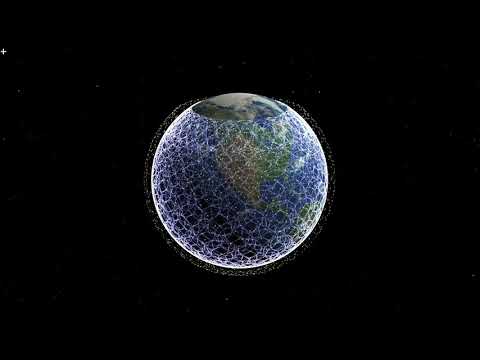
Mark Handley of UCL explains, with simulation visualizations, how early Starlink satellites without inter-satellite links could still give low-latency wide-area communication by hopping via ground relays. He shows it can beat fibre on many long paths.
 13:14
How Analog Color TV Works: The Beginnings
503K views • 8 years ago
Technology Connections
Technology Connections explains the early history of analog color television, from the 1954 start of modern color broadcasting, and how shadow masks work in CRTs. It is the first in a series on how analog color TV works.
 6:04
Car-free Streets are Amazing (and we need more of them)
484K views • 6 years ago
Not Just Bikes
Not Just Bikes explains the Dutch concept of autoluw, or nearly car-free, streets and how it is applied across the Netherlands, with examples from Toronto and Copenhagen. It also covers Amsterdam's move toward a nearly car-free city.
 1:44
What is Bitcoin? (v1)
10.3M views • 15 years ago
WeUseCoins
A two-minute animated introduction to Bitcoin from 2011, explaining it as a peer-to-peer digital currency. It was widely shared in Bitcoin's early days as the standard newcomer explainer.
 17:13
India's Semiconductor Failure
1.6M views • 5 years ago
Asianometry
Asianometry explains why India, a chip design powerhouse, cannot fabricate chips, tracing the 1980s government attempt to build a national semiconductor champion and how it collapsed. It includes the sabotage at the SCL fab.
 10:35
Why the Dutch Wait Less at Traffic Lights
1.2M views • 6 years ago
Not Just Bikes
Not Just Bikes explains how Dutch traffic lights use early detection, transit priority and conflict-free design to cut waiting. The aim is to move as many people as possible rather than as many cars.
 12:55
Humanity was born way ahead of its time. The reason is grabby aliens.
1.7M views • 5 years ago
Rational Animations
Rational Animations explains Robin Hanson's grabby aliens model, which argues that humanity looks suspiciously early in cosmic history. Expanding civilizations set a deadline that explains our timing and bears on the Fermi paradox.