google earth
 8:09
Google Earth’s Incredible 3D Imagery, Explained
3.1M views • 9 years ago
Nat and Friends
A short explainer from Nat and Friends on where Google Earth's 3D imagery comes from, how it is stitched together, and how often it is updated. It describes aircraft carrying camera rigs and photogrammetry that turns the photos into 3D models.
 29:52
Turning Earth Into a Telescope | The Terrascope
613K views • 7 years ago
Cool Worlds
David Kipping presents his proposed Terrascope, a telescope that uses Earth's atmosphere as a lens to achieve enormous magnification. He covers the history of telescopes and his path to the idea, plus Sol-scope and Jupiter-scope variants.
 7:53
Sand Castle Holds Up A Car! - Mechanically Stabilized Earth
5M views • 10 years ago
Practical Engineering
Practical Engineering explains Mechanically Stabilized Earth, where layers of reinforcement make soil strong enough to hold heavy loads, shown with a sand structure supporting a car. It notes that MSE walls are everywhere in infrastructure.
 4:14
Experiment! How Does An Owl Fly So Silently? | Super Powered Owls | BBC
25.7M views • 10 years ago
BBC Earth
A BBC Earth clip from Super Powered Owls in which the team uses sensitive sound equipment to compare owl flight with other birds. It shows why owls fly almost silently.
 8:47
Cloaking
238K views • 15 years ago
Google Search Central
Matt Cutts of Google explains what cloaking is: serving different content to search engine crawlers than to users. He covers why it violates Google's webmaster guidelines.
 6:42
Carl Sagan - Cosmos - Eratosthenes
3M views • 17 years ago
carlsagandotcom
A short clip from Carl Sagan's Cosmos in which he explains how Eratosthenes measured the circumference of the Earth using shadows in two Egyptian cities. It is a clear, visual account of an ancient scientific feat.
 11:17
The Most Radioactive Places on Earth
24.9M views • 11 years ago
Veritasium
Veritasium visits Chernobyl, Fukushima and other places to find who on Earth is exposed to the most ionizing radiation. The answer turns out to be surprising and puts radiation risk in context.
 20:14
What if Humans Are NOT Earth's First Civilization? | Silurian Hypothesis
2.6M views • 2 years ago
PBS Space Time
PBS Space Time examines the Silurian hypothesis, the idea that an industrial civilization could have existed on Earth before humans. It looks at what traces such a civilization might leave in the geological record.
 7:16
Unix and Google
9K views • 10 years ago
FOAM
A short animated simulation comparing how Multics and Unix were developed, showing why Unix's small composable programs and pipes gave it a efficiency advantage. It frames Unix as a moonshot achievable by a small team.
 1:03:31
4.5 Billion Years in 1 Hour
17.9M views • 2 years ago
Kurzgesagt – In a Nutshell
Kurzgesagt's hour-long animated film that compresses Earth's 4.5 billion year history into one hour, roughly a million years per second. It follows the evolution of life through to humanity's tiny final stretch.
 5:30
The Moon's Orbit is WEIRD
1.9M views • 2 years ago
minutephysics
A minutephysics explainer showing that the Moon's path around the Sun is not a spiral but closer to a 12-sided polygon with curved corners. It argues the Moon arguably orbits the Sun rather than the Earth.
 7:09
The Deadliest Being on Planet Earth – The Bacteriophage
35.3M views • 8 years ago
Kurzgesagt – In a Nutshell
An animated Kurzgesagt explainer on bacteriophages, viruses that kill bacteria, covering how they infect and burst cells and their potential as therapy against antibiotic-resistant bacteria.
 10:45
The 5 Most Dangerous Chemicals on Earth
11.9M views • 11 years ago
SciShow
A SciShow episode in which Hank Green introduces five of the most dangerous chemicals, from lethal toxins to substances that explode on contact. It is an entertaining overview of extreme chemical hazards.
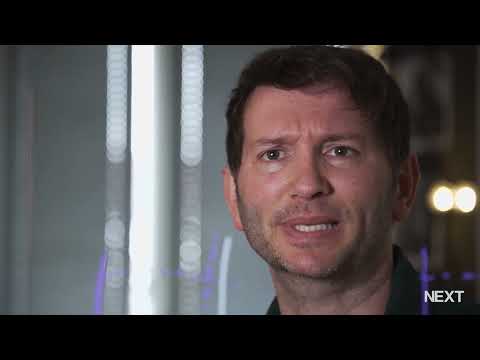 28:06
#Earth 🌏 Will we survive this ? Amazing⚡️ #crashcourse on #collapse & #environment by #ArthurKeller
101K views • 7 years ago
NEXT - Les Mondes Sensibles (byThePassengerStudio)
Arthur Keller gives a roughly half-hour crash course on environmental collapse, covering exponential growth, carrying capacity and ecological overshoot.
 17:05
How Physicists Created a Holographic Wormhole in a Quantum Computer
2.4M views • 3 years ago
Quanta Magazine
Quanta Magazine explains the 2022 experiment that claimed to create a holographic wormhole on Google's quantum computer. The description now notes that a later independent analysis questioned whether any wormhole was created.
 7:35
End of Space – Creating a Prison for Humanity
14.6M views • 7 years ago
Kurzgesagt – In a Nutshell
Kurzgesagt explains how accumulating space junk could trigger a collision cascade (Kessler syndrome) that makes launches too dangerous and traps humanity on Earth.
 27:15
The Most Misunderstood Concept in Physics
31.5M views • 3 years ago
Veritasium
Veritasium's explainer on entropy, presented as one of physics' most important and least understood concepts. It uses examples such as heat engines and the sun's energy flowing through the Earth.
 12:42
How To Terraform Venus (Quickly)
22.8M views • 5 years ago
Kurzgesagt – In a Nutshell
Kurzgesagt lays out a speculative plan to terraform Venus, covering its hostile atmosphere and how it might be made Earth-like, with a sources page linked.
 45:13
You've (Likely) Been Playing The Game Of Life Wrong
11.6M views • 11 months ago
Veritasium
Veritasium explains why many real-world systems follow power laws rather than normal distributions. It covers self-organized criticality, with simulations of sandpiles, magnetism and forest fires.
 28:44
Arcologies
397K views • 10 years ago
Isaac Arthur
An Isaac Arthur episode on arcologies, self-sufficient habitats that could house whole cities, on Earth or on harsh worlds. It covers how such structures might work and what limits their size.
 26:13
The Smartphone CPU Review You NEED to Watch!
345K views • 4 years ago
Geekerwan
Geekerwan reviews smartphone CPUs by power efficiency rather than benchmark scores, with test methodology and chapters on Qualcomm, Apple, Samsung and Google chips. It explains why high benchmark scores can coexist with heat and poor battery life.
 28:33
Terence Tao on the cosmic distance ladder
6.5M views • 1 year ago
3Blue1Brown
Terence Tao and Grant Sanderson of 3Blue1Brown walk through the cosmic distance ladder, showing how humans measured distances from the Earth to the Moon, Sun, planets and beyond. It includes animations and the history behind each step.
 7:44
Diatoms: Tiny Factories You Can See From Space
811K views • 7 years ago
Journey to the Microcosmos
An episode of Journey to the Microcosmos, hosted by Hank Green, about diatoms, single-celled algae with glass shells. It covers their role in producing a large share of Earth's oxygen and their uses in beer filtering, paint and kitty litter.
 30:14
Power Satellites & Space Based Solar Power
254K views • 8 years ago
Isaac Arthur
Isaac Arthur explores space-based solar power, in which satellites beam energy down via microwaves to rectennas on Earth. He discusses feasibility, profitability and its role in spurring space colonization.
 28:11
Why Everyone Is Talking About Data Centers In Space
408K views • 10 months ago
Scott Manley
Scott Manley examines why SpaceX, Google and others are looking at orbital data centers. He walks through the economics, heat rejection and solar power arguments, with links to the Lumen/Starcloud and Google Suncatcher papers.
 26:02
Yellowstone Won't Explode And End Civilisation (Sorry) | The Deep Dive
7.8M views • 4 years ago
Soup Emporium
Soup Emporium's deep dive argues that Yellowstone is not a ticking timebomb. It goes through uplift and subsidence, earthquakes and what the caldera really is, to rebut supervolcano doom claims.
 10:29
Are There Lost Alien Civilizations in Our Past?
14.2M views • 4 years ago
Kurzgesagt – In a Nutshell
Kurzgesagt asks whether advanced civilizations could have existed on Earth in the deep past and left little evidence. It looks at time as a dimension for searching for alien civilizations and the limits of the geological record.
 7:00
1,000km Cable to the Stars - The Skyhook
13M views • 6 years ago
Kurzgesagt – In a Nutshell
Kurzgesagt explains the skyhook, a rotating cable with a counterweight that could catapult spacecraft from Earth orbit toward deep space. It covers why it would make space travel cheaper and more efficient.
 17:24
The touch lamp; a neat idea, and older than you'd think!
1.8M views • 6 years ago
Technology Connections
Technology Connections explains how touch lamps work and traces them back through patents to the 1950s, far earlier than most people assume.
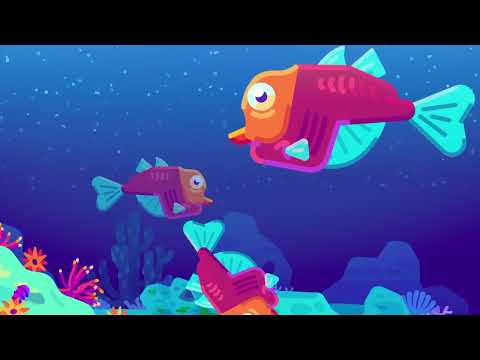 9:29
The Most Extreme Explosion in the Universe
11.6M views • 3 years ago
Kurzgesagt – In a Nutshell
A Kurzgesagt animation on supernovae, the most powerful explosions in the universe. It explains their role in creating elements and what would happen to Earth if one occurred nearby.