init systems
 1:22:45
Building Software Systems At Google and Lessons Learned
257K views • 15 years ago
Stanford
Jeff Dean of Google describes his experiences building Google's systems and how its infrastructure evolved over time. The Stanford talk covers search, scaling tipping points and lessons from building large-scale software.
 14:36
Distributed Systems 1.1: Introduction
382K views • 6 years ago
Martin Kleppmann
The first lecture in Martin Kleppmann's 8-lecture distributed systems series from the University of Cambridge undergraduate course. It introduces the subject, and accompanying lecture notes are available.
 1:06:44
01 - Course Introduction & Relational Model (CMU Databases Systems / Fall 2019)
248K views • 7 years ago
CMU Database Group
The first lecture of Andy Pavlo's CMU 15-445 Intro to Database Systems (Fall 2019), covering course introduction and the relational model.
 1:30:50
Lecture 7: Introduction to Galois Fields for the AES by Christof Paar
278K views • 12 years ago
Introduction to Cryptography by Christof Paar
Christof Paar's university lecture introducing Galois fields and finite-field arithmetic as used in AES. It covers the mathematics behind the AES S-box.
 1:00:34
1. Introduction, Finite Automata, Regular Expressions
626K views • 5 years ago
MIT OpenCourseWare
The first lecture of Michael Sipser's MIT 18.404J Theory of Computation course, covering course mechanics, finite automata, regular languages and regular expressions. It proves closure of regular languages under union and begins concatenation.
 1:19:35
Lecture 1: Introduction
921K views • 6 years ago
MIT 6.824: Distributed Systems
The opening lecture of MIT 6.824 Distributed Systems (Spring 2020), introducing the course and core challenges of distributed systems. It begins a playlist that goes on to cover Raft and other consensus papers in Go.
 49:39
NeWS: A Networked and Extensible Window System, lecture by James Gosling
5K views • 10 years ago
Computer History Museum
A 1990 lecture by James Gosling on NeWS, Sun's networked window system in which clients send PostScript programs to the server for execution. It covers the high-level imaging model and compares NeWS with similar systems.
 52:54
Rust at speed — building a fast concurrent database
225K views • 7 years ago
Jon Gjengset
A guest lecture Jon Gjengset gave at Two Sigma on using Rust for large, high-performance systems. It covers why Rust suits such projects, the Noria research database, a concurrent data structure used in it, and practical experience.
 39:49
Lec 1 | MIT 18.06 Linear Algebra, Spring 2005
4.9M views • 17 years ago
MIT OpenCourseWare
The first lecture of Gilbert Strang's MIT 18.06 Linear Algebra course, covering the geometry of linear equations. It opens a full 35-lecture university course.
 2:31:27
Lecture: 2017 Maps of Meaning 01: Context and Background
6.4M views • 9 years ago
Jordan B Peterson
The first lecture of Jordan Peterson's 2017 Maps of Meaning course, setting out the Cold War context for his theory of belief and culture. He introduces the narrative structure of culture and archetypal characters for the individual, the known and the unknown.
 1:06:34
Paxos lecture (Raft user study)
114K views • 13 years ago
Diego Ongaro
John Ousterhout's slides-and-voiceover lecture on Paxos, made for the Raft user study comparing how students learn Raft and Paxos. It is a full introduction to the Paxos consensus algorithm.
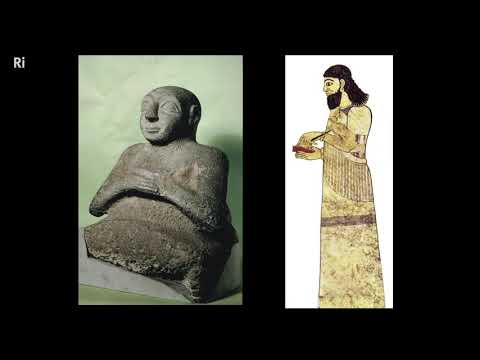 38:55
Cracking Ancient Codes: Cuneiform Writing - with Irving Finkel
2.8M views • 7 years ago
The Royal Institution
Irving Finkel of the British Museum lectures at the Royal Institution on the invention and decipherment of cuneiform writing in Mesopotamia, and why it is so hard to translate.
 19:32
Control Bootcamp: Overview
560K views • 9 years ago
Steve Brunton
The opening lecture of Steve Brunton's Control Bootcamp, covering the kinds of control and why closed-loop feedback matters. It starts a series that follows the control chapter of the Brunton and Kutz data-driven science book.
 58:17
Raft lecture (Raft user study)
87K views • 13 years ago
Diego Ongaro
John Ousterhout lectures on the Raft consensus algorithm, made for the Raft user study comparing how students learn Raft and Paxos. It covers leader election and log repair.
 14:34
Blockchains Are a Bad Idea (James Mickens)
68K views • 8 years ago
HBS Digital Initiative
James Mickens of Harvard gives a funny lecture at HBS's Future Assembly arguing that blockchains are a very bad idea. He covers their trust, legal and practical shortcomings for real-world problems.
 1:20:09
Confessions of a Converted Lecturer: Eric Mazur
207K views • 16 years ago
UMBCtube
Harvard physicist Eric Mazur explains how he realized his students were memorizing rather than understanding, and how he changed his teaching. He presents peer instruction and data showing improved student performance.
 53:25
The Only Unbreakable Law
487K views • 4 years ago
Molly Rocket
Casey Muratori's lecture, originally given at the Technical University of Madrid, arguing that Conway's Law is the only viable candidate for a true law of software architecture. He explains how software mimics the organization over time, using examples like Windows' multiple volume controls.
 11:41
RSA ANIMATE: Changing Education Paradigms
18M views • 16 years ago
Royal Society of Arts
An RSA Animate drawn from a Sir Ken Robinson talk arguing that current education systems are modeled on the industrial age. It discusses divergent thinking, standardization, and how schools disengage kids.
 1:15:47
Richard Feynman Computer Science Lecture - Hardware, Software and Heuristics
978K views • 14 years ago
Muon Ray
A lecture by Richard Feynman on how computers work, using the analogy of a filing clerk that becomes progressively dumber and faster. It also covers heuristics and how computers handle data and solve problems in finite time.
 1:16:55
LEADERSHIP LAB: Writing Beyond the Academy 1.23.15
1.7M views • 11 years ago
UChicago Social Sciences
Larry McEnerney of the University of Chicago Writing Program argues that good writing is defined by what readers value, not by rules or the writer's own ideas. He explains why academic habits fail outside academia and how to write so readers find the work valuable.
 1:14:46
Arithmetic, Population and Energy - a talk by Al Bartlett
201K views • 13 years ago
lXlSalemlXl
Physicist Al Bartlett's well-known lecture on the arithmetic of exponential growth, applied to population, energy consumption and resource depletion. He argues that steady percentage growth cannot be sustained on a finite planet and that most public discussion ignores this.
 1:14:16
Exponential Growth Arithmetic, Population and Energy, Dr. Albert A. Bartlett
84K views • 11 years ago
Hiroob
A recording of physicist Albert Bartlett's well-known lecture on the arithmetic of exponential growth, applied to population and energy use. He argues that steady percentage growth in a finite world cannot continue and sneaks up suddenly.
 10:54
RSA ANIMATE: Language as a Window into Human Nature
1.6M views • 15 years ago
Royal Society of Arts
An RSA Animate in which Steven Pinker explains how the mind builds infinite meanings from finite language, and why people often speak indirectly. It covers ambiguity, politeness and mutual knowledge, including the emperor's new clothes example.
 46:29
Lecture 1: Probability and Counting | Statistics 110
1.8M views • 13 years ago
Harvard University
Lecture 1 of Harvard's Statistics 110 with Joe Blitzstein, introducing sample spaces, the naive definition of probability, counting, binomial coefficients and the sampling table.
 1:06:15
The Hyperbolic Geometry of DMT Experiences (@Harvard Science of Psychedelics Club)
1.4M views • 7 years ago
Qualia Research Institute
Andres Gomez Emilsson of the Qualia Research Institute presents a model of DMT experiences using hyperbolic geometry and dynamical systems theory. He describes how different intoxication levels correspond to changing curvature and information content of experience.
 1:14:16
Arithmetic, Population and Energy - FULL LENGTH
191K views • 14 years ago
kip399
Physicist Albert Bartlett's full-length lecture on how steady exponential growth in population and energy use collides with finite resources. It uses examples like bacteria in a bottle and covers peak oil.
 1:20:33
Lecture 1 | Convex Optimization I (Stanford)
753K views • 18 years ago
Stanford
The introductory lecture of Stephen Boyd's Stanford Convex Optimization I course (EE 364A). It outlines convex sets, functions and problems, and the course's coverage of least-squares, linear and semidefinite programming, duality and interior-point methods.
 1:37:33
21. Chaos and Reductionism
1.8M views • 15 years ago
Stanford
Robert Sapolsky's Stanford lecture on chaos and reductionism, which he calls one of the hardest of the course. It examines the limits of breaking systems into parts to understand them and introduces chaotic systems.