materials science
 15:00
The Material Science of Metal 3D Printing
2.7M views • 7 years ago
Real Engineering
Real Engineering explains the materials science behind metal 3D printing, including crystal structure, laser sintering, and why printed parts develop fatigue cracks. It shows how process imperfections limit the strength of printed metal.
 39:34
The Ridiculous Engineering Of Jet Engines
16.8M views • 11 months ago
Veritasium
Veritasium explains how jet engines run hotter than their components' melting points, using cooling air and single-crystal superalloy turbine blades. It covers how the blades are grown as aligned crystals.
Topic match · Materials science 29:48
MOLTEN GLASS VS Prince Rupert's Drop - Smarter Every Day 285
5.8M views • 3 years ago
SmarterEveryDay
Destin Sandlin of Smarter Every Day explores molten glass and Prince Rupert's drops with a glass artist, including a process that freezes the moment glass shatters and an artisan who makes the drops.
Topic match · Materials science 9:34
Was Roman Concrete Better?
2.7M views • 8 years ago
Practical Engineering
Practical Engineering compares modern concrete with that of the Roman Empire, covering modern techniques like roller compacted concrete and water-reducing admixtures. It explains the tradeoffs of Roman construction versus reinforced concrete.
Topic match · Materials science 8:04
Khan Academy and the Effectiveness of Science Videos
1.7M views • 15 years ago
Veritasium
Veritasium examines research suggesting science explainer videos like Khan Academy's make students feel they understand while tests show they have not learned, because misconceptions go unaddressed. It suggests how to partly fix this.
 9:11
What is Concrete?
2.5M views • 8 years ago
Practical Engineering
Practical Engineering gives a short introduction to concrete, covering the difference between concrete and cement, the ingredients, and reinforcement. It includes a hydraulic press demonstration of compressive strength.
Topic match · Materials science 11:54
Building a Cathedral without Science or Mathematics: The Engineering Method Explained
1.1M views • 3 years ago
engineerguy
Bill Hammack of engineerguy explains how medieval engineers designed stone cathedrals using rules of thumb, with no science, mathematics or literacy. He uses it to define the engineering method.
 23:05
World's Strongest Magnet!
16.4M views • 3 years ago
Veritasium
Veritasium visits the National High Magnetic Field Laboratory to see the world's strongest magnets and demonstrate effects like eddy currents. It covers what intense magnetic fields do to materials and objects.
Topic match · Materials science 10:26
Tiny meteorites are everywhere. Here’s how to find them.
1.2M views • 7 years ago
Verge Science
Verge Science's pilot of its Trial & Error series follows amateur scientist Jon Larsen on a hunt for micrometeorites. It shows how tiny space rocks can be found on rooftops and confirmed under a microscope.
 15:41
How anti-theft tags work - magnetostriction
886K views • 10 years ago
Applied Science
Applied Science explains how retail anti-theft tags work. A tiny magnetostrictive strip acts as a mechanical oscillator excited by a magnetic field, and magnetizing or demagnetizing it arms or disarms the tag.
 21:12
The Infinite Pattern That Never Repeats
21.9M views • 6 years ago
Veritasium
Veritasium explains how Penrose tilings and quasicrystals overturned the belief that 5-fold symmetry and non-periodic crystals were impossible, including an interview with Paul Steinhardt.
Topic match · Materials science 18:32
The world depends on a collection of strange items. They're not cheap
12.6M views • 3 years ago
Veritasium
Veritasium visits NIST to explain Standard Reference Materials, the carefully characterized items such as peanut butter used to calibrate instruments and keep measurements consistent. It covers why they exist and why they are expensive.
 10:42
1. Climate Change -- the scientific debate
530K views • 18 years ago
potholer54
The first video in potholer54's climate series, giving a basic look at how climate scientists infer that man-made carbon gases are changing the climate. It is a short explainer meant to present the scientific evidence plainly.
 45:08
Adam Savage's Epiphany on the Science of Measurement!
1.1M views • 4 years ago
Adam Savage’s Tested
Adam Savage shows a set of Mitutoyo ceramic gauge blocks and uses them to explain metrology, the science of measurement. He argues that accuracy and precision work differently than most people assume, which changes how you think about every measuring tool.
 20:30
Does Superdeterminism save Quantum Mechanics? Or does it kill free will and destroy science?
989K views • 4 years ago
Sabine Hossenfelder
Sabine Hossenfelder explains superdeterminism as an interpretation of quantum mechanics, addressing common objections and misconceptions, including the worry that it kills free will or science. She ties it to Bell's theorem and hidden variables.
 18:49
The Snowflake Myth
10.6M views • 4 years ago
Veritasium
Veritasium visits snowflake expert Dr Ken Libbrecht, who grows designer snowflakes in the lab. The video explains how snowflakes form and why they take so many shapes.
Topic match · Materials science 12:50
Fasting vs. Eating Less: What's the Difference? (Science of Fasting)
13.2M views • 9 years ago
Joseph Everett - WIL
A short explainer on the physiological differences between fasting and simply eating less. It covers ketosis, ghrelin and hunger waves, and the hormonal effects of fasting.
 44:13
Doctor Dissects the Wim Hof Method - Cold Hard Science Analysis
1.8M views • 7 years ago
Medlife Crisis
A cardiologist runs a detailed, skeptical review of the Wim Hof Method, covering the research on cold exposure and breathing techniques. It also teaches how to read scientific statistics critically.
 32:57
Are Seed Oils Inflammatory?! (The *Evidence* No One Shows)
480K views • 4 years ago
Nutrition Made Simple!
A nutrition-science explainer reviewing the human evidence on whether seed oils cause inflammation. It looks at nine different seed oils, heated oils, and genetic variability, and compares omega-6 intake with saturated fat.
 12:10
The Science of Thinking
9.3M views • 9 years ago
Veritasium
A Veritasium explainer on how the brain works and how we learn. It is inspired by Kahneman's Thinking, Fast and Slow and covers System 1 and System 2 thinking and why harder learning builds skill.
 11:33
A new way to visualize General Relativity
3.6M views • 6 years ago
ScienceClic English
ScienceClic explains why the rubber sheet analogy for general relativity is misleading and offers a new visualization that includes the curvature of time and shows gravity as motion through curved spacetime.
 3:35
How our voting system (and IRV) betrays your favourite candidate
35K views • 12 years ago
The Center for Election Science
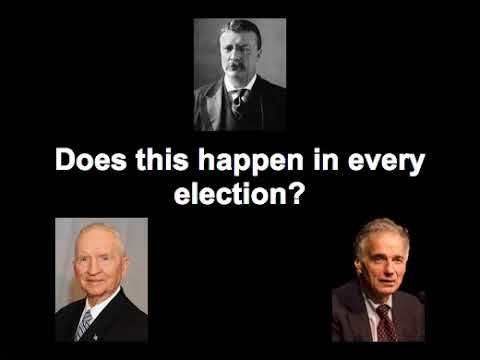
The Center for Election Science explains favorite betrayal in instant-runoff voting: in some elections, ranking your favorite first can cause your least favorite to win. It contrasts this with plurality voting's spoiler problem.
 15:53
Quantum Field Theory visualized
2.7M views • 6 years ago
ScienceClic English
ScienceClic gives a 15-minute animated introduction to quantum field theory, covering fields, spin, conserved quantities, the standard model and interactions.
 11:57
We all move at the Speed of Light
1.4M views • 8 years ago
ScienceClic English
ScienceClic explains why nothing can go faster than light by treating motion through space and time together, so everything moves at the speed of light through spacetime. It uses animated visuals to cover relativity basics in 12 minutes.
 14:53
What would we see if we fell into a Black Hole?
7.5M views • 5 years ago
ScienceClic English
ScienceClic visualizes what you would see falling into a black hole, from the approach and the accretion disc to crossing the horizon, in 15 minutes.
 18:13
Try to Rule Fairly and You'll Be Overthrown
26M views • 10 years ago
CGP Grey
CGP Grey's animated adaptation of The Dictator's Handbook, explaining how rulers stay in power by keeping a small group of key supporters happy rather than ruling fairly. It lays out selectorate theory and how resources shape regimes.
 12:09
I promise this story about microwaves is interesting.
9M views • 5 years ago
Tom Scott
Tom Scott investigates the claim that the microwave was invented to heat hamsters, and interviews James Lovelock about freezing and microwave-thawing hamsters in the 1950s. It traces early magnetron uses beyond radar.
 4:58
You Actually Share Your Brain With a Silent Stranger
20.2M views • 10 years ago
CGP Grey
CGP Grey explains split-brain patients, where severing the corpus callosum lets the two hemispheres act independently. He uses this to explore the idea of two minds in one head.
 24:57
The Man Who Accidentally Killed The Most People In History
43.5M views • 4 years ago
Veritasium
Veritasium tells the story of Thomas Midgley Jr., who introduced leaded gasoline and CFCs, and covers the science behind lead exposure and ozone damage. It also touches on isotope geochemistry used to uncover the history.
 21:33
A CONSERVATIVE solution to global warming (Part 1)
278K views • 8 years ago
potholer54
Potholer54 presents the climate science case and a market-oriented, conservative-friendly approach to addressing global warming, with sources listed. It is part one of a two-part series.
 10:51
Is olive oil safe at high heat? Does it taste bad?
1.9M views • 6 years ago
Adam Ragusea
Adam Ragusea examines whether olive oil is unsafe for high-heat cooking and whether it tastes bad when heated. He cites studies showing it is among the most stable cooking oils and that smoke-point worries are overblown.
 12:42
How To Terraform Venus (Quickly)
22.8M views • 5 years ago
Kurzgesagt – In a Nutshell
Kurzgesagt lays out a speculative plan to terraform Venus, covering its hostile atmosphere and how it might be made Earth-like, with a sources page linked.
 14:06
Testing 432 Hz Frequencies (and temperaments)
4M views • 7 years ago
Adam Neely
Adam Neely tests the claims for tuning to A=432 Hz by trying the unusual tuning systems that its proponents' numerology requires. He compares how they sound against standard tuning and temperaments.
 13:47
Why Hershey bars taste like vomit (and I love them)
3.1M views • 6 years ago
Adam Ragusea
Adam Ragusea explores why Hershey's chocolate tastes the way it does to many non-Americans, tracing it to butyric acid and Hershey's history, and why familiarity makes Americans love it. He compares it with British Cadbury.
 26:33
The Most Underrated Algorithm
10.8M views • 4 years ago
Veritasium
Veritasium tells the story of the Fast Fourier Transform, from its use in detecting nuclear tests to Cold War politics, and how it could have changed the arms race. It includes a short, intuitive explanation of what the Fourier transform does.
 4:10
Where Do Trees Get Their Mass?
2.5M views • 14 years ago
Veritasium
Veritasium asks people where a tree's mass comes from, then explains that most of a dry tree's mass originates from carbon dioxide in the air. It combines street interviews with a short explanation of photosynthesis.
 6:50
13 Misconceptions About Global Warming
5.9M views • 12 years ago
Veritasium
Veritasium debunks common climate change myths in under seven minutes, with references to NASA and published research. Topics include CO2 sources, sea ice and 1970s predictions of cooling.
 11:48
RSA ANIMATE: The Divided Brain
2.2M views • 15 years ago
Royal Society of Arts
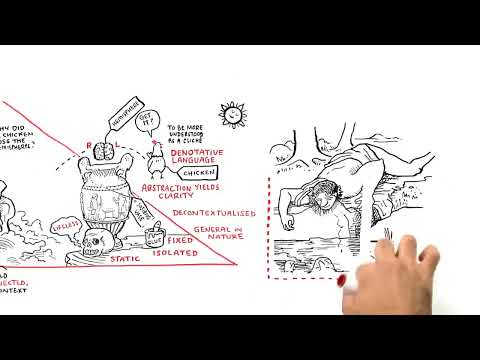
An RSA Animate summary of Iain McGilchrist's lecture on the divided brain, arguing the brain's two hemispheres attend to the world differently and that this has shaped culture and society.
 28:33
Terence Tao on the cosmic distance ladder
6.5M views • 1 year ago
3Blue1Brown
Terence Tao and Grant Sanderson of 3Blue1Brown walk through the cosmic distance ladder, showing how humans measured distances from the Earth to the Moon, Sun, planets and beyond. It includes animations and the history behind each step.
 9:55
Everyone is Wrong About Mexican Coke (Even @johnnyharris)
1.2M views • 1 year ago
Reactions
ACS Reactions investigates why Mexican Coke, supposedly cane sugar sweetened, tested as having glucose and fructose, explaining that sucrose breaks down in acidic soda.