mathologer
 41:44
Numberphile v. Math: the truth about 1+2+3+...=-1/12
3.3M views • 8 years ago
Mathologer
Mathologer examines the infamous Numberphile claim that 1+2+3+... equals -1/12, explaining what is wrong with the calculation and how it connects to real math like the zeta function and analytic continuation.
Topic match · Recreational & visual math 13:37
Times Tables, Mandelbrot and the Heart of Mathematics
2.8M views • 11 years ago
Mathologer
Mathologer shows how times table diagrams on a circle produce cardioids and other curves connected to the Mandelbrot set. He explains the patterns and links to a tool for making your own diagrams.
Topic match · Recreational & visual math 13:29
Infinite fractions and the most irrational number
658K views • 10 years ago
Mathologer
Mathologer uses continued fractions to show why the golden ratio is the most irrational number, comparing it with root 2, e and pi and pointing to where this shows up in nature.
Topic match · Recreational & visual math 25:35
Epicycles, complex Fourier series and Homer Simpson's orbit
421K views • 8 years ago
Mathologer
Mathologer explains epicycles and complex Fourier series, inspired by an animation of Homer Simpson drawn with epicycles. It covers the shape of the Moon's orbit around the Sun and how to make your own epicycle drawings.
Topic match · Recreational & visual math 34:25
Ramanujan: Making sense of 1+2+3+... = -1/12 and Co.
3.6M views • 10 years ago
Mathologer
Mathologer examines how identities like 1+2+3+... = -1/12 arise in Ramanujan's work, starting from his 1913 letter to Hardy. The video explains the rules for summing infinite series and why such results are meaningful but not naive sums.
Topic match · Recreational & visual math 14:27
A simple trick to design your own solutions for Rubik's cubes
1.6M views • 10 years ago
Mathologer
Mathologer shows a simple idea, the commutator, that lets anyone who can solve the first layer design their own full Rubik's cube solution. The same idea carries over to other symmetric twisty puzzles such as the Megaminx.
Topic match · Recreational & visual math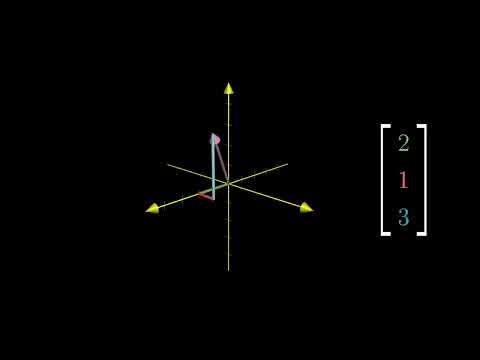 9:52
Vectors | Chapter 1, Essence of linear algebra
13M views • 10 years ago
3Blue1Brown
The first chapter of 3Blue1Brown's Essence of Linear Algebra series, introducing vectors with animated geometric visuals. It begins a series that builds intuition for linear algebra from the basics.
Topic match · Recreational & visual math 19:42
But what is the Fourier Transform? A visual introduction.
12.6M views • 8 years ago
3Blue1Brown
3Blue1Brown's animated visual introduction to the Fourier Transform, showing how a signal breaks into frequency components.
Topic match · Recreational & visual math 18:40
But what is a neural network? | Deep learning chapter 1
25.1M views • 9 years ago
3Blue1Brown
3Blue1Brown's first chapter on deep learning explains what neurons and layers are and the math underlying a basic neural network, using handwritten digit recognition with visual animations.
Topic match · Recreational & visual math 24:26
The Beauty of Bézier Curves
2.2M views • 5 years ago
Freya Holmér
Freya Holmer explains how Bezier curves work, from the helper-line construction to their uses in animation, text rendering and shapes. It uses visuals from her Unity Shapes plugin and was a SoME1 contest winner.
Topic match · Recreational & visual math 1:13:50
The Continuity of Splines
1.9M views • 3 years ago
Freya Holmér
Freya Holmer's 74-minute video essay on splines, covering Bezier curves, B-splines, derivatives and the different levels of continuity (C0, C1, C2), built with custom animation tools. She notes she did not cover non-uniform splines.
Topic match · Recreational & visual math 1:00:43
Jim Simons (full length interview) - Numberphile
1.4M views • 11 years ago
Numberphile2
The full-length Numberphile interview with mathematician and hedge fund founder Jim Simons. He discusses his path from mathematics and codebreaking to founding Renaissance Technologies, his use of algorithms in markets, and his philanthropy.
Topic match · Recreational & visual math 25:16
But how does bitcoin actually work?
18.1M views • 9 years ago
3Blue1Brown
3Blue1Brown explains the math and mechanics behind Bitcoin visually: ledgers, digital signatures, proof of work and the blockchain, building up a decentralized payment system from first principles.
Topic match · Recreational & visual math 7:48
Conway's Game Of Life in APL
236K views • 17 years ago
Dyalog
A short Dyalog demonstration building Conway's Game of Life in a single line of APL, step by step. It shows how array operations replace loops.
Topic match · Recreational & visual math 17:05
The essence of calculus
11.9M views • 9 years ago
3Blue1Brown
The first video of 3Blue1Brown's Essence of Calculus series, which builds toward integrals, derivatives, and the fundamental theorem of calculus from a simple geometry question. It aims to make viewers feel they could have invented calculus themselves.
Topic match · Recreational & visual math 6:49
The man with 1,000 Klein Bottles UNDER his house - Numberphile
2.2M views • 11 years ago
Numberphile
Numberphile visits Cliff Stoll, the man behind ACME Klein Bottles, and sees how he stores a thousand glass Klein bottles in a crawlspace under his house. A remote-controlled forklift fetches them.
Topic match · Recreational & visual math 5:09
Essence of linear algebra preview
2.8M views • 10 years ago
3Blue1Brown
A five-minute preview of 3Blue1Brown's Essence of Linear Algebra series, which uses animation to build geometric intuition for topics from a standard linear algebra course.
Topic match · Recreational & visual math 44:23
A Swift Introduction to Geometric Algebra
1.1M views • 6 years ago
sudgylacmoe
An animated introduction to geometric algebra, presented as a language that can describe most of physics. It was made with manim and covers multivectors and how they generalize familiar tools like cross products and quaternions.
Topic match · Recreational & visual math 11:15
The hardest problem on the hardest test
16.5M views • 8 years ago
3Blue1Brown
3Blue1Brown walks through a very hard Putnam competition problem and its elegant solution, emphasizing the visual intuition and the thought process behind solving it.
Topic match · Recreational & visual math 5:47
Imaginary Numbers Are Real [Part 1: Introduction]
8.6M views • 11 years ago
Welch Labs
The first part of Welch Labs' series on imaginary numbers, presenting them as the natural extension of the number line into two dimensions. It covers the history and the math with strong visuals.
Topic match · Recreational & visual math 10:03
The determinant | Chapter 6, Essence of linear algebra
5M views • 10 years ago
3Blue1Brown
A 10-minute 3Blue1Brown chapter explaining the determinant as the factor by which a linear transformation scales area or volume. It builds the idea geometrically with animations before any formulas.
Topic match · Recreational & visual math 34:00
Math's Fundamental Flaw
30.8M views • 5 years ago
Veritasium
Veritasium's explainer on Godel's incompleteness theorems and the limits of mathematical proof, tracing set theory, Hilbert's program and the road to Turing and modern computing.
Topic match · Recreational & visual math 21:36
Fractals are typically not self-similar
4.6M views • 9 years ago
3Blue1Brown
3Blue1Brown explains fractal dimension and shows why many fractals are not strictly self-similar. Self-similarity turns out to be a special case of the broader idea of fractional dimension.
Topic match · Recreational & visual math 24:14
The Banach–Tarski Paradox
49.1M views • 11 years ago
Vsauce
Vsauce's roughly 24 minute explainer on the Banach-Tarski paradox, building from infinity and set theory to the decomposition of a sphere into pieces that form two spheres.
Topic match · Recreational & visual math 25:13
Thinking outside the 10-dimensional box
3.2M views • 9 years ago
3Blue1Brown
3Blue1Brown visualizes high-dimensional spheres to explain a surprising puzzle about how a sphere fits in a box as dimensions grow. It builds geometric intuition for counterintuitive properties of high-dimensional space.
Topic match · Recreational & visual math 1:30
Life in life
4.1M views • 14 years ago
Phillip Bradbury
A two-minute video of Conway's Game of Life running inside Conway's Game of Life, built from OTCA metapixels and Golly. It zooms smoothly between scales.
Topic match · Recreational & visual math 17:16
Eigenvectors and eigenvalues | Chapter 14, Essence of linear algebra
6.4M views • 10 years ago
3Blue1Brown
3Blue1Brown's chapter on eigenvectors and eigenvalues in the Essence of Linear Algebra series. It builds a visual intuition for what they mean, why an eigenbasis is useful, and ends with a puzzle.
Topic match · Recreational & visual math 14:27
All the Numbers - Numberphile
1.8M views • 7 years ago
Numberphile
Matt Parker talks Numberphile through the different kinds of numbers: algebraic, transcendental, computable, normal, and beyond. It shows how few numbers we can actually name or describe.
Topic match · Recreational & visual math 18:07
The more general uncertainty principle, regarding Fourier transforms
2.3M views • 8 years ago
3Blue1Brown
3Blue1Brown shows how the uncertainty principle arises from Fourier transforms. A wave packet cannot be narrow in both position and frequency, so the principle is a property of waves rather than of measurement.
Topic match · Recreational & visual math 31:51
Visualizing the 4d numbers Quaternions
5.6M views • 8 years ago
3Blue1Brown
3Blue1Brown builds visual intuition for quaternions, showing how to think about this four-dimensional number system using stereographic projection and rotations in 3D space. It is part one of a two-part series with an interactive companion site.
Topic match · Recreational & visual math 37:54
Do Chairs Exist?
16.2M views • 5 years ago
Vsauce
A Vsauce video exploring whether chairs exist, through metaphysics, mereology and the philosophy of categorizing objects. It runs about 38 minutes and cites academic work on ontology.
Topic match · Recreational & visual math 8:23
How Big is Graham's Number? (feat Ron Graham)
1.7M views • 12 years ago
Numberphile
Numberphile talks with mathematician Ron Graham about the magnitude of Graham's number, building up from arrow notation to show how impossibly large it is. It is part of a series of videos on this number.
Topic match · Recreational & visual math 51:16
Why can't you multiply vectors?
524K views • 3 years ago
Freya Holmér
Freya Holmer's Dutch Game Day 2023 talk asking why vectors can't be multiplied, building from complex numbers to a single axiom and arriving at geometric algebra, quaternions and multivectors.
Topic match · Recreational & visual math 1:07:02
Stanford Lecture: Don Knuth—"A Conjecture That Had To Be True" (2017)
30K views • 8 years ago
Stanford Online
Donald Knuth's 2017 Christmas Tree Lecture at Stanford about a combinatorial geometry problem whose computed numbers matched a striking formula. He tells the story of the conjecture and its sequel.
Topic match · Recreational & visual math 15:08
What does it feel like to invent math?
4.6M views • 11 years ago
3Blue1Brown
3Blue1Brown explores infinite sums from convergent to divergent, with an introduction to the 2-adic metric, themed on the cycle between discovering and inventing mathematics.
Topic match · Recreational & visual math 10:44
P vs. NP and the Computational Complexity Zoo
3.7M views • 12 years ago
hackerdashery
An 11-minute animated introduction to P vs. NP and the wider landscape of complexity classes, inspired by the Complexity Zoo wiki. It assumes no background in computer science.
Topic match · Recreational & visual math 23:12
Simulating an epidemic
5.2M views • 6 years ago
3Blue1Brown
3Blue1Brown builds toy SIR models to simulate how an epidemic spreads and tests scenarios like social distancing, travel restrictions, central gathering places and quarantine. It was made during the early COVID-19 outbreak.
Topic match · Recreational & visual math 22:11
But what is the Riemann zeta function? Visualizing analytic continuation
5.4M views • 9 years ago
3Blue1Brown
3Blue1Brown visualizes the Riemann zeta function and the analytic continuation that extends it beyond where its series converges, building toward the Riemann hypothesis.
Topic match · Recreational & visual math 22:21
Why do prime numbers make these spirals? | Dirichlet’s theorem and pi approximations
7.6M views • 7 years ago
3Blue1Brown
3Blue1Brown explains why plotting primes in polar coordinates produces spiral patterns, using modular arithmetic, Dirichlet's theorem and rational approximations of pi.
Topic match · Recreational & visual math 23:46
How To Count Past Infinity
29.7M views • 10 years ago
Vsauce
Vsauce's Michael Stevens takes viewers past infinity using transfinite numbers, ordinals and cardinals, with input from mathematician Hugh Woodin. It is a fast-paced, mind-bending tour of different sizes of infinity.
Topic match · Recreational & visual math