mobile soc
 7:39
Propaganda Games: Sesame Credit - The True Danger of Gamification - Extra Credits
2M views • 10 years ago
Extra Credits
An Extra Credits episode on China's Sesame Credit, which gamifies obedient citizenship through a social score. It covers how the system rewards conformity and pressures people through their friends' behavior.
 11:32
The Internet is Worse Than Ever – Now What?
9.1M views • 2 years ago
Kurzgesagt – In a Nutshell
A Kurzgesagt video arguing that social media's problem is information flooding and tribal polarization. It suggests a return to smaller online communities and more in-person interaction.
 26:13
The Smartphone CPU Review You NEED to Watch!
345K views • 4 years ago
Geekerwan
Geekerwan reviews smartphone CPUs by power efficiency rather than benchmark scores, with test methodology and chapters on Qualcomm, Apple, Samsung and Google chips. It explains why high benchmark scores can coexist with heat and poor battery life.
 7:49
America Keeps Rejecting an ID Card It Already Has
13.6M views • 9 years ago
CGP Grey
CGP Grey explains the history of the US Social Security card and number, and why they became a de facto national ID despite never being meant for it. He also covers why America resists a proper identity card.
 14:44
Cars Are A Disaster For Society -- Here Are the Numbers
414K views • 2 years ago
Ray Delahanty | CityNerd
CityNerd's Ray Delahanty tallies the personal costs of driving and then the externalities that car dependency imposes on everyone else, with numbers for each. It is an urbanist case that driving is heavily subsidized and costs society far more than drivers pay.
 18:57
Manipulating the YouTube Algorithm - (Part 1/3) Smarter Every Day 213
2.7M views • 7 years ago
SmarterEveryDay
Part 1 of Smarter Every Day's three-part series on manipulating the YouTube algorithm. It features Renee DiResta and examples of how social media platforms can be manipulated.
 30:02
The Future Of Reasoning
12.8M views • 5 years ago
Vsauce
Vsauce explores how human reasoning works, drawing on the social theory of reason and the extended mind thesis, made in partnership with Bill Gates around climate change.
 6:17
Can You Watch This Without Getting Angry?
12.1M views • 11 years ago
CGP Grey
CGP Grey explains how ideas spread like germs, and why content that triggers outrage spreads fastest, using a study on what makes online content viral. He argues that opposing outrage-driven memes feed each other.
 28:21
The $100 Billion Dollar Ingredient making your Food Toxic
4.4M views • 5 years ago
Joseph Everett - WIL
A What I've Learned video arguing that industrial seed and vegetable oils have displaced saturated fats and harmed health. It covers the history of vegetable oils, the American Heart Association's role, and rising consumption.
 16:03
The Non-capitalist Solution to the Housing Crisis
1.7M views • 4 years ago
About Here
About Here looks at the housing crisis and argues for non-market solutions such as co-op and social housing, drawing on Vancouver's situation. It discusses how public supply can hold down rents.
 4:13
Social Inequalities Explained in a $100 Race - Please Watch to the End. Thanks.
5M views • 9 years ago
Peter D
A short animated explainer that stages a $100 footrace in which contestants start at different distances from the line, depending on the advantages or disadvantages they inherited. It uses the race as a metaphor for how unequal starting points shape outcomes, citing US census income and poverty figures.
 21:05
Who is Manipulating Facebook? - Smarter Every Day 215
1M views • 7 years ago
SmarterEveryDay
Destin Sandlin of Smarter Every Day investigates manipulation on Facebook, interviewing the company's team about content moderation. It is the third video in his series on social media manipulation.
 11:48
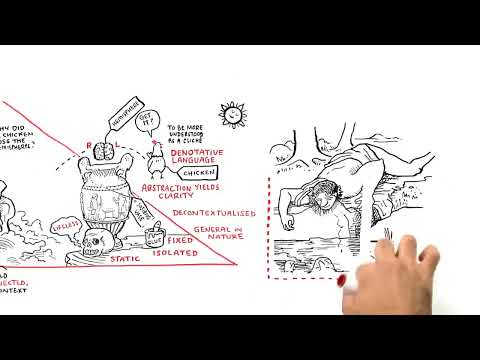
RSA ANIMATE: The Divided Brain
2.2M views • 15 years ago
Royal Society of Arts
An RSA Animate summary of Iain McGilchrist's lecture on the divided brain, arguing the brain's two hemispheres attend to the world differently and that this has shaped culture and society.
 6:59
The Problem With Facebook
3.1M views • 12 years ago
2veritasium
Veritasium's Derek Muller argues that Facebook's business model works against pages and creators, because it charges them to reach the audiences they built. He explains how filtering and paid promotion undermine the value of likes.
 4:26
British Plugs Are Better Than All Other Plugs, And Here's Why
7.6M views • 12 years ago
Tom Scott
Tom Scott explains the design of the British BS 1363 plug and socket, including fuses, shutters and safety features, and why he thinks it beats other plugs.
 13:07
Loneliness
28.1M views • 7 years ago
Kurzgesagt – In a Nutshell
Kurzgesagt explains why humans feel loneliness, its evolutionary role, and how modern life can turn it into a harmful downward spiral. It cites research and offers ideas on what to do about it.
 2:58
First Follower: Leadership Lessons from Dancing Guy
8.8M views • 16 years ago
Derek Sivers
Derek Sivers annotates a short clip of a lone dancer at a festival, showing how a first follower turns a ridiculous act into a movement. He draws out lessons about leadership and making it easy to follow.
 6:23
How We Should Vote (Range Voting)
43K views • 10 years ago
Undefined Behavior
A six-minute explainer from Undefined Behavior on range (score) voting. It follows an earlier video on Arrow's Theorem and shows how range voting seems to satisfy the criteria Arrow's Theorem says no ranked system can.
 21:24
Why are people mean on Twitter? - Smarter Every Day 214
957K views • 7 years ago
SmarterEveryDay
Destin Sandlin of Smarter Every Day examines how bad actors and bots use Twitter, drawing on the released Russian IRA dataset and interviews. It asks why interactions on the platform turn hostile.
 23:34
Why Democracy Is Mathematically Impossible
10.1M views • 2 years ago
Veritasium
Veritasium explains why no voting system can be perfectly fair, drawing on Arrow's theorem and the work of Eric Maskin. It looks at problems with systems like first-past-the-post and ranked-choice voting.
 10:48
RSA ANIMATE: Drive: The surprising truth about what motivates us
20.2M views • 16 years ago
Royal Society of Arts
An RSA Animate whiteboard adaptation of Dan Pink's talk on what motivates people at work. It argues that beyond simple tasks, autonomy, mastery and purpose drive performance more than money.
 11:11
RSA ANIMATE: Crises of Capitalism
3.3M views • 16 years ago
Royal Society of Arts
An RSA Animate video that illustrates a talk by geographer David Harvey on the crises of capitalism. It covers creative destruction, wage stagnation masked by credit, and the search for a more just economic order.
 10:23
RSA ANIMATE: Smile or Die
2.5M views • 16 years ago
Royal Society of Arts
An RSA Animate drawing of Barbara Ehrenreich's talk on the darker side of positive thinking. It argues that forced positivity in culture, work and policy can be harmful and played a part in the financial crisis.
 2:53
Brené Brown on Empathy
24.1M views • 12 years ago
Royal Society of Arts
A short animated RSA piece with Dr Brene Brown's voiceover on the difference between empathy and sympathy. She argues that real connection requires getting in touch with your own vulnerability, rather than trying to fix someone's pain.
 10:09
RSA ANIMATE: The Secret Powers of Time
4.4M views • 16 years ago
Royal Society of Arts
An RSA Animate illustrating a lecture by psychologist Philip Zimbardo on how people's perspectives on time (past, present, future) shape work, health and well-being.
 11:09
RSA ANIMATE: The Truth About Dishonesty
1.4M views • 14 years ago
Royal Society of Arts
An RSA Animate adaptation of a Dan Ariely lecture on dishonesty. It explores when ordinary people lie or cheat and how they rationalize small acts of dishonesty.
 25:47
What Happens When Ammo Burns? Sporting Ammunition and the Fire Fighter | SAAMI.org
868K views • 13 years ago
NSSF—The Firearm Industry Trade Association
A SAAMI-produced training video for firefighters explaining what happens when sporting ammunition burns, including that unchambered cartridges lack the energy to penetrate much. It includes test footage of ammunition in fires.
 13:20
Your Home Can Survive a Wildfire
164K views • 11 years ago
National Fire Protection Association
NFPA video in which wildfire researcher Jack Cohen explains that embers (firebrands), not the flame front, are the main cause of homes igniting in wildfires. He shows how landscaping and removing debris around the home reduce risk.
 9:31
Around The Corner - How Differential Steering Works (1937)
22.3M views • 17 years ago
US Auto Industry
A 1937 GM-produced film explaining how the automobile differential lets wheels turn at different speeds around a corner. It uses clear animations and cutaway demonstrations to build the idea from first principles.
 12:44
We Were Taught to Call Death a Blessing
11.9M views • 8 years ago
CGP Grey
CGP Grey narrates an animated adaptation of Nick Bostrom's Fable of the Dragon-Tyrant. The story uses a dragon that demands a daily toll of lives as a metaphor for aging and society's acceptance of death.
 23:16
The Machinery Of Freedom: Illustrated summary
164K views • 14 years ago
bitbutter
An illustrated 23-minute summary of David Friedman's talk based on The Machinery of Freedom. It describes how law, police and courts could work as market services in a stateless society, covering private law, polycentric law and objections.
 23:12
Simulating an epidemic
5.2M views • 6 years ago
3Blue1Brown
3Blue1Brown builds toy SIR models to simulate how an epidemic spreads and tests scenarios like social distancing, travel restrictions, central gathering places and quarantine. It was made during the early COVID-19 outbreak.
 12:13
Why China Is so Good at Building Railways
8.7M views • 7 years ago
Wendover Productions
A Wendover Productions explainer on how China built the world's largest high-speed rail network so quickly and why its rail strategy differs from America's. It covers politics, social benefits and the economics of unprofitable lines.
 3:51
Why “No Problem” Can Seem Rude: Phatic Expressions
5M views • 7 years ago
Tom Scott
Tom Scott explains phatic expressions such as hello, thank you and how are you, which carry social meaning rather than information, and why replies like no problem can seem rude to some people.
 8:17
PHILOSOPHY - Michel Foucault
3.9M views • 11 years ago
The School of Life
A School of Life short introducing Michel Foucault, who questioned assumed progress in how society treats madness, medicine and sexuality.
 20:46
Blue Bubbles vs Green Bubbles: Explained!
6.5M views • 4 years ago
Marques Brownlee
Marques Brownlee explains why iMessage's blue and green bubbles matter, covering the technical, commercial and social side of Apple's messaging lock-in. It also discusses RCS and what could be done about it.
 7:45
The 100 Year Flood Is Not What You Think It Is (Maybe)
2.3M views • 10 years ago
Practical Engineering
Practical Engineering explains what a 100-year flood actually means, combining statistics, hydrology and how society treats risk. Grady walks through local drainage infrastructure and the caveats in estimating flood probability.
 21:33
Accent Expert Gives a Tour of U.S. Accents - (Part One) | WIRED
9.6M views • 5 years ago
WIRED
Dialect coach Erik Singer and several linguists tour distinct accents across English-speaking North America. It is the first part of a WIRED series on US accents.
 22:10
Why Don't You Want To Do Anything After Binging 4 Hours of YouTube Videos...
2.3M views • 3 years ago
HealthyGamerGG
Dr. K of HealthyGamerGG explains why people feel unmotivated and unable to start tasks after hours of YouTube or similar distractions. He frames it as a result of how social media is designed to capture attention, and says not to blame yourself.
 5:28
Bonhoeffer‘s Theory of Stupidity
4.7M views • 5 years ago
Sprouts
An animated Sprouts video presenting Dietrich Bonhoeffer's argument that stupidity is more dangerous than evil, because reason cannot reach stupid people. It frames stupidity as a social and moral phenomenon.