no-code
 4:17
AI Learns Noise Filtering For Photorealistic Videos | Two Minute Papers #215
65K views • 8 years ago
Two Minute Papers
A Two Minute Papers episode on NVIDIA's recurrent denoising autoencoder, which cleans up noisy Monte Carlo path-traced image sequences. It shows how a neural network can produce usable renders from very few samples.
 7:33
What is a genocide?
82K views • 2 years ago
Anders Puck Nielsen
Anders Puck Nielsen clears up common misunderstandings about what legally counts as genocide, then compares the situation in Gaza with the genocide case against Putin. The chapters cover the definition, individual intent, and the two case comparisons.
 2:16
Andreas Antonopoulos - 51% Bitcoin Attack
72K views • 11 years ago
Rodolfo Díaz
A two-minute clip of Andreas Antonopoulos explaining why a 51% attack on Bitcoin would not destroy it and what such an attack would cost. It is a succinct take on mining security.
 3:45
pointerpointer.com's use of voronoi, canvas, and javascript
40K views • 14 years ago
Paul Irish
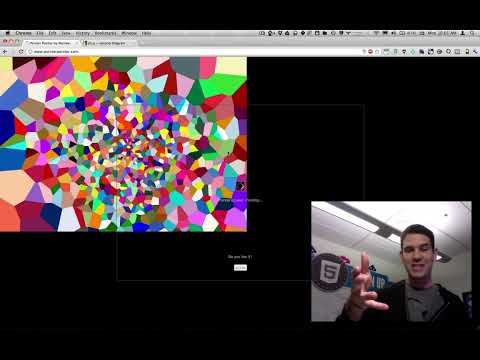
Paul Irish explains how pointerpointer.com works. It uses a hidden canvas of colored Voronoi regions to look up which photo matches the cursor position.
 5:51
Bitcoin Q&A: Energy Consumption
96K views • 8 years ago
aantonop
Andreas Antonopoulos answers a Bitcoin Q&A question about energy consumption in mining. He argues that mining is arbitrage for the cheapest electricity, drives investment in renewables, and that the traditional financial system has hidden externalities.
Topic match · Cryptography 14:32
Orbital Data Centers Yes or No
18K views • 1 year ago
Eager Space
Eager Space examines the practicality of putting data centers in orbit, walking through three scenarios with cost calculations and the launch cost reductions that would be required.
 3:35
How our voting system (and IRV) betrays your favourite candidate
35K views • 12 years ago
The Center for Election Science
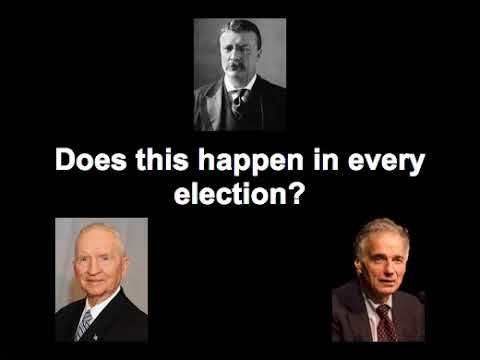
The Center for Election Science explains favorite betrayal in instant-runoff voting: in some elections, ranking your favorite first can cause your least favorite to win. It contrasts this with plurality voting's spoiler problem.
 18:58
The Great Stranding: How Inaccurate Mainstream LCOE Estimates are Creating a Trillion-Dollar Bubble
38K views • 5 years ago
RethinkX
RethinkX summarizes its report arguing that mainstream LCOE estimates are inflating a bubble in coal, gas, nuclear and hydro assets. It claims solar, wind and batteries will strand conventional energy investments.
 10:09
Dominic Frisby. A simple guide to land value tax
25K views • 11 years ago
Dominic Frisby Comedy Videos
Comedian Dominic Frisby gives a ten-minute explanation of land value tax. He argues it would fix problems of rent-seeking and the economics of land ownership.
 3:31
Trusted Computing? Yes or No
47K views • 20 years ago
Robin Good
A four-minute 2006 explainer on trusted computing, describing what it is and whether users should support it, with a skeptical DRM angle.
 6:06
Strong Towns: Property Tax vs. Land Value "Tax" (LVT)
61K views • 10 years ago
John Snow
Chuck Marohn of Strong Towns explains how a land value tax differs from an ordinary property tax, why it makes economic sense, and why it is rarely used. It is a short six-minute explainer.
 4:44
Debt Metaphor
95K views • 17 years ago
Ward Cunningham
Ward Cunningham explains the history and intent of the debt metaphor, which he coined while refactoring the WyCash product. He says debt means code reflecting an incomplete understanding of the problem, not sloppy programming.
 3:25
Get Perpendicular
95K views • 18 years ago
teraera08
A Hitachi promotional cartoon in the style of Schoolhouse Rock explaining perpendicular magnetic recording for hard drives.
 6:18
Animated Voting Methods
16K views • 9 years ago
Unify The Vote
An animated simulation comparing single-winner voting methods such as plurality, instant runoff and STAR. Colored regions show which candidate wins as a randomized electorate shifts across a two-dimensional political space, building on Ka-Ping Yee's earlier diagrams.
 12:23
Xanadu Basics 1a - VISIBLE CONNECTION
20K views • 8 years ago
TheTedNelson
Ted Nelson explains the original Xanadu hypertext idea of visible connection, the notion that links between documents should be shown and preserved. He argues that the Web and current document standards lost this concept.
 11:10
Why Japan's Conviction Rate is 99% (Actually Explained)
82K views • 6 years ago
That Japanese Man Yuta
Yuta explains what Japan's 99% conviction rate actually means, noting that prosecutors drop cases unless confidence is very high. He argues that the number is widely misunderstood and cites his sources.
 15:28
The Braitenberg Vehicles
65K views • 10 years ago
Brian Douglas
Brian Douglas introduces Braitenberg vehicles, simple robots whose sensors are wired directly to motors yet show surprisingly lifelike behavior. He draws on Valentino Braitenberg's book Vehicles.
 6:23
How We Should Vote (Range Voting)
43K views • 10 years ago
Undefined Behavior
A six-minute explainer from Undefined Behavior on range (score) voting. It follows an earlier video on Arrow's Theorem and shows how range voting seems to satisfy the criteria Arrow's Theorem says no ranked system can.
 4:22
Idaho Stop for Cyclists? Drivers Already Do It!
34K views • 5 years ago
Oh The Urbanity!
A short urbanism video presenting original observations of how drivers treat stop signs, to argue that cyclists rolling through them under an Idaho stop is no different. It filmed intersections in Ottawa.
 4:01
Dutch junction design - safer for cyclists
52K views • 15 years ago
BicycleDutch
A short BicycleDutch episode showing how Dutch junctions with protected cycle paths are laid out. It argues these are proven, non-experimental designs that make intersections safer for cyclists.
 9:16
What Happened When This City Banned Housing Investors
96K views • 3 years ago
Oh The Urbanity!
Oh The Urbanity! tests the theory that banning housing investors would fix affordability, using Rotterdam's ban as a case study. The video finds mixed results.
 12:05
Why Traffic Congestion Grows Exponentially, Why It Matters, and What To Do About It // An Explainer
100K views • 4 years ago
Ray Delahanty | CityNerd
CityNerd explains why traffic congestion grows nonlinearly as more cars use a road network, and why adding road capacity tends not to fix it. It covers the consequences for drivers, bus riders, cyclists and pedestrians, and discusses alternatives such as true bus rapid transit.