pen plotter
 4:31
Death to Pennies
10.7M views • 14 years ago
CGP Grey
CGP Grey's short animated argument for abolishing the US penny, covering its cost and history.
 6:33
I, Pencil: The Movie
1.4M views • 13 years ago
I, Pencil
A short film from the Competitive Enterprise Institute adapting Leonard Read's 1958 essay I, Pencil, showing how no one person knows how to make a pencil and how many people cooperate without central planning.
 19:59
What Happens at the Event Horizon? | Space Time | PBS Digital Studios
3.2M views • 9 years ago
PBS Space Time
PBS Space Time explains what happens as you approach and cross a black hole's event horizon, using Penrose diagrams and light cones as the tool for understanding spacetime there.
 6:02
OpenAI Plays Hide and Seek…and Breaks The Game! 🤖
11M views • 7 years ago
Two Minute Papers
Two Minute Papers covers OpenAI's multi-agent hide-and-seek experiment, in which agents learned emergent tool use and found ways to break the game's rules. It summarizes the 'Emergent Tool Use from Multi-Agent Interaction' paper.
 2:26
Milton Friedman - I, Pencil
802K views • 14 years ago
Free To Choose Network
A two-minute clip in which Milton Friedman uses a humble pencil to show how thousands of strangers across many countries cooperate, without central direction, to make a simple product. It is a short visual version of the 'I, Pencil' essay's argument about free markets and dispersed knowledge.
 10:22
Shakespeare: Original pronunciation (The Open University)
5.6M views • 15 years ago
OpenLearn from The Open University
David and Ben Crystal introduce the Original Pronunciation production of Shakespeare and show what it reveals about the history of English, including puns and rhymes lost in modern speech.
 1:10:52
The Fermi Paradox Compendium
815K views • 10 years ago
Isaac Arthur
Isaac Arthur surveys the popular proposed solutions to the Fermi Paradox in a 71-minute compendium. He weighs the strengths and weaknesses of each argument.
 14:25
Do Events Inside Black Holes Happen?
3.2M views • 11 years ago
PBS Space Time
A PBS Space Time episode asking what black holes really are and whether events can happen inside them. It covers event horizons, time dilation and common misconceptions about black holes.
 3:37
Why Web Filters Don't Work: Penistone and the Scunthorpe Problem
3.6M views • 10 years ago
Tom Scott
Tom Scott visits Penistone to explain the Scunthorpe problem, showing why naive web and profanity filters block innocent words.
 25:47
What Happens When Ammo Burns? Sporting Ammunition and the Fire Fighter | SAAMI.org
868K views • 13 years ago
NSSF—The Firearm Industry Trade Association
A SAAMI-produced training video for firefighters explaining what happens when sporting ammunition burns, including that unchambered cartridges lack the energy to penetrate much. It includes test footage of ammunition in fires.
 15:01
What Happened to Horses Is Happening to Us
19.8M views • 12 years ago
CGP Grey
CGP Grey's video "Humans Need Not Apply" argues that automation will make a large part of the workforce economically obsolete, much as engines did for horses. It surveys robots and software replacing both physical and mental labor.
 3:47
Why Grocery Shopping is Better in Amsterdam
1.3M views • 7 years ago
Not Just Bikes
A four-minute Not Just Bikes comparison of grocery shopping in Amsterdam versus car-centric North America, arguing that frequent small fresh-food trips beat bulk shopping. It ties this to land use and reduced food waste.
 36:06
Civilizations at the End of Time: Black Hole Farming
934K views • 10 years ago
Isaac Arthur
An Isaac Arthur episode on civilizations in the dark, post-stellar universe, including black hole farming, accretion disks and the Penrose process as energy sources.
 12:39
Why Trains are so Expensive
3.2M views • 9 years ago
Wendover Productions
A Wendover Productions explainer on why train tickets, especially Amtrak in the US, cost so much compared with flying. It breaks down staffing, speed and the cost components behind a ticket.
 4:07
Why do competitors open their stores next to one another? - Jac de Haan
7.4M views • 14 years ago
TED-Ed
A short animated TED-Ed lesson in which two competing ice cream vendors on a beach illustrate why rival shops cluster together. It introduces game theory and the Nash equilibrium through the Hotelling model.
 14:18
How to Design Impenetrable Airport Security
5.5M views • 8 years ago
Wendover Productions
A Wendover Productions explainer on how airport security is designed, covering screening layers, x-ray scanning, and the contrast with Israel's profiling-based approach. It walks through the logic behind why security works the way it does.
 9:39
What Happened Before History? Human Origins
24.3M views • 10 years ago
Kurzgesagt – In a Nutshell
Kurzgesagt's animated overview of human origins and the vast prehistory before recorded history. It covers how modern humans emerged and spread.
 14:28
A Scientist Spilled 2 Drops Organic Mercury On Her Hand. This Is What Happened To Her Brain.
15.8M views • 8 years ago
Chubbyemu
Chubbyemu narrates the true case of a professor who spilled two drops of dimethylmercury on her hand and suffered fatal neurological damage.
 10:13
The Problem with Time & Timezones - Computerphile
4.4M views • 12 years ago
Computerphile
Tom Scott explains for Computerphile why handling time and timezones in code is so hard, walking through a simple web app that computes how long ago something happened. It covers the quirks of timezones and calendars and ends in an exasperated rant.
 12:01
Why Electronic Voting Is Still A Bad Idea
5.1M views • 6 years ago
Tom Scott
Tom Scott explains why electronic voting is a bad idea. Elections must be trusted by everyone and attacks on software scale in ways attacks on paper do not, so open source or blockchain fixes do not solve it.
 6:59
The Problem With Facebook
3.1M views • 12 years ago
2veritasium
Veritasium's Derek Muller argues that Facebook's business model works against pages and creators, because it charges them to reach the audiences they built. He explains how filtering and paid promotion undermine the value of likes.
 12:46
The Speed of Light is NOT About Light
7.1M views • 11 years ago
PBS Space Time
PBS Space Time argues that the speed of light is better understood as the speed of causality, the universal limit on how fast cause and effect propagate. Light travels at that speed because it is massless, but the limit itself is a property of spacetime.
 4:58
You Actually Share Your Brain With a Silent Stranger
20.2M views • 10 years ago
CGP Grey
CGP Grey explains split-brain patients, where severing the corpus callosum lets the two hemispheres act independently. He uses this to explore the idea of two minds in one head.
 13:44
Is AI Safety a Pascal's Mugging?
388K views • 7 years ago
Robert Miles AI Safety
Robert Miles examines whether the case for AI safety is a Pascal's mugging, a tiny probability of an enormous payoff. He argues it is not, because AI risk does not depend on vanishingly small probabilities.
 13:31
Randomness is Random - Numberphile
893K views • 7 years ago
Numberphile
Numberphile with Simon Pampena on how humans misunderstand randomness, including coin-flip sequences, run lengths and the gambler's fallacy.
 12:47
Backpropagation, intuitively | Deep Learning Chapter 3
6.4M views • 9 years ago
3Blue1Brown
3Blue1Brown's third deep learning chapter gives a visual, intuitive account of backpropagation and what happens to a neural network as it learns. A follow-up video covers the underlying calculus.
 8:42
Michael Bay - What is Bayhem?
3.3M views • 12 years ago
Every Frame a Painting
An Every Frame a Painting video essay on Michael Bay's style, 'Bayhem', covering his camera movement, composition, color and editing. It argues that even if you dislike his films, they teach something about visual perception.
 8:00
Edgar Wright - How to Do Visual Comedy
11.4M views • 12 years ago
Every Frame a Painting
An Every Frame a Painting video essay analysing how Edgar Wright creates visual comedy through framing, camera movement, editing, sound effects and music.
 18:05
The Crisis in Cosmology
1.1M views • 7 years ago
PBS Space Time
PBS Space Time explains the Hubble constant tension, in which two precise, independent methods of measuring the universe's expansion rate disagree. It covers why this calls some standard cosmology into question.
 24:28
Euler's formula with introductory group theory
2.8M views • 9 years ago
3Blue1Brown
3Blue1Brown builds intuition for Euler's formula, e^(pi i) = -1, using the core ideas of group theory. It treats exponentiation geometrically as rotation and scaling instead of repeated multiplication.
 6:04
Car-free Streets are Amazing (and we need more of them)
484K views • 6 years ago
Not Just Bikes
Not Just Bikes explains the Dutch concept of autoluw, or nearly car-free, streets and how it is applied across the Netherlands, with examples from Toronto and Copenhagen. It also covers Amsterdam's move toward a nearly car-free city.
 11:13
What if you could only see the world in UV?
5.6M views • 8 years ago
Veritasium
Veritasium shows what the world looks like through a UV camera. It covers how pigments absorb UV, how fluorescence works, and how UV imaging reveals sunscreen effectiveness and skin damage.
 10:33
Testing if 60 minutes of silence drives you crazy
32.8M views • 12 years ago
Veritasium
Veritasium's Derek Muller spends an hour in a silent, dark anechoic chamber at BYU to test the claim that 45 minutes is the most anyone can bear. He reports on his experience and other people's reactions.
 7:53
Why Are American Health Care Costs So High?
7.7M views • 13 years ago
vlogbrothers
John Green explains why the US spends far more on health care than other countries, going through insurers, drug companies, hospitals and lawyers. He argues the causes are complicated rather than a simple blame game.
 6:58
The Skinner Box - How Games Condition People to Play More - Extra Credits
1.2M views • 14 years ago
Extra Credits
An Extra Credits episode on how games use Skinner box operant conditioning and reward schedules to keep players playing and spending. It argues for more immersive design mechanics than simple reward loops.
 4:13
Social Inequalities Explained in a $100 Race - Please Watch to the End. Thanks.
5M views • 9 years ago
Peter D
A short animated explainer that stages a $100 footrace in which contestants start at different distances from the line, depending on the advantages or disadvantages they inherited. It uses the race as a metaphor for how unequal starting points shape outcomes, citing US census income and poverty figures.
 21:05
Who is Manipulating Facebook? - Smarter Every Day 215
1M views • 7 years ago
SmarterEveryDay
Destin Sandlin of Smarter Every Day investigates manipulation on Facebook, interviewing the company's team about content moderation. It is the third video in his series on social media manipulation.
 4:45
How playing an instrument benefits your brain - Anita Collins
15.2M views • 12 years ago
TED-Ed
A short TED-Ed animated lesson by Anita Collins on what happens in the brain when people play a musical instrument. It argues that playing engages many brain areas at once, like a full-body workout, with long-term benefits.
 8:16
Giving birth costs a lot. Hospitals won't tell you how much.
3.4M views • 10 years ago
Vox
A Vox reporter tries to learn what his son's birth would cost before it happens and fails, showing how opaque US hospital pricing is even for the most common procedure.
 3:54
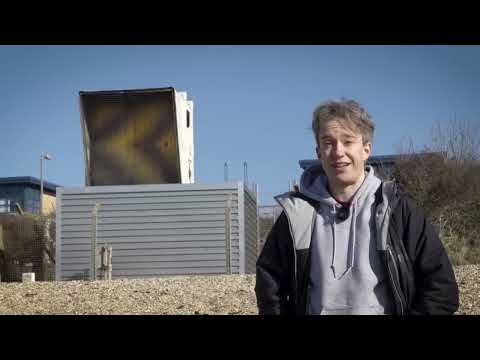
The moiré effect lights that guide ships home
3.1M views • 8 years ago
Tom Scott
Tom Scott investigates moire-effect beacons, called Inogon leading marks, a Swedish invention from the 1980s that shows different patterns depending on the viewer's position. He visits one used to mark an undersea cable and tracks down its history.