personal computers
 20:13
The Most Powerful Computers You've Never Heard Of
13.7M views • 4 years ago
Veritasium
Veritasium traces analog computers from the Antikythera mechanism and Kelvin's tide-predicting machines to fire control and modern analog approaches. It explains how these machines computed continuously rather than digitally.
 21:42
Future Computers Will Be Radically Different (Analog Computing)
13.2M views • 4 years ago
Veritasium
Veritasium explains why analog computing may suit AI workloads, covering old analog computers, The Analog Thing and Mythic's analog chips that use flash memory for neural network inference. It argues digital hardware is hitting limits.
 28:43
Why build an entire computer on breadboards?
3.4M views • 6 years ago
Ben Eater
Ben Eater explains why he builds computers on breadboards, including testing their signal behavior on an oscilloscope. It is a companion to his 6502 breadboard computer series.
 18:57
Why the Soviet Computer Failed
4.2M views • 4 years ago
Asianometry
An Asianometry explainer on why the Soviet Union, once a leading computing power, fell far behind the US in computers by the 1980s. It traces the gap from the 1960s onward despite strong state support for science.
Topic match · History of computing 19:25
New computers don't speed up old code
187K views • 1 year ago
Matthias random stuff
Matthias Wandel tests old and new code on a range of PCs, including a new mini PC, to measure how much faster modern hardware really is. He also shows optimization techniques such as branchless code, with benchmark programs on GitHub.
 23:03
The Universe is Hostile to Computers
26.5M views • 5 years ago
Veritasium
Veritasium explains how cosmic rays and other particles flip bits in computer memory, with examples including a Belgian election count error, plane incidents and game glitches. It is inspired by a RadioLab episode on bit flips.
 25:10
How an Atomic Clock Really Works: Inside the HP 5061A Cesium Clock
464K views • 6 years ago
CuriousMarc
CuriousMarc powers up a vintage HP 5061A cesium beam clock and explains both the quantum principle and the HP implementation in detail. It is part of a longer atomic clock series.
Topic match · History of computing 21:20
Cracking Enigma in 2021 - Computerphile
2.9M views • 5 years ago
Computerphile
Dr Mike Pound of Computerphile shows how a modern laptop can crack Enigma, using a ciphertext-only attack based on an older paper. He compares it with the tooling in CrypTool.
Topic match · History of computing 23:04
The Computer-free Automation of a Jukebox (Electromechanics)
1.3M views • 6 years ago
Technology Connections
Technology Connections takes apart a 1970 Wurlitzer 3400 jukebox to show how electromechanical relays and switches automated its behavior without a computer.
Topic match · History of computing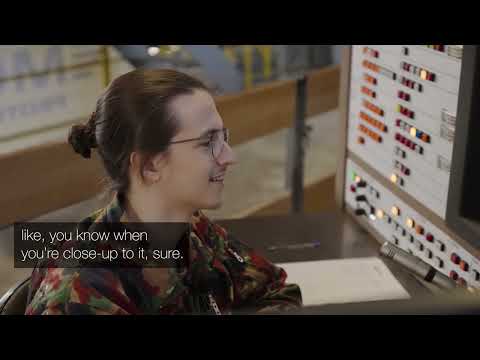 4:40
This 1970s tank simulator drives through a tiny world
12M views • 4 years ago
Tom Scott
Tom Scott visits the Swiss Military Museum to see the last surviving 1970s tank-driving simulator. It uses a real camera moving over a miniature model landscape rather than any computer graphics.
Topic match · History of computing 19:37
Why is Japan So Weak in Software?
968K views • 2 years ago
Asianometry
Asianometry examines why Japan's software industry has lagged despite its hardware strengths. It looks at dependence on US software and the low prestige of programming.
Topic match · History of computing 17:49
How Japan Learned Semiconductors
228K views • 4 years ago
Asianometry
Asianometry traces the 30-year rise and peak of Japan's semiconductor industry from the 1950s to the 1980s, covering how a postwar country gained competence in an emerging technology.
Topic match · History of computing 14:03
The Computer Designed To Die In Microseconds
408K views • 3 years ago
Scott Manley
Scott Manley tells the story of a computerized telemetry system built to sit at the heart of a nuclear test device in place of the plutonium pit, designed to transmit data in the microseconds before it was destroyed.
Topic match · History of computing 8:03
Why You Can't Name A File CON In Windows
7.8M views • 6 years ago
Tom Scott
Tom Scott explains why Windows does not let you name a file CON, tracing the reserved device names back to backwards compatibility with DOS.
Topic match · History of computing 18:52
Renting vs. Buying a Home: What People Get Wrong
975K views • 1 year ago
Ben Felix
Ben Felix argues that common beliefs about renting versus buying are wrong: homes are not great investments, mortgages are not a wealth hack, and ownership does not reliably bring happiness.
 14:40
Renting vs Buying a Home: How to Decide
360K views • 5 years ago
Ben Felix
Ben Felix explains how to decide between renting and buying a home, weighing financial and non-financial factors. He argues that renting is often as good or better than owning, both financially and for well-being.
 15:50
Can YOU Fix Climate Change?
14.3M views • 5 years ago
Kurzgesagt – In a Nutshell
Kurzgesagt examines what individuals can do about climate change, covering lesser-known carbon sources and why systemic and political change matter more than personal footprints.
 50:09
Old pinball machines are amazingly complex
3.5M views • 3 years ago
Technology Connections
Technology Connections takes a long, detailed look at how a 1970s electromechanical pinball machine works, from relays to stepper motors and mechanical logic. It is the first part of a series.
 14:44
Cars Are A Disaster For Society -- Here Are the Numbers
414K views • 2 years ago
Ray Delahanty | CityNerd
CityNerd's Ray Delahanty tallies the personal costs of driving and then the externalities that car dependency imposes on everyone else, with numbers for each. It is an urbanist case that driving is heavily subsidized and costs society far more than drivers pay.