personal computing
 3:28:54
COLLAPSE of Personal Computing | Investigation Into the Destruction of Ownership
3.2M views • 5 months ago
Gamers Nexus
A roughly 3.5-hour Gamers Nexus investigation into rising PC component prices, driven largely by AI data-center demand for memory and other hardware. It draws on interviews with industry figures to argue that personal computing and ownership are being eroded.
 1:00:26
Colossus - The Greatest Secret in the History of Computing
1M views • 6 years ago
The Centre for Computing History
Chris Shore of the Centre for Computing History explains how Colossus was built, how it worked, and how it affected the course of World War II. It is an hour-long museum lecture on the codebreaking computer.
 54:35
"An approach to computing and sustainability inspired from permaculture" by Devine Lu Linvega
19K views • 3 years ago
Strange Loop Conference
Devine Lu Linvega of Hundred Rabbits talks about low-power, offline computing, esoteric languages and the Uxn virtual machine, informed by years of sailing the Pacific. The talk frames computing sustainability through a permaculture lens.
 21:42
Future Computers Will Be Radically Different (Analog Computing)
13.2M views • 4 years ago
Veritasium
Veritasium explains why analog computing may suit AI workloads, covering old analog computers, The Analog Thing and Mythic's analog chips that use flash memory for neural network inference. It argues digital hardware is hitting limits.
 18:57
Why the Soviet Computer Failed
4.2M views • 4 years ago
Asianometry
An Asianometry explainer on why the Soviet Union, once a leading computing power, fell far behind the US in computers by the 1980s. It traces the gap from the 1960s onward despite strong state support for science.
Topic match · History of computing 46:56
IBM Computing Cheese Cutter [Restoration]
3.6M views • 5 years ago
Hand Tool Rescue
A 47-minute restoration of a 1920s IBM computing cheese cutter, a machine with parts patented between 1901 and 1907. The video covers the restoration work and explains why it is a computing cheese cutter.
 27:10
Growing Living Rat Neurons To Play... DOOM? | Part 1
4.5M views • 3 years ago
The Thought Emporium
The Thought Emporium grows living rat neurons on an electrode array and tries to train them to play Doom. It is part of a series on biological computing.
 20:13
The Most Powerful Computers You've Never Heard Of
13.7M views • 4 years ago
Veritasium
Veritasium traces analog computers from the Antikythera mechanism and Kelvin's tide-predicting machines to fire control and modern analog approaches. It explains how these machines computed continuously rather than digitally.
Topic match · History of computing 57:05
Keynote: Begin...End?
9K views • 5 years ago
David Beazley
David Beazley's PyData Global 2021 keynote, an oral history of early scientific Python. He tells how Python ended up running on a Connection Machine supercomputer at Los Alamos.
Topic match · History of computing 1:43:10
Brian Kernighan: UNIX, C, AWK, AMPL, and Go Programming | Lex Fridman Podcast #109
766K views • 6 years ago
Lex Fridman
Lex Fridman interviews Brian Kernighan, co-author of The C Programming Language and co-creator of AWK and AMPL. They discuss Unix, C, Go and his memoir on the history of Unix.
Topic match · History of computing 16:33
Using a 1930 Teletype as a Linux Terminal
1.6M views • 6 years ago
CuriousMarc
CuriousMarc connects a restored 1930 Model 15 Teletype to a Linux machine and uses it as a terminal, after commenters requested it. The video shows the challenges of linking a 5-bit mechanical device to a modern OS.
Topic match · History of computing 29:06
The REAL Story On Why Space Cadet Pinball Was Removed (ft. Windows on Itanium)
1.2M views • 5 years ago
NCommander
NCommander investigates why Space Cadet Pinball disappeared from Windows Vista, building on Raymond Chen's explanation about 64-bit incompatibility. He tests it on 64-bit Windows including Itanium and walks through the debugging.
Topic match · History of computing 49:03
Apollo Core Rope Memory (Apollo Guidance Computer Part 30)
759K views • 3 years ago
CuriousMarc
CuriousMarc's Apollo Guidance Computer restoration series looks at core rope memory, the ROM that held the Moon landing programs. Mike Stewart builds a custom reader to recover lost AGC programs.
Topic match · History of computing 5:51
Susan Kare explains Macintosh UI ergonomics on the Computer Chronicles (1984)
51K views • 6 years ago
erg0steur
A 1984 Computer Chronicles segment in which Susan Kare explains the ergonomics and interface design of the original Macintosh. She introduces the interface step by step for newcomers.
Topic match · History of computing 48:40
Capt. Grace Hopper on Future Possibilities: Data, Hardware, Software, and People (Part One, 1982)
179K views • 2 years ago
National Security Agency
Part one of Capt. Grace Hopper's 1982 NSA lecture on the future of data, hardware, software and people. It includes her humor, her nanosecond demonstration and views on scaling and resisting old ways of doing things.
Topic match · History of computing 59:23
Quick Start, Episode 7: Crimes... And Felonies.
235K views • 2 years ago
Cathode Ray Dude - CRD
Cathode Ray Dude covers two bizarre HP 'Quick Start' features: QuickLook, an offline email client built on EFI firmware, and Daystarter, which hijacks the Windows boot process. It includes an explanation of EFI applications and why HP built these things.
Topic match · History of computing 11:13
1979: Will WORD PROCESSORS start a HOME WORKING revolution? | Past Predictions | BBC Archive
461K views • 4 years ago
BBC Archive
A 1979 BBC Nationwide report asking whether word processors and networked microprocessors could end office commuting. It shows early word processing and a woman working from home, with surprisingly prophetic predictions.
Topic match · History of computing 7:27
Lamport on writing "Time, Clocks, and the Ordering of Events in a Distributed System"
24K views • 6 years ago
Turing Awardee Clips
A short clip from an ACM and Computer History Museum interview in which Leslie Lamport discusses writing his paper on time, clocks and the ordering of events. He explains its link to special relativity.
Topic match · History of computing 42:38
VCF East: Xerox Star vs. Apple Lisa
41K views • 5 years ago
Vintage Computer Federation
Jason Perkins's talk at Vintage Computer Festival East 2020 compares the user interface of the Xerox Star with that of the Apple Lisa. It covers editing documents, the Star's mouse and a Q&A.
Topic match · History of computing 29:44
EEVblog #1341 - AMAZING $250,000 IBM Processor TEARDOWN!
714K views • 6 years ago
EEVblog
Dave Jones of EEVblog tears down a 1991 IBM 9121 thermal conduction module from a System/390 mainframe, a 63-layer ceramic hybrid module with 2772 pins worth about $250,000, and demonstrates a BGA desoldering technique.
Topic match · History of computing 16:35
The World Premiere of the Amiga (1985, Andy Warhol, Debbie Harry)
20K views • 3 years ago
Generation X Video Archive
Footage of the 1985 world premiere of the Amiga 1000 at Lincoln Center. It shows demos such as multitasking and the bouncing ball, and Andy Warhol painting Debbie Harry live on the machine.
Topic match · History of computing 17:10
Xerox Star User Interface: An overview
20K views • 5 years ago
ACM SIGCHI
A 1982 Xerox PARC film, presented at CHI '90, in which Star designers David Canfield Smith and Charles Irby give an overview of the Xerox Star interface. It shows the document-centric, icon-and-window office system.
Topic match · History of computing 2:39:15
Jim Keller: The Future of Computing, AI, Life, and Consciousness | Lex Fridman Podcast #162
1.3M views • 5 years ago
Lex Fridman
Lex Fridman interviews chip architect Jim Keller about the future of computing, AI, life and consciousness. Topics include CPU design, branch prediction and why imperfect designs often win.
 49:48
2023 LLVM Dev Mtg - Mojo 🔥: A system programming language for heterogenous computing
61K views • 2 years ago
LLVM
A 2023 LLVM Developers' Meeting keynote by Abdul Dakkak, Chris Lattner and Jeff Niu introducing Mojo, a Python-family systems language built on MLIR and LLVM for heterogeneous computing.
 20:01
PDE: A different take on editing code
88K views • 4 years ago
TJ DeVries
TJ DeVries coins the term PDE (Personalized Development Environment) to describe editors like Neovim that you shape to your own workflow. He contrasts this with out-of-the-box IDEs and discusses why customizable tools appeal to developers.
 2:27:20
NixOS Drama Explained, a Personal Account
15K views • 1 year ago
Jon Ringer
A long personal account by a former NixOS contributor of his experience in the community, his ban and the governance events. He aims to correct what he sees as a false narrative about the NixOS drama.
 2:42:41
Chris Lattner: The Future of Computing and Programming Languages | Lex Fridman Podcast #131
594K views • 6 years ago
Lex Fridman
Lex Fridman's long interview with Chris Lattner, creator of LLVM and Swift, covering the future of computing and programming languages. It touches on compilers, hardware, and his work at Apple, Tesla, Google and SiFive.
 1:32:48
General Magic (1080p) FULL DOCUMENTARY - History, Technology, Business
73K views • 4 years ago
Gravitas Documentaries
A feature-length documentary on General Magic, the 1989 startup that envisioned the smartphone and handheld connected devices, featuring Tony Fadell, Andy Hertzfeld and Marc Porat. It covers the company's vision and eventual failure.
Topic match · History of computing 25:10
Data Brokers: Last Week Tonight with John Oliver (HBO)
9.7M views • 4 years ago
LastWeekTonight
John Oliver's Last Week Tonight segment explains how data brokers collect and sell personal information, including a stunt in which his team bought data to identify members of Congress.
 18:31
Fourier Optics used for Optical Pattern Recognition
103K views • 6 years ago
Huygens Optics
Huygens Optics explains the Fourier transform and shows how a lens performs one optically. A DLP projector is used as a Fourier filter to do simple pattern recognition on lithographic character patterns.
 2:58:24
The Death of Affordable Computing | Tariffs Impact & Investigation
2.3M views • 1 year ago
Gamers Nexus
A long Gamers Nexus investigation into how volatile US tariffs affect the computer hardware industry. It interviews manufacturers and sellers about costs, margins and why moving production to the US is hard.
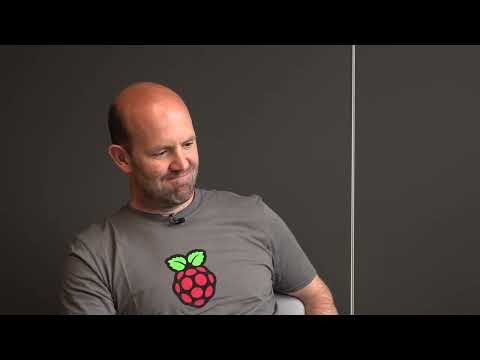 37:45
He started a computing REVOLUTION—then the shortage hit
224K views • 3 years ago
Jeff Geerling
Jeff Geerling interviews Raspberry Pi co-founder Eben Upton about the Pi shortage, the RP2040, RISC-V, the Sony investment and the origin of the name.
 52:59
Introducing Nx - José Valim | Lambda Days 2021
26K views • 5 years ago
Code Sync
Jose Valim introduces Nx, the project bringing numerical computing to Elixir, covering multi-dimensional tensors, automatic differentiation and JIT compilation to CPU and GPU.
 4:52
Freespin
148K views • 5 years ago
Matthias Kramm
Freespin is a demo that runs on a Commodore 1541 floppy drive. It makes sound by vibrating the drive head and video by toggling the serial bus lines, and it keeps running after the C64 that booted it is disconnected.
 20:11
Apple Vision Pro Impressions!
18.2M views • 3 years ago
Marques Brownlee
Marques Brownlee shares his hands-on impressions of Apple's $3500 Vision Pro headset after trying it. He covers the spatial computing experience, eye tracking, and how it compares to other devices.
 56:54
Change w/ Jim Keller
61K views • 3 years ago
Tenstorrent
Jim Keller, CTO of Tenstorrent, gives a keynote at Stanford's System X conference on change, understanding and the future of computing. He touches on Moore's Law, how far transistors are from physical limits, and ideas like DNA origami.
 50:06
Protected KVM on Arm64: A Technical Deep Dive - Quentin Perret, Google
6K views • 4 years ago
The Linux Foundation
Quentin Perret of Google gives a technical deep dive into protected KVM (pKVM) on Arm64, a confidential computing approach for CPUs without hardware extensions. It explains how the nVHE hypervisor manages stage-2 MMU access control to protect guest memory.
 37:43
Doom The Way it Was Meant to Be Played - v1.1 Multi-monitor
1.2M views • 3 years ago
Tech Tangents
Tech Tangents sets up original Doom's three-screen multi-monitor mode, which required a separate networked computer for each monitor. The video covers the hardware and setup work and the result.
 1:21:22
Light Years Ahead | The 1969 Apollo Guidance Computer
2.8M views • 6 years ago
TNMoC
Robert Wills of TNMoC explains the Apollo Guidance Computer hardware and software, then walks through the Apollo 11 landing procedure step by step, including the 1202 alarms.
Topic match · History of computing 25:10
How an Atomic Clock Really Works: Inside the HP 5061A Cesium Clock
464K views • 6 years ago
CuriousMarc
CuriousMarc powers up a vintage HP 5061A cesium beam clock and explains both the quantum principle and the HP implementation in detail. It is part of a longer atomic clock series.
Topic match · History of computing