physical access
No strong matches for “physical access”. Here are the closest videos.
 4:01
Who else benefits from the Dutch cycling infrastructure
88K views • 13 years ago
BicycleDutch
A short BicycleDutch episode showing how people with disabilities use Dutch cycle tracks on hand-cycles, tricycles and mobility scooters.
 9:49
How We're Redefining the kg
2.8M views • 9 years ago
Veritasium
Veritasium explains why the kilogram is being redefined in terms of Planck's constant rather than a physical metal artifact. It visits NIST to show the Kibble balance and why measuring mass precisely is hard.
 7:59
The Miniature Microcars of Amsterdam
1.2M views • 6 years ago
Not Just Bikes
Not Just Bikes looks at the tiny microcars such as the Canta seen around Amsterdam. It discusses how they serve people with mobility issues, can use bike paths under certain rules, and where they fit in a 21st century city.
 6:36
Intel ME explained (intel management engine) from insider
12K views • 8 years ago
jessie
A short video explaining the Intel Management Engine, a hidden embedded computer inside Intel machines with deep access to hardware. It is presented from an insider's perspective and raises backdoor and NSA concerns.
 15:01
What Happened to Horses Is Happening to Us
19.8M views • 12 years ago
CGP Grey
CGP Grey's video "Humans Need Not Apply" argues that automation will make a large part of the workforce economically obsolete, much as engines did for horses. It surveys robots and software replacing both physical and mental labor.
 10:13
The Problem with Time & Timezones - Computerphile
4.4M views • 12 years ago
Computerphile
Tom Scott explains for Computerphile why handling time and timezones in code is so hard, walking through a simple web app that computes how long ago something happened. It covers the quirks of timezones and calendars and ends in an exasperated rant.
 2:23
Music and Life - Alan Watts
2.6M views • 19 years ago
seandulac
A two-minute animation of an Alan Watts talk arguing that life is like music: it is meant to be danced to in the moment, not rushed toward a final goal. It is a short, accessible take on living in the present.
 34:00
Math's Fundamental Flaw
30.8M views • 5 years ago
Veritasium
Veritasium's explainer on Godel's incompleteness theorems and the limits of mathematical proof, tracing set theory, Hilbert's program and the road to Turing and modern computing.
 11:38
The Economics of Airline Class
12.2M views • 9 years ago
Wendover Productions
Wendover Productions explains how airlines make money from different cabin classes and why premium seats matter so much to profits. It also touches on how this shaped decisions such as the decline of supersonic travel.
 14:27
All the Numbers - Numberphile
1.8M views • 7 years ago
Numberphile
Matt Parker talks Numberphile through the different kinds of numbers: algebraic, transcendental, computable, normal, and beyond. It shows how few numbers we can actually name or describe.
 24:57
The Man Who Accidentally Killed The Most People In History
43.5M views • 4 years ago
Veritasium
Veritasium tells the story of Thomas Midgley Jr., who introduced leaded gasoline and CFCs, and covers the science behind lead exposure and ozone damage. It also touches on isotope geochemistry used to uncover the history.
 30:36
Orbital Rings
421K views • 9 years ago
Isaac Arthur
Isaac Arthur explains the orbital ring, a megastructure launch-assist system that could move bulk cargo cheaply to orbit and beyond. He compares it with space elevators and discusses power transmission.
 7:39
Propaganda Games: Sesame Credit - The True Danger of Gamification - Extra Credits
2M views • 10 years ago
Extra Credits
An Extra Credits episode on China's Sesame Credit, which gamifies obedient citizenship through a social score. It covers how the system rewards conformity and pressures people through their friends' behavior.
 9:09
England: South Sea Bubble - The Sharp Mind of John Blunt - Extra History - Part 1
3.5M views • 11 years ago
Extra History
The first part of Extra History's animated miniseries on the South Sea Bubble. It explains how England's government debt led Robert Harley to turn to financier John Blunt, whose schemes began inflating artificial demand for shares.
 29:55
The Collapse of The American Dream Explained in Animation
11M views • 15 years ago
doctordude
A 30-minute animated film explaining how money, banking and the Federal Reserve work and arguing that the American economy is heading for collapse. It is opinionated and has a strong point of view.
 16:39
Feeding Bill Gates a Fake Burger (to save the world)
83.4M views • 6 years ago
Mark Rober
Mark Rober makes a plant-based burger for Bill Gates and explains why meat production strains the environment. Gates also appears and discusses his worry about steel and cement.
 12:50
Fasting vs. Eating Less: What's the Difference? (Science of Fasting)
13.2M views • 9 years ago
Joseph Everett - WIL
A short explainer on the physiological differences between fasting and simply eating less. It covers ketosis, ghrelin and hunger waves, and the hormonal effects of fasting.
 21:42
Future Computers Will Be Radically Different (Analog Computing)
13.2M views • 4 years ago
Veritasium
Veritasium explains why analog computing may suit AI workloads, covering old analog computers, The Analog Thing and Mythic's analog chips that use flash memory for neural network inference. It argues digital hardware is hitting limits.
 9:41
Spinning Levers - How A Transmission Works (1936)
11.5M views • 14 years ago
US Auto Industry
A 1936 Chevrolet-sponsored film that explains how a car transmission works by treating gears as spinning levers. It uses physical models to make the mechanism clear.
 28:34
But why would light "slow down"? | Visualizing Feynman's lecture on the refractive index
2.9M views • 2 years ago
3Blue1Brown
3Blue1Brown visualizes Feynman's lecture on the refractive index, explaining why light appears to slow down in glass and why the effect depends on color. It builds the idea from waves produced by oscillating charges in the material.
 4:14
Computer Color is Broken
4.3M views • 11 years ago
minutephysics
MinutePhysics explains that computers store brightness nonlinearly, so blurring and blending colors in raw RGB gives wrong, dark results. It shows why mixed colors, such as in gradients, look off.
 23:46
How To Count Past Infinity
29.7M views • 10 years ago
Vsauce
Vsauce's Michael Stevens takes viewers past infinity using transfinite numbers, ordinals and cardinals, with input from mathematician Hugh Woodin. It is a fast-paced, mind-bending tour of different sizes of infinity.
 28:21
The $100 Billion Dollar Ingredient making your Food Toxic
4.4M views • 5 years ago
Joseph Everett - WIL
A What I've Learned video arguing that industrial seed and vegetable oils have displaced saturated fats and harmed health. It covers the history of vegetable oils, the American Heart Association's role, and rising consumption.
 7:15
A Selfish Argument for Making the World a Better Place – Egoistic Altruism
11.4M views • 8 years ago
Kurzgesagt – In a Nutshell
Kurzgesagt makes a selfish case for improving the world, arguing that helping people far away raises prosperity and innovation for everyone, including yourself. The animated video frames this as egoistic altruism and positive-sum cooperation.
 8:34
Was YOUR vote counted? (feat. homomorphic encryption) - Numberphile
198K views • 10 years ago
Numberphile
Numberphile interviews cryptographer Ron Rivest about end-to-end verifiable voting. He explains how homomorphic encryption and receipts let a voter confirm their ballot was counted without being able to prove how they voted to anyone else.
 15:27
Why Not Just: Think of AGI Like a Corporation?
163K views • 7 years ago
Robert Miles AI Safety
Robert Miles asks whether corporations can be thought of as artificial general superintelligences and how far the analogy holds. He argues the differences, such as being limited by employees' capabilities, matter for AI safety.
 7:19
The Lively & Liveable Neighbourhoods that are Illegal in Most of North America
2M views • 6 years ago
Not Just Bikes
Not Just Bikes explains how small pockets of shops and restaurants inside residential Dutch neighbourhoods create liveliness and help reduce traffic. It argues this kind of mixed-use design has been illegal in most of the US and Canada for a century because of zoning, and should be brought back.
 19:07
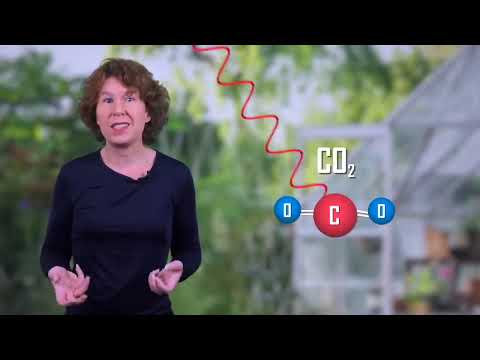
I Misunderstood the Greenhouse Effect. Here's How It Works.
989K views • 3 years ago
Sabine Hossenfelder
Sabine Hossenfelder explains how the greenhouse effect actually works, given that infrared is mostly absorbed low in the atmosphere already. She walks through why more CO2 still warms the surface.
 17:35
Bell's Theorem: The Quantum Venn Diagram Paradox
8.1M views • 9 years ago
minutephysics
MinutePhysics, with 3Blue1Brown, explains Bell's theorem using a Venn diagram paradox and polarizing filters. It shows why no local hidden variable theory can reproduce quantum correlations.
 5:55
Richard Feynman talks about light
1.8M views • 19 years ago
sdfhsfh
A PBS clip in which Richard Feynman explains the strange nature of light and electromagnetic radiation. He conveys how little of it we actually see and how radio waves are present everywhere.
 31:56
Why Russia is Invading Ukraine
21.7M views • 4 years ago
RealLifeLore
RealLifeLore explains with maps why Russia invaded Ukraine, focusing on energy resources, security buffers, Black Sea access and Crimea's strategic value.
 49:02
Is SpaceX's Raptor engine the king of rocket engines?
5.4M views • 7 years ago
Everyday Astronaut
Everyday Astronaut explains the basic physics of rocket engines, the main engine cycles and fuel types, then compares SpaceX's methane-fueled full-flow staged combustion Raptor to other engines. It runs nearly 50 minutes with chapter markers.
 11:44
World's Roundest Object!
38.5M views • 13 years ago
Veritasium
Veritasium explains the effort to redefine the kilogram, which was still defined by a physical artifact, and how a near-perfect silicon sphere from the Avogadro project helps. It also covers the history of the unit's odd naming.
 7:07
Feynman: What things really are like FUN TO IMAGINE 1
747K views • 17 years ago
Christopher Sykes
A clip from the 1983 BBC series Fun to Imagine in which Richard Feynman explains heat as the jiggling of atoms and how we perceive it as hot and cold.
 4:47
Noam Chomsky: The five filters of the mass media machine | The Listening Post
2.9M views • 9 years ago
Al Jazeera English
A short Al Jazeera animation narrated by Amy Goodman presenting Noam Chomsky's five filters of the mass media: ownership, advertising, media elite sourcing, flak and a common enemy. It is part of the MediaTheorised series.
 10:50
The most feared song in jazz, explained
10.6M views • 7 years ago
Vox
Vox Earworm explains why John Coltrane's Giant Steps is so hard to improvise over: it is fast and moves through three keys. Musicians Braxton Cook and Adam Neely walk the host through the underlying music theory.
 12:35
The Mathematics of Quantum Computers | Infinite Series
718K views • 9 years ago
PBS Infinite Series
A PBS Infinite Series episode explaining the mathematics of quantum computers, including how qubits store complex numbers and how quantum computation differs from classical computation. Hosted by Kelsey Houston-Edwards.
 30:48
A New Way to Achieve Nuclear Fusion: Helion
8.4M views • 3 years ago
Real Engineering
Real Engineering's Brian McManus explains Helion's approach to nuclear fusion: colliding two plasma rings, compressing them magnetically, and capturing energy directly from the changing magnetic flux rather than boiling water. It covers why this pulsed design sidesteps problems of tokamaks and laser fusion.
 8:00
Infinity is bigger than you think - Numberphile
7.7M views • 14 years ago
Numberphile
Numberphile's James Grime explains Cantor's result that some infinities are bigger than others, including why the reals outnumber the integers. It is a short, accessible introduction to countable and uncountable infinity.
 27:07
Attention Is All You Need
814K views • 8 years ago
Yannic Kilcher
Yannic Kilcher walks through the Attention Is All You Need paper, which introduced the Transformer, a sequence model based solely on attention without recurrence or convolutions. He reviews the architecture and the paper's translation results.