physics visualization
 1:07:09
Dennis Gustafsson – Parallelizing the physics solver – BSC 2025
77K views • 1 year ago
Better Software Conference
Dennis Gustafsson, creator of Teardown, presents how he parallelized the physics solver for an upcoming game, followed by a Q&A. The talk was given at the Better Software Conference 2025.
 48:39
4 2 1 Christopher Domas The future of RE Dynamic Binary Visualization
59K views • 14 years ago
Adrian Crenshaw
Christopher Domas presents his Cantor Dust tool at Derbycon 2012, a 3D visual approach to reverse engineering binaries by visualizing their structure dynamically.
 54:47
Social Physics: How Good Ideas Spread | Sandy Pentland | Talks at Google
53K views • 12 years ago
Talks at Google
Sandy Pentland of MIT presents his book on social physics, which uses big-data studies of how people interact to explain how ideas spread. He describes findings on collective intelligence and social influence.
 51:46
Connections between physics and deep learning
67K views • 10 years ago
MITCBMM
Max Tegmark's MIT CBMM talk on why deep learning works so well. He argues that the laws of physics and the symmetries in physical data make it compressible into small neural networks, tying physics to network structure.
 1:03:22
REcon 2013 - The Future of RE : Dynamic Binary Visualization (Christopher Domas)
9K views • 12 years ago
Sébastien Duquette
Christopher Domas's REcon 2013 talk on dynamic binary visualization for reverse engineering. He shows how rendering binary data as interactive visual maps and trigraphs reveals structure that hex dumps hide, leading to his Cantor.dust tool.
 35:16
Bret Victor - Drawing Dynamic Visualizations
17K views • 11 years ago
Colin McDonnell
Bret Victor's talk on Drawing Dynamic Visualizations. It argues that visualization tools offer either the directness of hand drawing or the dynamics of programmed graphics, and shows a tool that combines both.
 1:06:21
David Deutsch on Physics Without Probability
38K views • 11 years ago
Simon Benjamin
A 2015 talk by David Deutsch with slides and audio about constructor theory and how physics, in particular the many-worlds interpretation, can be framed without probability.
 31:00
Exploring the Tech and Design of Noita
288K views • 6 years ago
GDC Festival of Gaming
In this 2019 GDC session, Petri Purho of Nolla Games explains the technical side of Noita's physics engine, including scaling a falling-sand simulation to large continuous worlds and adding destructible rigid bodies. It also shows how the emergent physics drives the gameplay.
 56:00
BTD10: The 835kph Sailplane and Dynamic Soaring
216K views • 9 years ago
TNG Technology Consulting GmbH
Spencer Lisenby explains dynamic soaring, a technique that lets unpowered radio-controlled gliders reach speeds above 835 kph. He covers the physics and the design, build and flying challenges.
 26:53
What the heck is the event loop anyway? | Philip Roberts | JSConf EU
3.8M views • 12 years ago
JSConf
Philip Roberts explains the JavaScript event loop, call stack, callbacks and asynchronous behavior with live visualizations using a tool he built. It demystifies terms like non-blocking and single-threaded.
 21:26
The mathematics of weight loss | Ruben Meerman | TEDxQUT (edited version)
12.6M views • 13 years ago
TEDx Talks
Ruben Meerman presents a TEDx talk on the stoichiometry of weight loss, showing with lab demonstrations where fat goes when it is lost. He argues that most of it is exhaled as carbon dioxide.
 48:26
Doug McLean | Common Misconceptions in Aerodynamics
856K views • 13 years ago
Michigan Engineering
Retired Boeing Technical Fellow Doug McLean walks through common misconceptions in aerodynamics, drawing on his book Understanding Aerodynamics. He critiques popular explanations of wing lift and rocket thrust and argues for arguing from the real physics.
 40:19
Physics in Clojure - Colin Smith
13K views • 9 years ago
ClojureTV
Colin Smith introduces Structure and Interpretation of Classical Mechanics and his Clojure port, sicmutils. He shows how higher-order functions and a symbolic algebra system can represent Lagrangian mechanics.
 11:42
See how the rest of the world lives, organized by income | Anna Rosling Rönnlund
881K views • 8 years ago
TED
Anna Rosling Rönnlund presents Dollar Street, a project photographing homes in dozens of countries, from stoves to beds to toilets, and sorting them by income. She shows how data visualization can change how we see the world.
 49:43
Nima Arkani-Hamed: The End of Space-Time
254K views • 4 years ago
Max-Planck-Institut für Physik
Theoretical physicist Nima Arkani-Hamed gives a public talk on why spacetime may not be fundamental and what might replace it, including newer approaches to scattering amplitudes.
 55:10
Visualizing Data Using t-SNE
204K views • 13 years ago
Google TechTalks
A Google Tech Talk by Laurens van der Maaten, co-creator of t-SNE, on visualizing high-dimensional data by mapping it to two dimensions. It explains how the technique works and how it compares with other visualization approaches.
 19:09
A Better Default Colormap for Matplotlib | SciPy 2015 | Nathaniel Smith and Stéfan van der Walt
177K views • 11 years ago
Enthought
SciPy 2015 talk by Nathaniel Smith and Stefan van der Walt on choosing a new default colormap for Matplotlib. It covers why Jet misleads, how perceptual color spaces work, and how viridis was designed.
 9:09
Animations of unseeable biology | Drew Berry | TED
2.7M views • 14 years ago
TED
Drew Berry shows scientifically accurate animations of molecular processes inside cells, such as DNA replication, at TEDxSydney.
 20:36
The best stats you've ever seen | Hans Rosling
4.4M views • 19 years ago
TED
Hans Rosling uses the Gapminder animated-data tool to debunk myths about world development, with sportscaster-like energy. It shows trends in health, income and child survival across countries.
 30:55
[JSConfUS 2013] Steven Wittens: Making WebGL Dance
56K views • 13 years ago
JSConf
Steven Wittens' JSConf US 2013 talk on drawing with WebGL, using animated visuals to walk through vectors, matrices and the rendering pipeline. Despite the title, it works as a visual primer on the linear algebra behind 3D graphics.
 15:12
Bret Victor - Seeing Spaces
21K views • 11 years ago
Colin McDonnell
Bret Victor's talk proposing a new kind of maker space built for seeing and understanding a project's behavior: inside it, across time and across possibilities. It argues for scientific understanding over recipes and rules of thumb.
 20:36
Hans Rosling: Debunking third-world myths with the best stats you've ever seen
2.2M views • 19 years ago
TED
In this TED talk, Hans Rosling uses animated statistics to debunk myths about the developing world, showing how health and income have improved across countries.
 28:12
Shawn Douglas - Nanoscale Instruments for Visualizing Small Proteins & Bret Victor - Dynamicland
20K views • 4 years ago
Foresight Institute
A Foresight Institute workshop video with two talks: Shawn Douglas on nanoscale instruments for visualizing small proteins, and Bret Victor on Dynamicland. Victor's part shows biomolecular design built in his Realtalk system with physical objects.
 10:16
Hans Rosling: Global population growth, box by box
1.9M views • 16 years ago
TED
Hans Rosling's TED@Cannes talk uses boxes and animated data graphics to show how world population will grow to about 9 billion. He argues that raising living standards for the poorest is what reduces population growth.
 2:00:59
Is the Universe a Simulation? | 2016 Isaac Asimov Memorial Debate
5.9M views • 10 years ago
American Museum of Natural History
The 2016 Isaac Asimov Memorial Debate, moderated by Neil deGrasse Tyson, in which a panel of physicists and philosophers debates whether the universe is a simulation. Participants include David Chalmers, Zohreh Davoudi and James Gates.
 19:46
David Deutsch: Chemical scum that dream of distant quasars
173K views • 19 years ago
TED
David Deutsch's TED talk arguing that humanity's survival depends on solving problems through knowledge growth. He frames people as improbable "chemical scum" capable of understanding distant quasars.
 1:15:11
Veritasium: What Everyone Gets Wrong About AI and Learning – Derek Muller Explains
5M views • 1 year ago
Perimeter Institute for Theoretical Physics
Veritasium's Derek Muller gives a Perimeter Institute livestream on how AI might change teaching and learning. He draws on past technology shifts and cognitive science to argue that learning requires effortful repetition.
 1:01:20
Indistinguishable From Magic: Manufacturing Modern Computer Chips
209K views • 14 years ago
Andor Gafotas
A HOPE09 talk on how modern computer chips are manufactured, from 22nm transistors to ultra-clean fabs and the tricks used to pattern tiny features with light. It frames chipmaking as hacking electrical engineering and physics.
 47:52
Finding the Missing Memristor - R. Stanley Williams
133K views • 16 years ago
The Qualcomm Institute
R. Stanley Williams of HP Labs gives a keynote on the memristor, covering the physics, crossbar computation, and potential for memory and new computer architectures.
 1:38:49
Breakthrough in Nuclear Fusion? - Prof. Dennis Whyte
1.1M views • 10 years ago
MIT Club of Northern California
MIT's Prof. Dennis Whyte explains the ARC/SPARC compact tokamak approach, in which new high-temperature superconducting magnets allow smaller and cheaper fusion reactors. He covers fusion physics, performance trends and the engineering path to net energy.
 48:10
Bay Area Vision Meeting: Unsupervised Feature Learning and Deep Learning
123K views • 15 years ago
Google TechTalks
Andrew Ng presents unsupervised feature learning and deep learning, showing how algorithms can learn representations from unlabeled data instead of hand-designed features. He gives examples in vision and audio, including visualizations of features learned by successive layers.
 52:22
Google Self-Driving Car Project | SXSW Interactive 2016
144K views • 10 years ago
SXSW
Chris Urmson's SXSW 2016 talk on Google's self-driving car project, covering 1.3 million self-driven miles and the gap between hype and reality. It shows sensor visualizations and playbacks of hard situations the cars met, and discusses failures such as the low-speed bus collision.
 46:37
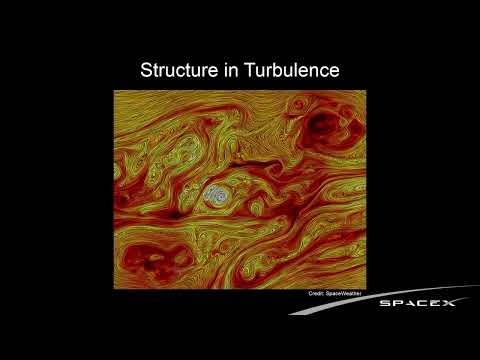
GPUs to Mars: Full-Scale Simulation of SpaceX's Mars Rocket Engine
126K views • 11 years ago
insideHPC Report
SpaceX engineers present at NVIDIA's GPU Technology Conference on a multi-physics code that simulates the full-scale Raptor methane engine. It covers GPU-based turbulent combustion modeling with adaptive grids and wavelet compression.
 25:01
Dan Abramov The wet codebase
27K views • 5 years ago
eswarnichtsmehrfrei
Dan Abramov's talk on the wet codebase, using visualizations to show how removing all duplication too early produces wrong abstractions that are hard to unwind.
 1:32:38
Should Google Go Nuclear? Clean, cheap, nuclear power (no, really)
23K views • 14 years ago
GoogleTalksArchive
Robert Bussard's 2006 Google Tech Talk on inertial electrostatic confinement fusion, a compact approach he argued could be cheap and clean, using boron-hydrogen fuel without neutron radiation. It runs about 93 minutes and covers the physics, funding history and his proposed development path.
 31:18
Quantum Expert Insight: Peter Shor
607K views • 5 years ago
Qiskit
Peter Shor tells the story of how he discovered Shor's Algorithm, from his early mathematics days to the quantum factoring breakthrough. It was recorded at MIT at the Physics of Computation conference.
 20:38
Alan Kay: A powerful idea about teaching ideas
51K views • 18 years ago
TED
Alan Kay's TED talk on teaching ideas, in which he argues the world is not what it seems and shows children learning through programming and building their own lessons with Etoys/Squeak.
 48:07
von Neumann probes, Dyson spheres, exploratory engineering and the Fermi paradox
46K views • 14 years ago
Future of Humanity Institute
Stuart Armstrong of the Future of Humanity Institute gives an Oxford physics talk on what exploratory engineering suggests about the Fermi paradox. He argues that von Neumann probes and Dyson spheres are plausibly buildable and asks what traces advanced civilizations would leave.
 1:01:45
Intuition Pumps and Other Tools for Thinking | Daniel Dennett | Talks at Google
129K views • 13 years ago
Talks at Google
Philosopher Daniel Dennett visits Google to discuss his book Intuition Pumps and Other Tools for Thinking, describing thought experiments and thinking tools across psychology, biology, computer science and physics.
 44:59
Google I/O 2011: Kick-Ass Game Programming with Google Web Toolkit
106K views • 15 years ago
Google for Developers
Google I/O 2011 session by Ray Cromwell and Philip Rogers on writing 2D and 3D games with HTML5 and GWT. It covers porting game libraries and physics engines, sharing code with Android, and publishing to the Chrome Web Store, and showcases the ForPlay library.