processor architecture
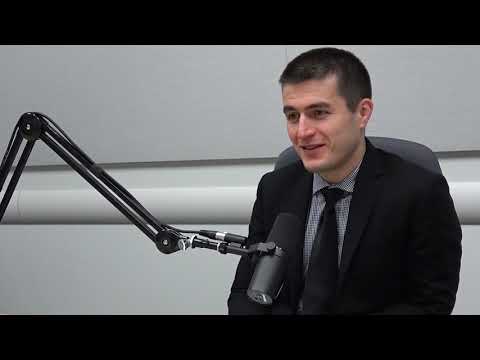 1:34:44
Jim Keller: Moore's Law, Microprocessors, and First Principles | Lex Fridman Podcast #70
742K views • 6 years ago
Lex Fridman
Lex Fridman interviews legendary chip architect Jim Keller about Moore's Law, microprocessor design, and first-principles thinking. Keller draws on his work at AMD, Apple, Tesla and Intel, discussing instruction sets, transistor budgets, and self-driving.
 41:44
Comparing Tesla, Ford, & VW's Electrical Architectures
381K views • 5 years ago
Munro Live
Sandy Munro sits down with engineers from 3IS to compare the electrical architectures of the Tesla Model Y, Ford Mach-E and VW ID.4. They discuss ECU counts, bus architectures and what the differences mean for cost and integration.
 11:13
1979: Will WORD PROCESSORS start a HOME WORKING revolution? | Past Predictions | BBC Archive
461K views • 4 years ago
BBC Archive
A 1979 BBC Nationwide report asking whether word processors and networked microprocessors could end office commuting. It shows early word processing and a woman working from home, with surprisingly prophetic predictions.
 51:50
[11] Mike Clark, AMD Zen Chief Architect
27K views • 5 years ago
TechTechPotato
Ian Cutress interviews Mike Clark, AMD's chief architect of Zen, about his career since the K5, how Zen began and how CPUs are designed. It also covers the future of AMD.
 29:44
EEVblog #1341 - AMAZING $250,000 IBM Processor TEARDOWN!
714K views • 6 years ago
EEVblog
Dave Jones of EEVblog tears down a 1991 IBM 9121 thermal conduction module from a System/390 mainframe, a 63-layer ceramic hybrid module with 2772 pins worth about $250,000, and demonstrates a BGA desoldering technique.
 52:45
The Road to PS5
16.8M views • 6 years ago
PlayStation
PS5 lead system architect Mark Cerny gives a deep dive into the PS5's architecture, covering its SSD, I/O, audio and design goals. He explains how removing bottlenecks shapes future games.
 33:43
TSP #183 - Starlink Dish Phased Array Design, Architecture & RF In-depth Analysis
171K views • 5 years ago
The Signal Path
The Signal Path takes apart a Starlink dish layer by layer, analyzing the phased array RF design, system architecture and integrated circuits, with an X-ray of the RF stack.
 3:09
Microservices
4M views • 6 years ago
KRAZAM
A short KRAZAM comedy sketch in which engineers explain an absurdly tangled microservices architecture to a manager. It parodies how backend complexity gets justified with jargon.
 53:25
The Only Unbreakable Law
487K views • 4 years ago
Molly Rocket
Casey Muratori's lecture, originally given at the Technical University of Madrid, arguing that Conway's Law is the only viable candidate for a true law of software architecture. He explains how software mimics the organization over time, using examples like Windows' multiple volume controls.
 2:09:01
Well There's Your Problem | Episode 46 : Five-over-Ones
291K views • 5 years ago
Well There's Your Problem Podcast
An episode of the Well There's Your Problem podcast on five-over-one buildings, wood-frame floors atop concrete bases, with engineering background and some oil industry news. It is long, rambling and has NSFW language.
 13:28
This Town Did The Impossible
3.1M views • 3 years ago
The Aesthetic City
A look at Le Plessis-Robinson, a French suburb transformed from modernist urbanism into traditional mixed-use fabric with local-style architecture, green space and a more balanced housing supply.
 1:49:11
WE MUST ADD STRUCTURE TO DEEP LEARNING BECAUSE...
101K views • 2 years ago
Machine Learning Street Talk
Machine Learning Street Talk interviews Paul Lessard about Categorical Deep Learning, which uses category theory and monads to make neural network architectures more interpretable and composable. They also discuss neural networks' limits in reasoning and unbounded computation.
 31:00
Exploring the Tech and Design of Noita
288K views • 6 years ago
GDC Festival of Gaming
In this 2019 GDC session, Petri Purho of Nolla Games explains the technical side of Noita's physics engine, including scaling a falling-sand simulation to large continuous worlds and adding destructible rigid bodies. It also shows how the emergent physics drives the gameplay.
 2:50:14
Simple Code, High Performance
463K views • 5 years ago
Molly Rocket
Casey Muratori's University of Twente guest lecture is a case study in how straightforward code can cut thousands of lines and tens of seconds of runtime down to a few dozen lines running in under a second. It uses concrete examples to show why software is often an order of magnitude slower than it should be.
 37:11
CheerpX: a WebAssembly-based x86 virtual machine in the browser, Yuri Iozzelli
7K views • 6 years ago
WebAssembly NA
A talk by Yuri Iozzelli at a WebAssembly meetup on CheerpX, an x86 virtual machine running in the browser. It uses a JIT compiler that emits WebAssembly at runtime to run real native applications. It covers the architecture and demos such as porting a multiplayer C++ game.
 1:37:12
[7] Jim Keller, Silicon Wizard 🧙♂️
67K views • 5 years ago
TechTechPotato
Ian Cutress interviews chip architect Jim Keller about his time at AMD, Intel and elsewhere, management advice, design approach, Moore's Law and x86 versus Arm.
 2:39:15
Jim Keller: The Future of Computing, AI, Life, and Consciousness | Lex Fridman Podcast #162
1.3M views • 5 years ago
Lex Fridman
Lex Fridman interviews chip architect Jim Keller about the future of computing, AI, life and consciousness. Topics include CPU design, branch prediction and why imperfect designs often win.
 1:05:28
HC2023-K2: Hardware for Deep Learning
15K views • 3 years ago
hotchipsvideos
Bill Dally of NVIDIA gives a Hot Chips 2023 keynote on the challenges of building hardware for deep learning. He traces how GPUs have been adapted for machine learning, especially training.
 1:06:08
Scaling the Linear Sync Engine
37K views • 3 years ago
Linear
A Linear engineer talks about scaling the company's sync engine, which keeps client data local and synchronized. It follows an earlier talk on the same system.
 5:24
Commie Blocks Are Pretty Good, Actually
1.9M views • 4 years ago
Adam Something
Adam Something gives a short, tongue-in-cheek defense of Soviet-era prefab apartment blocks. He argues they offer efficient, dense housing with schools and services built nearby.
 31:06
Jim Keller - Moore's Law in the age of AI Chips
33K views • 6 years ago
Matroid
Jim Keller's talk at the 2020 Scaled Machine Learning conference on Moore's Law in the age of AI chips. He compares scalar, vector and GPU-style parallel approaches to computation.
 3:46:53
2023 Investor Day | Tesla
1.9M views • 3 years ago
Tesla
Tesla's 2023 Investor Day, a nearly four-hour presentation covering Master Plan 3, vehicle design, powertrain, electronic architecture, manufacturing and sustainable energy economics.
 1:06:20
USENIX ATC '21/OSDI '21 Joint Keynote Address-It's Time for Operating Systems to Rediscover Hardware
46K views • 5 years ago
USENIX
Timothy Roscoe of ETH Zurich delivers the joint USENIX ATC/OSDI 2021 keynote arguing that operating systems must reckon with modern hardware, which is a heterogeneous collection of processors, firmware and coprocessors rather than a simple machine. It shows how much runs below and beside Linux.
 1:01:46
GigCityElixir23 - Bryan Hunter
10K views • 3 years ago
Groxio
Bryan Hunter's GigCityElixir 2023 talk on HCA Healthcare's Waterpark system, built on Elixir/Erlang. It describes how the architecture is distributed and fault-tolerant, with a multi-datacenter cluster and runtime code swapping.
 35:33
How does Computer Memory Work? 💻🛠
5.5M views • 4 years ago
Branch Education
A 36-minute animated deep dive from Branch Education into how DRAM works. It shows how memory connects to the CPU and how billions of bits are stored in nanoscale capacitor cells. It also covers why DRAM sits between SSDs and the processor.
 35:25
Saving Voyager 1! - Bruce Waggoner at !!Con 2024
8K views • 2 years ago
!!Con
Bruce Waggoner of the Voyager team describes how engineers diagnosed Voyager 1's 2023 loss of telemetry and patched its flight software from 15 billion miles away. The talk covers the spacecraft's architecture and the scarcity of old documentation.
 44:29
Behind the scenes of iOS and Mac Security
36K views • 6 years ago
Black Hat
Ivan Krstic's Black Hat talk on Apple platform security, including the Find My design that uses elliptic curve key diversification to locate offline devices privately. It also covers hardware features such as the T2 chip and secure boot hardening.
 1:16:07
React Helsinki February 2020
42K views • 6 years ago
Fraktio
React Helsinki meetup recording featuring a talk on lessons with Apollo GraphQL and Linear co-founder Tuomas Artman on real-time sync for web apps. The sync talk explains Linear's local-first architecture.
 1:35:12
Modernizing Compiler Design for Carbon Toolchain - Chandler Carruth - CppNow 2023
71K views • 3 years ago
CppNow
Chandler Carruth's CppNow 2023 talk on modernizing compiler design for the Carbon toolchain, using data-oriented design and modern hardware assumptions. It covers lexing, parsing and compact data structures aimed at compiler performance.
 7:42:30
XDC 2020 - Day 1 - September 16, 2020
24K views • 6 years ago
X.Org Foundation
Day one of the X.Org Developer's Conference 2020 stream, including talks on the Raspberry Pi 4 Vulkan driver, the WSL graphics architecture, X11 and Wayland apps in WSL, and Mesa for D3D12.
 42:57
Tesla Virtual Power Plant
36K views • 6 years ago
InfoQ
A QCon London 2020 talk by Tesla engineers on the architecture of Tesla's Virtual Power Plant. It covers aggregating distributed batteries and solar with vertically integrated hardware and software across cloud and edge.
 1:07:09
Richard Sutton – Father of RL thinks LLMs are a dead end
804K views • 1 year ago
Dwarkesh Patel
Dwarkesh Patel interviews Richard Sutton, reinforcement learning pioneer, Turing Award winner and author of The Bitter Lesson. Sutton argues LLMs are a dead end because they cannot learn on the job, and that continual learning from experience will require a new architecture.
 50:06
Protected KVM on Arm64: A Technical Deep Dive - Quentin Perret, Google
6K views • 4 years ago
The Linux Foundation
Quentin Perret of Google gives a technical deep dive into protected KVM (pKVM) on Arm64, a confidential computing approach for CPUs without hardware extensions. It explains how the nVHE hypervisor manages stage-2 MMU access control to protect guest memory.