proofs
 44:09
Lec 1 | MIT 6.042J Mathematics for Computer Science, Fall 2010
2.8M views • 13 years ago
MIT OpenCourseWare
The first lecture of MIT 6.042J Mathematics for Computer Science, taught by Tom Leighton, introducing mathematical proofs. It covers propositions, implication and basic proof methods.
Topic match · Pure mathematics 22:36
Computer Scientist Explains One Concept in 5 Levels of Difficulty | WIRED
7.2M views • 4 years ago
WIRED
WIRED has UCLA professor Amit Sahai explain zero-knowledge proofs to a child, a teen, a college student, a grad student and an expert. Each round goes deeper into the cryptography and why it matters.
Topic match · Cryptography 1:32:08
Theory and Practice of Cryptography
73K views • 18 years ago
Google TechTalks
A Google Tech Talk by Steve Weis that introduces modern cryptography and its use in practice and at Google. It covers proofs of security and security definitions and a special topic. HN commenters treat it as a talk on verifiable electronic voting.
Topic match · Cryptography 38:36
"A Little Taste of Dependent Types" by David Christiansen
48K views • 8 years ago
Strange Loop Conference
David Christiansen gives a Strange Loop 2018 introduction to dependent types, where one language serves for both compile-time and run-time code and programs unite with proofs. It draws on his book The Little Typer.
Topic match · Logic & formal methods 11:15
The hardest problem on the hardest test
16.5M views • 8 years ago
3Blue1Brown
3Blue1Brown walks through a very hard Putnam competition problem and its elegant solution, emphasizing the visual intuition and the thought process behind solving it.
Topic match · Recreational & visual math 1:02:06
Real Analysis, Lecture 1: Constructing the Rational Numbers
613K views • 16 years ago
HarveyMuddCollegeEDU
The first lecture of Francis Su's Harvey Mudd real analysis course, covering the construction of the rational numbers. It begins a full lecture series that follows a standard analysis text.
Topic match · Pure mathematics 48:55
Pythagoras' theorem (a) | Math History | NJ Wildberger
517K views • 15 years ago
Insights into Mathematics
The first lecture of N J Wildberger's History of Mathematics course, starting with Pythagoras' theorem and following Stillwell's text. It emphasizes the flow of ideas over proofs.
Topic match · Pure mathematics 58:30
What if Current Foundations of Mathematics are Inconsistent? | Vladimir Voevodsky
57K views • 14 years ago
Institute for Advanced Study
Vladimir Voevodsky's IAS lecture starts from Godel's second incompleteness theorem to explore whether first-order arithmetic could be inconsistent. It motivates his vision of univalent foundations and computer-checked proofs.
Topic match · Logic & formal methods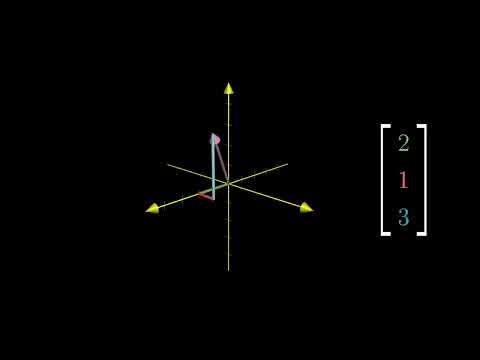 9:52
Vectors | Chapter 1, Essence of linear algebra
13M views • 10 years ago
3Blue1Brown
The first chapter of 3Blue1Brown's Essence of Linear Algebra series, introducing vectors with animated geometric visuals. It begins a series that builds intuition for linear algebra from the basics.
Topic match · Pure mathematics 19:42
But what is the Fourier Transform? A visual introduction.
12.6M views • 8 years ago
3Blue1Brown
3Blue1Brown's animated visual introduction to the Fourier Transform, showing how a signal breaks into frequency components.
Topic match · Recreational & visual math 18:40
But what is a neural network? | Deep learning chapter 1
25.1M views • 9 years ago
3Blue1Brown
3Blue1Brown's first chapter on deep learning explains what neurons and layers are and the math underlying a basic neural network, using handwritten digit recognition with visual animations.
Topic match · Recreational & visual math 24:26
The Beauty of Bézier Curves
2.2M views • 5 years ago
Freya Holmér
Freya Holmer explains how Bezier curves work, from the helper-line construction to their uses in animation, text rendering and shapes. It uses visuals from her Unity Shapes plugin and was a SoME1 contest winner.
Topic match · Recreational & visual math 1:13:50
The Continuity of Splines
1.9M views • 3 years ago
Freya Holmér
Freya Holmer's 74-minute video essay on splines, covering Bezier curves, B-splines, derivatives and the different levels of continuity (C0, C1, C2), built with custom animation tools. She notes she did not cover non-uniform splines.
Topic match · Recreational & visual math 1:00:43
Jim Simons (full length interview) - Numberphile
1.4M views • 11 years ago
Numberphile2
The full-length Numberphile interview with mathematician and hedge fund founder Jim Simons. He discusses his path from mathematics and codebreaking to founding Renaissance Technologies, his use of algorithms in markets, and his philanthropy.
Topic match · Recreational & visual math 39:49
Lec 1 | MIT 18.06 Linear Algebra, Spring 2005
4.9M views • 17 years ago
MIT OpenCourseWare
The first lecture of Gilbert Strang's MIT 18.06 Linear Algebra course, covering the geometry of linear equations. It opens a full 35-lecture university course.
Topic match · Pure mathematics 51:32
Behind the Scenes of iOS Security
127K views • 10 years ago
Black Hat
Apple security head Ivan Krstic gives a Black Hat 2016 talk on iOS security, covering HomeKit, Auto Unlock and iCloud Keychain. He explains key hierarchies and how data can stay safe even in adversarial clouds.
Topic match · Cryptography 12:01
Why Electronic Voting Is Still A Bad Idea
5.1M views • 6 years ago
Tom Scott
Tom Scott explains why electronic voting is a bad idea. Elections must be trusted by everyone and attacks on software scale in ways attacks on paper do not, so open source or blockchain fixes do not solve it.
Topic match · Cryptography 25:16
But how does bitcoin actually work?
18.1M views • 9 years ago
3Blue1Brown
3Blue1Brown explains the math and mechanics behind Bitcoin visually: ledgers, digital signatures, proof of work and the blockchain, building up a decentralized payment system from first principles.
Topic match · Cryptography 7:48
Conway's Game Of Life in APL
236K views • 17 years ago
Dyalog
A short Dyalog demonstration building Conway's Game of Life in a single line of APL, step by step. It shows how array operations replace loops.
Topic match · Recreational & visual math 9:18
The Most IMPORTANT Video You'll Ever See (part 1 of 8)
5.4M views • 19 years ago
wonderingmind42
Part 1 of a lecture by physicist Albert Bartlett on the exponential function and its consequences for population growth, resource use and energy. It argues that steady growth rates quickly lead to enormous quantities.
Topic match · Pure mathematics 1:07:10
Brian Beckman: Don't fear the Monad
415K views • 13 years ago
jasonofthel33t
Microsoft's Brian Beckman gives an hour-long, whiteboard-style walk through monads, building from function composition and monoids using school-level math. It is aimed at practicing programmers rather than category theorists.
Topic match · Logic & formal methods 1:37:22
Siggraph2019 Geometric Algebra
87K views • 7 years ago
Bivector
A SIGGRAPH 2019 course on geometric algebra. Charles Gunn gives an intro, then Steven De Keninck gives a programmer-focused course with live examples in ganja.js.
Topic match · Pure mathematics 17:05
The essence of calculus
11.9M views • 9 years ago
3Blue1Brown
The first video of 3Blue1Brown's Essence of Calculus series, which builds toward integrals, derivatives, and the fundamental theorem of calculus from a simple geometry question. It aims to make viewers feel they could have invented calculus themselves.
Topic match · Pure mathematics 59:23
28c3: The Science of Insecurity
42K views • 14 years ago
28c3
Meredith Patterson and Sergey Bratus argue that networked software stays insecure because protocols and inputs are too complex to recognize safely. They propose using formal language theory and grammars to build secure, verifiable input handling.
Topic match · Logic & formal methods 46:46
Category Theory 1.1: Motivation and Philosophy
394K views • 10 years ago
Bartosz Milewski
The first lecture in Bartosz Milewski's category theory series for programmers. It covers the motivation and philosophy behind category theory and why composition matters for handling complexity.
Topic match · Pure mathematics 42:43
"Propositions as Types" by Philip Wadler
143K views • 11 years ago
Strange Loop Conference
Philip Wadler's Strange Loop talk on Propositions as Types, the link between logic and computation (the Curry-Howard correspondence). He traces its history through Church, Godel and Turing and shows how it shaped theorem provers and programming languages.
Topic match · Logic & formal methods 6:49
The man with 1,000 Klein Bottles UNDER his house - Numberphile
2.2M views • 11 years ago
Numberphile
Numberphile visits Cliff Stoll, the man behind ACME Klein Bottles, and sees how he stores a thousand glass Klein bottles in a crawlspace under his house. A remote-controlled forklift fetches them.
Topic match · Recreational & visual math 8:38
Diffie-Hellman Key Exchange
938K views • 14 years ago
Art of the Problem
A short explainer on the history and mechanics of public key cryptography and the Diffie-Hellman key exchange. It uses a mixing-paint-colors analogy to show how two parties can agree on a shared secret in public.
Topic match · Cryptography 5:09
Essence of linear algebra preview
2.8M views • 10 years ago
3Blue1Brown
A five-minute preview of 3Blue1Brown's Essence of Linear Algebra series, which uses animation to build geometric intuition for topics from a standard linear algebra course.
Topic match · Pure mathematics 44:23
A Swift Introduction to Geometric Algebra
1.1M views • 6 years ago
sudgylacmoe
An animated introduction to geometric algebra, presented as a language that can describe most of physics. It was made with manim and covers multivectors and how they generalize familiar tools like cross products and quaternions.
Topic match · Pure mathematics 5:47
Imaginary Numbers Are Real [Part 1: Introduction]
8.6M views • 11 years ago
Welch Labs
The first part of Welch Labs' series on imaginary numbers, presenting them as the natural extension of the number line into two dimensions. It covers the history and the math with strong visuals.
Topic match · Pure mathematics 48:02
BlackHat USA 2011: SSL And The Future Of Authenticity
95K views • 15 years ago
Christiaan008
Moxie Marlinspike's BlackHat 2011 talk examines weaknesses of SSL and the certificate authority system and proposes Convergence, a decentralized notary approach with trust agility.
Topic match · Cryptography 14:34
Blockchains Are a Bad Idea (James Mickens)
68K views • 8 years ago
HBS Digital Initiative
James Mickens of Harvard gives a funny lecture at HBS's Future Assembly arguing that blockchains are a very bad idea. He covers their trust, legal and practical shortcomings for real-world problems.
Topic match · Cryptography 10:03
The determinant | Chapter 6, Essence of linear algebra
5M views • 10 years ago
3Blue1Brown
A 10-minute 3Blue1Brown chapter explaining the determinant as the factor by which a linear transformation scales area or volume. It builds the idea geometrically with animations before any formulas.
Topic match · Pure mathematics 2:18:23
Line Goes Up – The Problem With NFTs
19M views • 4 years ago
Folding Ideas
Dan Olson's roughly two-hour video essay critiques NFTs, cryptocurrency, and Web3, covering their technical, economic, and ideological flaws. It is heavily sourced and ends with the advice to ask whether a project needs crypto to work.
Topic match · Cryptography 34:00
Math's Fundamental Flaw
30.8M views • 5 years ago
Veritasium
Veritasium's explainer on Godel's incompleteness theorems and the limits of mathematical proof, tracing set theory, Hilbert's program and the road to Turing and modern computing.
Topic match · Logic & formal methods 21:36
Fractals are typically not self-similar
4.6M views • 9 years ago
3Blue1Brown
3Blue1Brown explains fractal dimension and shows why many fractals are not strictly self-similar. Self-similarity turns out to be a special case of the broader idea of fractional dimension.
Topic match · Recreational & visual math 24:14
The Banach–Tarski Paradox
49.1M views • 11 years ago
Vsauce
Vsauce's roughly 24 minute explainer on the Banach-Tarski paradox, building from infinity and set theory to the decomposition of a sphere into pieces that form two spheres.
Topic match · Logic & formal methods 8:21
Why Electronic Voting is a BAD Idea - Computerphile
2.3M views • 11 years ago
Computerphile
Tom Scott explains for Computerphile why electronic voting is a bad idea, arguing that paper ballots are transparent, auditable and hard to tamper with at scale. He covers why moving voting to phones, tablets or computers undermines trust and verifiability.
Topic match · Cryptography 25:13
Thinking outside the 10-dimensional box
3.2M views • 9 years ago
3Blue1Brown
3Blue1Brown visualizes high-dimensional spheres to explain a surprising puzzle about how a sphere fits in a box as dimensions grow. It builds geometric intuition for counterintuitive properties of high-dimensional space.
Topic match · Recreational & visual math