putin
 19:27
Quantum Computing Expert Explains One Concept in 5 Levels of Difficulty | WIRED
8M views • 8 years ago
WIRED
IBM's Dr. Talia Gershon explains quantum computing to five people of increasing expertise: a child, teen, college student, grad student and professional. The WIRED series format moves from simple analogies to technical detail.
 16:36
Hacking at Quantum Speed with Shor's Algorithm | Infinite Series
238K views • 9 years ago
PBS Infinite Series
PBS Infinite Series explains how Shor's algorithm lets a quantum computer break RSA encryption, building on earlier episodes about cryptography and the math of quantum computers. It works through the idea step by step.
Topic match · Quantum computing 12:35
The Mathematics of Quantum Computers | Infinite Series
718K views • 9 years ago
PBS Infinite Series
A PBS Infinite Series episode explaining the mathematics of quantum computers, including how qubits store complex numbers and how quantum computation differs from classical computation. Hosted by Kelsey Houston-Edwards.
Topic match · Quantum computing 11:27
CGA Graphics - Not as bad as you thought!
2.4M views • 10 years ago
The 8-Bit Guy
The 8-Bit Guy covers IBM's 1981 CGA graphics system, including how composite output and artifacting produced extra colors beyond the nominal palette. He argues CGA looked better in period than it does on RGB monitors.
Topic match · Demoscene & retrocomputing 15:09
Mouse Cursor History (and why I made my own)
3M views • 8 years ago
Posy
Posy gives a short history of the computer mouse cursor, from early straight pointers to the tilted arrow, comparing Apple and Windows designs. He then explains why he designed his own cursor set and offers it as a free download.
Topic match · History of computing 3:05
IBM Selectric Typewriter & its digital to analogue converter
1.1M views • 16 years ago
engineerguy
Bill Hammack of engineerguy uses slow motion video to show how the IBM Selectric typewriter works. He focuses on its fully mechanical digital-to-analog converter, which turns key presses into rotation of the type ball.
Topic match · History of computing 17:31
How Quantum Computers Break Encryption | Shor's Algorithm Explained
3.4M views • 7 years ago
minutephysics
MinutePhysics explains Shor's algorithm, showing how a quantum computer factors large integers by finding the period of a number modulo N. It walks through the modular arithmetic and number theory that give the exponential speedup over classical factoring, and why this threatens encryption.
Topic match · Quantum computing 9:20
An astonishing old calculator - Numberphile
794K views • 8 years ago
Numberphile
Cliff Stoll shows and explains his two Friden EC-132 electronic calculators for Numberphile. The video covers how these early machines worked, including their unusual acoustic delay line memory.
Topic match · History of computing 9:41
How Steve Jobs got the ideas of GUI from XEROX
272K views • 12 years ago
Ringo Pebam
A short video telling how Xerox PARC invented the graphical user interface and how Steve Jobs's 1979 visit influenced Apple's Lisa.
Topic match · History of computing 3:39
(1/4) Intro/History: Introducing a 100-year-old mechanical computer
476K views • 12 years ago
engineerguy
The first of four short videos from Bill Hammack (engineerguy) introducing and giving the history of a 100-year-old mechanical computer, Michelson's harmonic analyzer. The series goes on to explain Fourier synthesis, analysis and operation of the machine.
Topic match · History of computing 7:16
Unix and Google
9K views • 10 years ago
FOAM
A short animated simulation comparing how Multics and Unix were developed, showing why Unix's small composable programs and pipes gave it a efficiency advantage. It frames Unix as a moonshot achievable by a small team.
Topic match · History of computing 10:58
Flaw in the Enigma Code - Numberphile
5.4M views • 13 years ago
Numberphile
Numberphile's Dr James Grime explains the flaw in the Enigma machine, namely that a letter could never be encrypted to itself, and how that helped the Allies break the code. It touches on the Bombe and Alan Turing.
Topic match · History of computing 12:23
Xanadu Basics 1a - VISIBLE CONNECTION
20K views • 8 years ago
TheTedNelson
Ted Nelson explains the original Xanadu hypertext idea of visible connection, the notion that links between documents should be shown and preserved. He argues that the Web and current document standards lost this concept.
Topic match · History of computing 7:08
How "oldschool" graphics worked Part 1 - Commodore and Nintendo
5.7M views • 11 years ago
The 8-Bit Guy
The 8-Bit Guy explains the color limitations of 1980s computers and consoles such as the NES and Commodore 64. It shows how sprites, attributes and palettes shaped the look of old games.
Topic match · Demoscene & retrocomputing 16:29
Why Sony's Beta Videotape System Failed--and failed hard (Part 1)
1.5M views • 9 years ago
Technology Connections
Part one of Technology Connections' account of the VHS versus Betamax format war. It argues Sony was caught off guard by JVC's cheaper, more practical VHS system.
Topic match · History of computing 5:01
How a Laser-Shot Disk Defeats Hackers & Pirates (Coding Secrets)
132K views • 8 years ago
GameHut
An episode of Coding Secrets by Jon Burton on retro copy protection, in particular physically damaging a disk with a laser so copies fail. It explains how this defeated hackers and pirates.
Topic match · Demoscene & retrocomputing 13:59
MENACE: the pile of matchboxes which can learn
453K views • 8 years ago
Stand-up Maths
Matt Parker of Stand-up Maths demonstrates MENACE, Donald Michie's 1961 machine made of matchboxes that learns to play noughts and crosses through reinforcement. He builds and trains a physical version.
Topic match · History of computing 3:36
Hold music used to sound better. Here's why.
2.9M views • 8 years ago
Tom Scott
Tom Scott explains why hold music sounds worse than it used to, tracing it to old telephone exchanges and the audio compression applied by modern switches. It is a short visit to the Milton Keynes Museum.
Topic match · History of computing 8:26
AT&T Archives: The Step-By-Step Switch
774K views • 15 years ago
AT&T Tech Channel
A 1951 Bell System training film showing how telephone calls are routed through a step-by-step (Strowger) switching office.
Topic match · History of computing 12:24
The 1988 VIDEO Floppy Disk Camera: Canon Xap Shot RC-250
452K views • 8 years ago
LGR
LGR looks at the 1988 Canon Xap Shot, a still video camera that records photos to a floppy disk as analog NTSC signal rather than digital data.
Topic match · Demoscene & retrocomputing 12:23
Typesetters in the '80s - Computerphile
105K views • 12 years ago
Computerphile
Professor Brailsford of the University of Nottingham describes how the university set out to print its own mathematics exam papers in the 1980s. The story centers on getting a Mergenthaler Linotron 202 typesetter to work with their own software.
Topic match · History of computing 12:16
LCCS: The LCD / CRT Hybrid from JVC
2.3M views • 7 years ago
Technology Connections
A Technology Connections video on JVC's LCCS, a display hybrid that cycles a color LCD shutter over a monochrome CRT to produce field-sequential color without dots or stripes. It builds on his earlier videos about analog TV and compatible color.
Topic match · History of computing 43:57
Civilizations at the End of Time: Iron Stars
2.1M views • 9 years ago
Isaac Arthur
An Isaac Arthur episode on civilizations in the far future, past the Black Hole Era. It covers iron stars, Boltzmann brains, reversible computing and the idea of reversing entropy.
 4:58
You Actually Share Your Brain With a Silent Stranger
20.2M views • 10 years ago
CGP Grey
CGP Grey explains split-brain patients, where severing the corpus callosum lets the two hemispheres act independently. He uses this to explore the idea of two minds in one head.
Topic match · Neuroscience & the brain 16:26
Why Adults Can't Develop Perfect Pitch
1.8M views • 9 years ago
Rick Beato
Rick Beato argues that adults cannot develop true perfect pitch, which he ties to critical-period brain plasticity and language acquisition. He says it can only be developed in young children, and discusses the research behind this.
Topic match · Neuroscience & the brain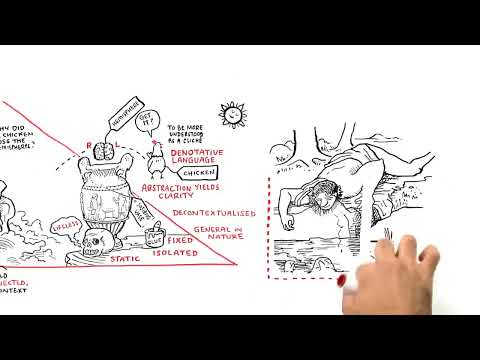 11:48
RSA ANIMATE: The Divided Brain
2.2M views • 15 years ago
Royal Society of Arts
An RSA Animate summary of Iain McGilchrist's lecture on the divided brain, arguing the brain's two hemispheres attend to the world differently and that this has shaped culture and society.
Topic match · Neuroscience & the brain 7:41
Why Life Seems to Speed Up as We Age
8M views • 10 years ago
Veritasium
Veritasium explores why time seems to speed up as we age, covering chronoception and several competing explanations beyond the common proportional-theory argument.
Topic match · Neuroscience & the brain 5:51
This Is Your Brain On Stale Air
4.2M views • 7 years ago
Tom Scott
Tom Scott features Kurtis Baute inside a sealed homemade biodome as carbon dioxide builds up, showing how stale air with elevated CO2 affects cognitive function. Sources include studies on CO2 and cognitive scores.
Topic match · Neuroscience & the brain 3:47
Your Coffee Addiction Is Probably Good for You
9.6M views • 15 years ago
CGP Grey
CGP Grey's short explainer arguing that caffeine addiction is mostly harmless and may even be beneficial. It covers what caffeine does in the body.
Topic match · Neuroscience & the brain 9:35
Is Your Red The Same as My Red?
34M views • 13 years ago
Vsauce
Vsauce explores qualia and whether different people experience colors the same way. It draws on color blindness, Mary's room, the explanatory gap and subjective experience.
Topic match · Neuroscience & the brain 15:15
WHY Exercise is so Underrated (Brain Power & Movement Link)
4.3M views • 9 years ago
Joseph Everett - WIL
A video arguing that exercise matters for the brain as much as the body, linking movement, the nervous system and BDNF to learning and memory. It draws on research connecting complex movement to brain development.
Topic match · Neuroscience & the brain 4:45
How playing an instrument benefits your brain - Anita Collins
15.2M views • 12 years ago
TED-Ed
A short TED-Ed animated lesson by Anita Collins on what happens in the brain when people play a musical instrument. It argues that playing engages many brain areas at once, like a full-body workout, with long-term benefits.
Topic match · Neuroscience & the brain 22:19
The Weird World in RGB
2.7M views • 7 years ago
Technology Connections
Technology Connections explains how RGB light and color work, from hue and saturation to color vision and how objects appear under different lighting. It uses a studio setup with colored lights to demonstrate the effects.
Topic match · Neuroscience & the brain 12:04
Anagrams, but where you can break apart letters: "Anagraphs"
256K views • 8 years ago
suckerpinch
Tom Scott-style exploration by suckerpinch (Tom7) of generalized anagrams where letters can be broken into pieces, called anagraphs, with a whimsical computational approach.
 40:47
Dyson Spheres
838K views • 9 years ago
Isaac Arthur
Isaac Arthur examines Dyson spheres and swarms, including common myths and misconceptions. He covers uses such as interstellar travel, black hole generation, and computing large enough to simulate universes.
 4:31
The True Cost of the Royal Family Explained
6.8M views • 15 years ago
CGP Grey
CGP Grey breaks down what the British Royal Family costs the UK versus what it brings in, including income from royal-owned land. He concludes the government nets a profit from the arrangement.