range voting
 6:23
How We Should Vote (Range Voting)
43K views • 10 years ago
Undefined Behavior
A six-minute explainer from Undefined Behavior on range (score) voting. It follows an earlier video on Arrow's Theorem and shows how range voting seems to satisfy the criteria Arrow's Theorem says no ranked system can.
 12:01
Why Electronic Voting Is Still A Bad Idea
5.1M views • 6 years ago
Tom Scott
Tom Scott explains why electronic voting is a bad idea. Elections must be trusted by everyone and attacks on software scale in ways attacks on paper do not, so open source or blockchain fixes do not solve it.
 8:21
Why Electronic Voting is a BAD Idea - Computerphile
2.3M views • 11 years ago
Computerphile
Tom Scott explains for Computerphile why electronic voting is a bad idea, arguing that paper ballots are transparent, auditable and hard to tamper with at scale. He covers why moving voting to phones, tablets or computers undermines trust and verifiability.
 6:18
Animated Voting Methods
16K views • 9 years ago
Unify The Vote
An animated simulation comparing single-winner voting methods such as plurality, instant runoff and STAR. Colored regions show which candidate wins as a randomized electorate shifts across a two-dimensional political space, building on Ka-Ping Yee's earlier diagrams.
 14:03
Simulating alternate voting systems
4.5M views • 6 years ago
Primer
Primer uses simulations to compare voting systems such as first-past-the-post, approval, ranked choice and others. It shows how each system behaves and can be manipulated, with links to further voting theory resources.
 4:27
The Voting System That Should Replace Every Election
4.7M views • 15 years ago
CGP Grey
A short CGP Grey explainer on the alternative vote (instant runoff voting) versus first past the post, made around the 2011 UK referendum. It shows how ranked ballots are tallied and why they avoid spoiler effects.
 6:47
The Voting System That's Actually Too Good for Politicians to Allow
10.4M views • 12 years ago
CGP Grey
CGP Grey explains the Single Transferable Vote, a proportional ranked-ballot system, and why politicians have little incentive to adopt it. It is a short animated explainer of how multi-winner ranked voting works.
 4:29
The Voting System That Gives You Two Votes
3.1M views • 15 years ago
CGP Grey
CGP Grey explains Mixed-Member Proportional representation, the system used in New Zealand where voters get two votes. It covers how it differs from first-past-the-post.
 8:34
Was YOUR vote counted? (feat. homomorphic encryption) - Numberphile
198K views • 10 years ago
Numberphile
Numberphile interviews cryptographer Ron Rivest about end-to-end verifiable voting. He explains how homomorphic encryption and receipts let a voter confirm their ballot was counted without being able to prove how they voted to anyone else.
 6:31
Why Your Vote Doesn't Count
7.9M views • 15 years ago
CGP Grey
CGP Grey explains first-past-the-post voting and why it pushes elections toward two dominant parties. It is the first in his series on electoral systems.
 10:33
Strange Spheres in Higher Dimensions - Numberphile
767K views • 9 years ago
Numberphile
Matt Parker on Numberphile explains the strange properties of spheres in higher dimensions, such as how they poke out of their bounding boxes. It uses Pythagoras to build intuition for 4D and beyond.
 4:58
You Actually Share Your Brain With a Silent Stranger
20.2M views • 10 years ago
CGP Grey
CGP Grey explains split-brain patients, where severing the corpus callosum lets the two hemispheres act independently. He uses this to explore the idea of two minds in one head.
 18:32
The world depends on a collection of strange items. They're not cheap
12.6M views • 3 years ago
Veritasium
Veritasium visits NIST to explain Standard Reference Materials, the carefully characterized items such as peanut butter used to calibrate instruments and keep measurements consistent. It covers why they exist and why they are expensive.
 4:51
The UK Election Results Were the Worst in History
8.1M views • 11 years ago
CGP Grey
CGP Grey explains how the 2015 UK general election showed the flaws of first-past-the-post voting, with parties like UKIP winning many votes but few seats.
 4:01
Spherical Geometry Is Stranger Than Hyperbolic - Hyperbolica Devlog #2
1.8M views • 6 years ago
CodeParade
CodeParade's short devlog on how spherical geometry looks in 2D and 3D and why it feels so unusual, part of the Hyperbolica series on a non-Euclidean game.
 18:02
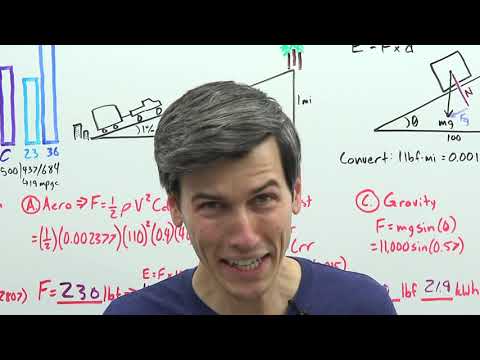
Why Teslas Are Bad At Towing (Today)
768K views • 6 years ago
Engineering Explained
Engineering Explained uses physics to show why today's electric cars, including Teslas, are poor at towing, pointing to battery energy density and weight. It examines Cybertruck and F-150 towing claims.
 6:31
You Can Win the Presidency With 22% of the Vote
8.2M views • 15 years ago
CGP Grey
A short CGP Grey animation showing how the US electoral college lets a candidate win the presidency with as little as about 22 percent of the popular vote. It lays out the arithmetic of winning states by narrow margins.
 5:04
Liquid Democracy In Simple Terms
76K views • 13 years ago
pxi
A five-minute animated explainer of liquid democracy, in which voters can delegate their vote to trusted people. It starts from the origins of democracy and contrasts direct and representative models.
 5:55
Richard Feynman talks about light
1.8M views • 19 years ago
sdfhsfh
A PBS clip in which Richard Feynman explains the strange nature of light and electromagnetic radiation. He conveys how little of it we actually see and how radio waves are present everywhere.
 14:27
Why is TV 29.97 frames per second?
2.2M views • 10 years ago
Stand-up Maths
Matt Parker explains the history behind NTSC television running at 29.97 frames per second rather than 30, tracing it to the backward-compatible addition of color. He walks through the arithmetic behind the odd ratio.
 10:24
Are Electric Planes Possible?
2.3M views • 8 years ago
Real Engineering
Real Engineering analyzes whether electric planes are feasible, focusing on battery energy density limits compared with jet fuel. It concludes electric flight works mainly for short ranges.
 14:25
China is erasing its border with Hong Kong
14.8M views • 8 years ago
Vox
A Vox Borders episode with Johnny Harris explaining how China is gradually erasing the line between mainland China and Hong Kong since the 1997 handover. It describes the one country, two systems arrangement and its expiration date.
 16:32
Pilot Wave Theory and Quantum Realism | Space Time | PBS Digital Studios
1.9M views • 9 years ago
PBS Space Time
A PBS Space Time episode introducing de Broglie-Bohm pilot wave theory, an interpretation of quantum mechanics that avoids much of the strangeness of the mainstream views. It is aimed at curious lay viewers.
 19:25
New computers don't speed up old code
187K views • 1 year ago
Matthias random stuff
Matthias Wandel tests old and new code on a range of PCs, including a new mini PC, to measure how much faster modern hardware really is. He also shows optimization techniques such as branchless code, with benchmark programs on GitHub.
 14:18
Accent Expert Gives a Tour of U.S. Accents - (Part 2) | WIRED
2.7M views • 5 years ago
WIRED
Dialect coach Erik Singer tours a range of accents across North America with linguists in Part 2 of WIRED's accent series. It covers regional distinctions such as Southern Mississippi, Miami and Utah English.
 18:25
How Star Wars was saved in the edit
3.2M views • 8 years ago
RocketJump
A video essay on how the editors of Star Wars: A New Hope recut and rearranged the footage to rescue the film. It walks through specific changes that improved pacing and drama.
 4:31
The True Cost of the Royal Family Explained
6.8M views • 15 years ago
CGP Grey
CGP Grey breaks down what the British Royal Family costs the UK versus what it brings in, including income from royal-owned land. He concludes the government nets a profit from the arrangement.
 5:51
Europe Is Actually Five Different Groups of Countries
14.9M views • 13 years ago
CGP Grey
A short CGP Grey explainer on the overlapping and inconsistent membership arrangements of European countries across the EU, Schengen, the euro and the EEA. It shows why "the EU" is full of exceptions.