reference frames
 8:55
Are Space and Time An Illusion?
3.3M views • 11 years ago
PBS Space Time
A PBS Space Time episode hosted by Gabe Perez-Giz on the nature of spacetime and whether space and time are fundamental. It builds up reference frames and causality in a short, dense format.
 14:27
Why is TV 29.97 frames per second?
2.2M views • 10 years ago
Stand-up Maths
Matt Parker explains the history behind NTSC television running at 29.97 frames per second rather than 30, tracing it to the backward-compatible addition of color. He walks through the arithmetic behind the odd ratio.
 17:52
Training AI Without Writing A Reward Function, with Reward Modelling
259K views • 6 years ago
Robert Miles AI Safety
Robert Miles explains reward modelling, in which an AI learns what humans want from their preference comparisons instead of a hand-written reward function. He walks through the 2017 paper on deep reinforcement learning from human preferences.
 6:18
The artificial gravity lab
7.2M views • 7 years ago
Tom Scott
Tom Scott tours the rotating room artificial gravity facility at Brandeis University's Graybiel lab. It shows how humans cope with rotation-based gravity and the odd effects such as Coriolis forces.
 7:16
Unix and Google
9K views • 10 years ago
FOAM
A short animated simulation comparing how Multics and Unix were developed, showing why Unix's small composable programs and pipes gave it a efficiency advantage. It frames Unix as a moonshot achievable by a small team.
 7:15
A Selfish Argument for Making the World a Better Place – Egoistic Altruism
11.4M views • 8 years ago
Kurzgesagt – In a Nutshell
Kurzgesagt makes a selfish case for improving the world, arguing that helping people far away raises prosperity and innovation for everyone, including yourself. The animated video frames this as egoistic altruism and positive-sum cooperation.
 4:38
The Only Safe Phone Is One Even the Police Can't Unlock
4.1M views • 10 years ago
CGP Grey
A five-minute CGP Grey explainer arguing that a phone is effectively an extension of your mind, and that any backdoor or master key into encrypted devices will inevitably be abused or leaked. It frames the encryption debate as locks that are either unbreakable or absent.
 13:34
Salt: Are you getting Enough? (More Sodium & Health)
1.4M views • 9 years ago
Joseph Everett - WIL
Joseph Everett argues, drawing on the book The Salt Fix, that most people benefit from more rather than less salt, and reviews studies on sodium, potassium and blood pressure.
 6:50
13 Misconceptions About Global Warming
5.9M views • 12 years ago
Veritasium
Veritasium debunks common climate change myths in under seven minutes, with references to NASA and published research. Topics include CO2 sources, sea ice and 1970s predictions of cooling.
 11:21
How does a whip break the sound barrier? (Slow Motion Shockwave formation) - Smarter Every Day 207
6.5M views • 7 years ago
SmarterEveryDay
Smarter Every Day uses high-speed and Schlieren photography to show how a whip crack is a supersonic shockwave formed at the tip. It references academic papers on whip physics.
 18:57
Manipulating the YouTube Algorithm - (Part 1/3) Smarter Every Day 213
2.7M views • 7 years ago
SmarterEveryDay
Part 1 of Smarter Every Day's three-part series on manipulating the YouTube algorithm. It features Renee DiResta and examples of how social media platforms can be manipulated.
 16:04
Genetic Engineering Will Change Everything Forever – CRISPR
30.8M views • 10 years ago
Kurzgesagt – In a Nutshell
Kurzgesagt's animated explainer on CRISPR gene editing, covering how the technology works and what it could mean for curing disease, designer babies and aging. It frames genetic engineering as an irreversible change coming to humanity.
 7:50
ASTOUNDING: 1 + 2 + 3 + 4 + 5 + ... = -1/12
9.8M views • 12 years ago
Numberphile
A Numberphile video in which physicists Tony Padilla and Ed Copeland show a seemingly astounding result that 1+2+3+4+... equals -1/12. The argument is informal and has drawn criticism for glossing over what the result actually means.
 16:07
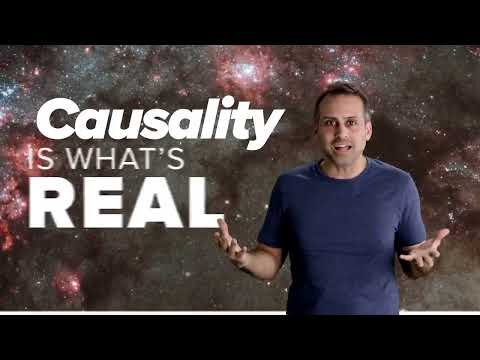
The Geometry of Causality
1.8M views • 9 years ago
PBS Space Time
PBS Space Time explains how spacetime geometry and light cones determine the order of events and what can cause what. It visualizes causality in special relativity.
 29:02
Colonizing Venus
731K views • 9 years ago
Isaac Arthur
Isaac Arthur examines options for colonizing Venus, from vast floating habitats in the temperate upper atmosphere to full terraforming of the planet. It is a long-form speculative futurism episode in his solar system colonization series.
 13:56
Understanding the Russian mindset
994K views • 12 years ago
CaspianReport
CaspianReport explainer arguing that Russia's geography, especially its vast size and indefensible Moscow core, shapes its political behavior. It frames Russian security thinking through the lens of geographic determinism.
 12:07
Why Are 96,000,000 Black Balls on This Reservoir?
112.9M views • 7 years ago
Veritasium
Veritasium rides a boat across the Los Angeles reservoir covered in 96 million black plastic balls. He explains why they were really introduced, which was not primarily to reduce evaporation.
 13:34
Did Time Start at the Big Bang?
2.5M views • 7 years ago
PBS Space Time
A PBS Space Time episode asking whether time began at the Big Bang. It explains that the Big Bang is not what most people were taught and what 'start' of the universe really means.
 8:47
Survivor Bias
1M views • 10 years ago
2veritasium
A Veritasium video on survivor bias, explaining how an observed sample can be incomplete and skewed. It uses examples such as bombers and famous success stories.
 2:22
Intersection design, the Dutch - cycle friendly - way
965K views • 15 years ago
BicycleDutch
A short BicycleDutch episode showing how Dutch protected intersections continue cycle paths through the junction without needing extra street width.
 40:47
Dyson Spheres
838K views • 9 years ago
Isaac Arthur
Isaac Arthur examines Dyson spheres and swarms, including common myths and misconceptions. He covers uses such as interstellar travel, black hole generation, and computing large enough to simulate universes.
 21:24
Why are people mean on Twitter? - Smarter Every Day 214
957K views • 7 years ago
SmarterEveryDay
Destin Sandlin of Smarter Every Day examines how bad actors and bots use Twitter, drawing on the released Russian IRA dataset and interviews. It asks why interactions on the platform turn hostile.
 7:00
1,000km Cable to the Stars - The Skyhook
13M views • 6 years ago
Kurzgesagt – In a Nutshell
Kurzgesagt explains the skyhook, a rotating cable with a counterweight that could catapult spacecraft from Earth orbit toward deep space. It covers why it would make space travel cheaper and more efficient.
 25:35
Epicycles, complex Fourier series and Homer Simpson's orbit
421K views • 8 years ago
Mathologer
Mathologer explains epicycles and complex Fourier series, inspired by an animation of Homer Simpson drawn with epicycles. It covers the shape of the Moon's orbit around the Sun and how to make your own epicycle drawings.
 11:48
Will We Ever Run Out of New Music?
16.8M views • 13 years ago
Vsauce
Vsauce asks whether music will ever run out of new melodies. It counts the possible note combinations and discusses how common chord progressions and remixing affect originality.
 9:41
How Steve Jobs got the ideas of GUI from XEROX
272K views • 12 years ago
Ringo Pebam
A short video telling how Xerox PARC invented the graphical user interface and how Steve Jobs's 1979 visit influenced Apple's Lisa.
 4:31
Why Photos of the Eiffel Tower at Night are Illegal
12.1M views • 9 years ago
Half as Interesting
Half as Interesting explains why the Eiffel Tower's night-time lighting is under copyright, which makes publishing photos of it at night legally problematic.
 21:10
How to Slow Aging (and even reverse it)
7.4M views • 6 years ago
Veritasium
Veritasium presents David Sinclair's information theory of aging, which says aging is a loss of epigenetic information, and the evidence that aging can be slowed or reversed. It touches on stressors like fasting, exercise and cold exposure.
 3:01
Inequality: Why are the rich getting richer?
130K views • 13 years ago
Positive Money UK
A three-minute Positive Money UK explainer arguing that the commercial banking system, where banks create most money as debt, redistributes income from the bottom 90 percent to the top 10 percent through interest.