reference frames
 23:33
Why Do Mainframes Still Exist? What's Inside One? 40TB, 200+ Cores, AI, and more!
1.2M views • 3 years ago
Dave's Garage
Dave Plummer tours the IBM z16 mainframe from design through factory assembly, test lab, accelerators and water cooling. He explains why mainframes still exist and what makes them reliable.
 8:55
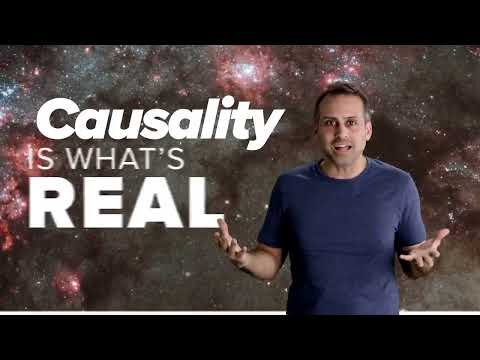
Are Space and Time An Illusion?
3.3M views • 11 years ago
PBS Space Time
A PBS Space Time episode hosted by Gabe Perez-Giz on the nature of spacetime and whether space and time are fundamental. It builds up reference frames and causality in a short, dense format.
 14:27
Why is TV 29.97 frames per second?
2.2M views • 10 years ago
Stand-up Maths
Matt Parker explains the history behind NTSC television running at 29.97 frames per second rather than 30, tracing it to the backward-compatible addition of color. He walks through the arithmetic behind the odd ratio.
 18:32
The world depends on a collection of strange items. They're not cheap
12.6M views • 3 years ago
Veritasium
Veritasium visits NIST to explain Standard Reference Materials, the carefully characterized items such as peanut butter used to calibrate instruments and keep measurements consistent. It covers why they exist and why they are expensive.
 26:29
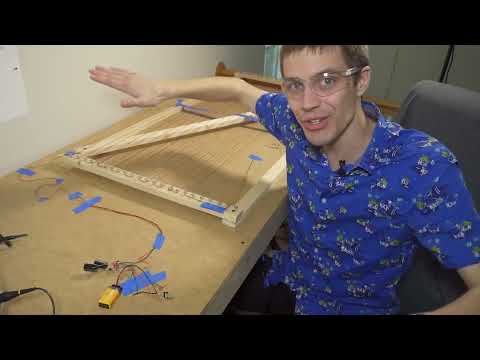
Watch electricity hit a fork in the road at half a billion frames per second
3M views • 2 years ago
AlphaPhoenix
AlphaPhoenix uses a custom high-speed measurement setup to watch voltage waves travel down wires and split at a fork. It answers how electricity knows where to go and how quickly that process happens.
 17:52
Training AI Without Writing A Reward Function, with Reward Modelling
259K views • 6 years ago
Robert Miles AI Safety
Robert Miles explains reward modelling, in which an AI learns what humans want from their preference comparisons instead of a hand-written reward function. He walks through the 2017 paper on deep reinforcement learning from human preferences.
 6:18
The artificial gravity lab
7.2M views • 7 years ago
Tom Scott
Tom Scott tours the rotating room artificial gravity facility at Brandeis University's Graybiel lab. It shows how humans cope with rotation-based gravity and the odd effects such as Coriolis forces.
 19:05
Why No One Has Measured The Speed Of Light
24.3M views • 6 years ago
Veritasium
Veritasium explains why the one-way speed of light has never been measured, only the round-trip speed, since measuring it requires synchronized clocks that assume the answer. It explores the implications for relativity.
 7:16
Unix and Google
9K views • 10 years ago
FOAM
A short animated simulation comparing how Multics and Unix were developed, showing why Unix's small composable programs and pipes gave it a efficiency advantage. It frames Unix as a moonshot achievable by a small team.
 21:42
Future Computers Will Be Radically Different (Analog Computing)
13.2M views • 4 years ago
Veritasium
Veritasium explains why analog computing may suit AI workloads, covering old analog computers, The Analog Thing and Mythic's analog chips that use flash memory for neural network inference. It argues digital hardware is hitting limits.
 7:15
A Selfish Argument for Making the World a Better Place – Egoistic Altruism
11.4M views • 8 years ago
Kurzgesagt – In a Nutshell
Kurzgesagt makes a selfish case for improving the world, arguing that helping people far away raises prosperity and innovation for everyone, including yourself. The animated video frames this as egoistic altruism and positive-sum cooperation.
 17:06
What Is A Black Start Of The Power Grid?
3.1M views • 3 years ago
Practical Engineering
Practical Engineering explains what a black start is: restarting a power grid after total collapse. It shows why most plants need outside power to start and why rebuilding a synchronized grid is delicate and high-stakes.
 21:14
The medical test paradox, and redesigning Bayes' rule
1.4M views • 5 years ago
3Blue1Brown
3Blue1Brown explains why positive results on accurate medical tests are often false positives, and reframes Bayes' rule using likelihood ratios (Bayes factors) to update odds. It uses visual examples to make the reasoning intuitive.
 4:38
The Only Safe Phone Is One Even the Police Can't Unlock
4.1M views • 10 years ago
CGP Grey
A five-minute CGP Grey explainer arguing that a phone is effectively an extension of your mind, and that any backdoor or master key into encrypted devices will inevitably be abused or leaked. It frames the encryption debate as locks that are either unbreakable or absent.
 13:34
Salt: Are you getting Enough? (More Sodium & Health)
1.4M views • 9 years ago
Joseph Everett - WIL
Joseph Everett argues, drawing on the book The Salt Fix, that most people benefit from more rather than less salt, and reviews studies on sodium, potassium and blood pressure.
 14:28
Superpositions, Sudoku, the Wave Function Collapse algorithm.
764K views • 6 years ago
Martin Donald
Martin Donald explains the Wave Function Collapse algorithm using Sudoku-like constraint solving and shows how he implemented it with Blender and Godot. It links demos and reference articles.
 6:50
13 Misconceptions About Global Warming
5.9M views • 12 years ago
Veritasium
Veritasium debunks common climate change myths in under seven minutes, with references to NASA and published research. Topics include CO2 sources, sea ice and 1970s predictions of cooling.
 16:45
How Airlines Quietly Became Banks
7.4M views • 4 years ago
Wendover Productions
A Wendover Productions explainer arguing that major airlines make much of their profit from loyalty programs and co-branded credit cards rather than flying. It frames airlines as quasi-banks that sell points in bulk, using United's pandemic-era loan as a hook.
 13:05
Smoother animation ≠ Better animation [read pinned comment]
16.1M views • 5 years ago
Noodle
Animator Noodle explains why frame interpolation does not make animation better, covering timing, easing, smear frames and using the wrong tool for the job. A pinned correction says the video is partly outdated given later AI developments.
 11:21
How does a whip break the sound barrier? (Slow Motion Shockwave formation) - Smarter Every Day 207
6.5M views • 7 years ago
SmarterEveryDay
Smarter Every Day uses high-speed and Schlieren photography to show how a whip crack is a supersonic shockwave formed at the tip. It references academic papers on whip physics.
 18:57
Manipulating the YouTube Algorithm - (Part 1/3) Smarter Every Day 213
2.7M views • 7 years ago
SmarterEveryDay
Part 1 of Smarter Every Day's three-part series on manipulating the YouTube algorithm. It features Renee DiResta and examples of how social media platforms can be manipulated.
 9:52
AI Slop Is Destroying The Internet
11.4M views • 1 year ago
Kurzgesagt – In a Nutshell
Kurzgesagt examines how AI-generated content is flooding the internet, from video and music to news and books. It looks at how this makes verifying what is real harder.
 16:04
Genetic Engineering Will Change Everything Forever – CRISPR
30.8M views • 10 years ago
Kurzgesagt – In a Nutshell
Kurzgesagt's animated explainer on CRISPR gene editing, covering how the technology works and what it could mean for curing disease, designer babies and aging. It frames genetic engineering as an irreversible change coming to humanity.
 7:50
ASTOUNDING: 1 + 2 + 3 + 4 + 5 + ... = -1/12
9.8M views • 12 years ago
Numberphile
A Numberphile video in which physicists Tony Padilla and Ed Copeland show a seemingly astounding result that 1+2+3+4+... equals -1/12. The argument is informal and has drawn criticism for glossing over what the result actually means.
 16:07
The Geometry of Causality
1.8M views • 9 years ago
PBS Space Time
PBS Space Time explains how spacetime geometry and light cones determine the order of events and what can cause what. It visualizes causality in special relativity.
 29:02
Colonizing Venus
731K views • 9 years ago
Isaac Arthur
Isaac Arthur examines options for colonizing Venus, from vast floating habitats in the temperate upper atmosphere to full terraforming of the planet. It is a long-form speculative futurism episode in his solar system colonization series.
 13:56
Understanding the Russian mindset
994K views • 12 years ago
CaspianReport
CaspianReport explainer arguing that Russia's geography, especially its vast size and indefensible Moscow core, shapes its political behavior. It frames Russian security thinking through the lens of geographic determinism.
 27:48
How are Microchips Made? 🖥️🛠️ CPU Manufacturing Process Steps
11.9M views • 2 years ago
Branch Education
Branch Education walks through a semiconductor fab and the dozens of steps used to turn silicon wafers into microchips, with 3D animation. It covers lithography, deposition and etching at a high level.
 10:35
Why the Dutch Wait Less at Traffic Lights
1.2M views • 6 years ago
Not Just Bikes
Not Just Bikes explains how Dutch traffic lights use early detection, transit priority and conflict-free design to cut waiting. The aim is to move as many people as possible rather than as many cars.
 12:07
Why Are 96,000,000 Black Balls on This Reservoir?
112.9M views • 7 years ago
Veritasium
Veritasium rides a boat across the Los Angeles reservoir covered in 96 million black plastic balls. He explains why they were really introduced, which was not primarily to reduce evaporation.
 22:10
Why Don't You Want To Do Anything After Binging 4 Hours of YouTube Videos...
2.3M views • 3 years ago
HealthyGamerGG
Dr. K of HealthyGamerGG explains why people feel unmotivated and unable to start tasks after hours of YouTube or similar distractions. He frames it as a result of how social media is designed to capture attention, and says not to blame yourself.
 37:16
Why it's not possible to synchronize turn signals (but also absolutely is)
3.3M views • 5 years ago
Technology Connections
Technology Connections explains why car turn signals appear to drift out of sync at stoplights and how thermal and other flasher designs work. It also covers how synchronization could be achieved.
 13:34
Did Time Start at the Big Bang?
2.5M views • 7 years ago
PBS Space Time
A PBS Space Time episode asking whether time began at the Big Bang. It explains that the Big Bang is not what most people were taught and what 'start' of the universe really means.
 8:47
Survivor Bias
1M views • 10 years ago
2veritasium
A Veritasium video on survivor bias, explaining how an observed sample can be incomplete and skewed. It uses examples such as bombers and famous success stories.
 4:18
"Pyramid UFO" - NEW FOOTAGE. It's Just Bokeh, not a Pyramid
434K views • 5 years ago
Mick West
Mick West shows new night-vision reference footage indicating the Navy's supposed flying pyramid UFO is just an out-of-focus light, likely a plane near LAX, rendered triangular by bokeh. He identifies other lights as Jupiter and stars.
 8:56
Tiffany: The Name That Cheats Death
6M views • 5 years ago
CGP Grey
CGP Grey investigates why the name Tiffany spiked in popularity and then faded, with help from onomastics experts. It is a short, playful look at how names spread.
 2:22
Intersection design, the Dutch - cycle friendly - way
965K views • 15 years ago
BicycleDutch
A short BicycleDutch episode showing how Dutch protected intersections continue cycle paths through the junction without needing extra street width.
 40:47
Dyson Spheres
838K views • 9 years ago
Isaac Arthur
Isaac Arthur examines Dyson spheres and swarms, including common myths and misconceptions. He covers uses such as interstellar travel, black hole generation, and computing large enough to simulate universes.
 12:31
The Last Human – A Glimpse Into The Far Future
15.2M views • 4 years ago
Kurzgesagt – In a Nutshell
A Kurzgesagt animation on longtermism, arguing that because the future could hold trillions of people, our actions' effect on future generations may be what matters most.
 21:24
Why are people mean on Twitter? - Smarter Every Day 214
957K views • 7 years ago
SmarterEveryDay
Destin Sandlin of Smarter Every Day examines how bad actors and bots use Twitter, drawing on the released Russian IRA dataset and interviews. It asks why interactions on the platform turn hostile.