simulation argument
 5:26
Neural Network Learns The Physics of Fluids and Smoke | Two Minute Papers #118
209K views • 9 years ago
Two Minute Papers
Two Minute Papers covers a paper on speeding up fluid and smoke simulation with convolutional networks. It contrasts the approach with earlier regression forest methods.
 6:18
Animated Voting Methods
16K views • 9 years ago
Unify The Vote
An animated simulation comparing single-winner voting methods such as plurality, instant runoff and STAR. Colored regions show which candidate wins as a randomized electorate shifts across a two-dimensional political space, building on Ka-Ping Yee's earlier diagrams.
 7:15
A Selfish Argument for Making the World a Better Place – Egoistic Altruism
11.4M views • 8 years ago
Kurzgesagt – In a Nutshell
Kurzgesagt makes a selfish case for improving the world, arguing that helping people far away raises prosperity and innovation for everyone, including yourself. The animated video frames this as egoistic altruism and positive-sum cooperation.
 10:15
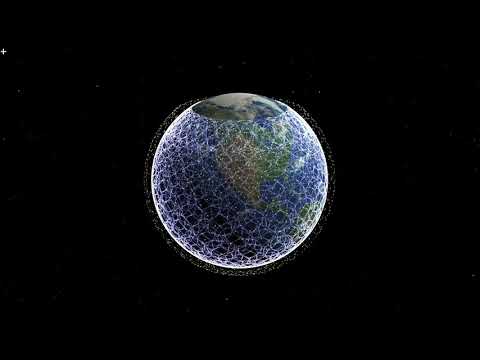
Using ground relays with Starlink
506K views • 6 years ago
Mark Handley
Mark Handley of UCL explains, with simulation visualizations, how early Starlink satellites without inter-satellite links could still give low-latency wide-area communication by hopping via ground relays. He shows it can beat fibre on many long paths.
 8:28
The Fastest Way to Board a Plane Feels Like the Slowest
37.5M views • 7 years ago
CGP Grey
CGP Grey compares airplane boarding methods, based on an arXiv paper, and shows why the intuitive back-to-front approach is slow while random or outside-in boarding does better.
 8:00
Infinity is bigger than you think - Numberphile
7.7M views • 14 years ago
Numberphile
Numberphile's James Grime explains Cantor's result that some infinities are bigger than others, including why the reals outnumber the integers. It is a short, accessible introduction to countable and uncountable infinity.
 12:01
Why Electronic Voting Is Still A Bad Idea
5.1M views • 6 years ago
Tom Scott
Tom Scott explains why electronic voting is a bad idea. Elections must be trusted by everyone and attacks on software scale in ways attacks on paper do not, so open source or blockchain fixes do not solve it.
 12:08
Why Some Diseases Only Traveled One Direction
13.9M views • 10 years ago
CGP Grey
CGP Grey explains why European diseases devastated the Americas while few deadly diseases traveled the other way. He ties it to livestock domestication, dense cities, and the ideas of Guns, Germs and Steel.
 7:16
Unix and Google
9K views • 10 years ago
FOAM
A short animated simulation comparing how Multics and Unix were developed, showing why Unix's small composable programs and pipes gave it a efficiency advantage. It frames Unix as a moonshot achievable by a small team.
 18:31
The LED Traffic Light and the Danger of "But Sometimes!"
4.2M views • 8 years ago
Technology Connections
Technology Connections explains how LED traffic lights, which do not melt snow, drew complaints and were blamed for accidents. He uses it to illustrate the 'but sometimes' fallacy against new technology.
 14:34
Visualization of Quantum Physics (Quantum Mechanics)
2.8M views • 9 years ago
udiprod
An animated visualization of basic quantum mechanics using a free particle, with simulations based on the actual equations. It covers waves, particles, and how measurement collapses the wavefunction.
 6:48
Why Age? Should We End Aging Forever?
9M views • 9 years ago
Kurzgesagt – In a Nutshell
Kurzgesagt's short animated video asks whether humanity should try to end aging, and argues the case for curing age-related disease. It is part one of a pair, with a second part by CGP Grey.
 1:10:52
The Fermi Paradox Compendium
815K views • 10 years ago
Isaac Arthur
Isaac Arthur surveys the popular proposed solutions to the Fermi Paradox in a 71-minute compendium. He weighs the strengths and weaknesses of each argument.
 6:50
13 Misconceptions About Global Warming
5.9M views • 12 years ago
Veritasium
Veritasium debunks common climate change myths in under seven minutes, with references to NASA and published research. Topics include CO2 sources, sea ice and 1970s predictions of cooling.
 6:47
Starlink revisions, Nov 2018
173K views • 8 years ago
Mark Handley
Mark Handley of UCL looks at how SpaceX's November 2018 revisions to the Starlink constellation affect network behavior. The video visualizes the orbits and routing and estimates latencies, building on his earlier video and research paper.
 17:55
The Fermi Paradox: Dark Forest Theory
412K views • 7 years ago
Isaac Arthur
Isaac Arthur examines the Dark Forest theory, Cixin Liu's proposed solution to the Fermi Paradox in which civilizations stay silent and may destroy any that reveal themselves. He tests the theory's underlying assumptions and arguments.
 6:31
You Can Win the Presidency With 22% of the Vote
8.2M views • 15 years ago
CGP Grey
A short CGP Grey animation showing how the US electoral college lets a candidate win the presidency with as little as about 22 percent of the popular vote. It lays out the arithmetic of winning states by narrow margins.
 7:41
Why Life Seems to Speed Up as We Age
8M views • 10 years ago
Veritasium
Veritasium explores why time seems to speed up as we age, covering chronoception and several competing explanations beyond the common proportional-theory argument.
 15:11
Bayes theorem, the geometry of changing beliefs
6M views • 6 years ago
3Blue1Brown
3Blue1Brown presents Bayes' theorem through a geometric diagram, showing how evidence should update beliefs. It works through the Kahneman and Tversky style questions and base rates.
 7:50
ASTOUNDING: 1 + 2 + 3 + 4 + 5 + ... = -1/12
9.8M views • 12 years ago
Numberphile
A Numberphile video in which physicists Tony Padilla and Ed Copeland show a seemingly astounding result that 1+2+3+4+... equals -1/12. The argument is informal and has drawn criticism for glossing over what the result actually means.
 4:31
Death to Pennies
10.7M views • 14 years ago
CGP Grey
CGP Grey's short animated argument for abolishing the US penny, covering its cost and history.
 16:07
The Geometry of Causality
1.8M views • 9 years ago
PBS Space Time
PBS Space Time explains how spacetime geometry and light cones determine the order of events and what can cause what. It visualizes causality in special relativity.
 20:00
AI "Stop Button" Problem - Computerphile
1.4M views • 9 years ago
Computerphile
Rob Miles explains on Computerphile why implementing an off switch for a general AI is hard. A capable agent would resist being stopped because shutdown prevents it from achieving its goal.
 2:26
Milton Friedman - I, Pencil
802K views • 14 years ago
Free To Choose Network
A two-minute clip in which Milton Friedman uses a humble pencil to show how thousands of strangers across many countries cooperate, without central direction, to make a simple product. It is a short visual version of the 'I, Pencil' essay's argument about free markets and dispersed knowledge.
 4:31
why typing like this is sometimes okay.
5.4M views • 7 years ago
Tom Scott
Tom Scott makes a short descriptivist argument that language keeps changing and that casual internet writing conventions, like lowercase typing and dropped full stops, are legitimate. It is part of his Language Files series, written with Gretchen McCulloch.
 25:22
The '5kg in 50 days' Diet!
205K views • 9 years ago
Thunderf00t
Thunderf00t applies a simple energy mass balance to weight loss, showing how much exercise is needed to burn off extra calories compared with eating less. He concludes that cutting intake is the easier route and that hunger fades after the first week.