star sizes
 17:06
What Is A Black Start Of The Power Grid?
3.1M views • 3 years ago
Practical Engineering
Practical Engineering explains what a black start is: restarting a power grid after total collapse. It shows why most plants need outside power to start and why rebuilding a synchronized grid is delicate and high-stakes.
 15:41
Why SpaceX is Making Starlink
7.4M views • 7 years ago
Real Engineering
Real Engineering explains why SpaceX is building Starlink, including the economics of satellite internet. It covers the latency advantage of light in vacuum over fiber for long-distance links.
 6:47
Starlink revisions, Nov 2018
173K views • 8 years ago
Mark Handley
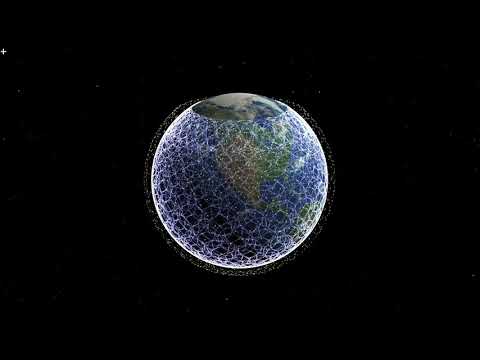
Mark Handley of UCL looks at how SpaceX's November 2018 revisions to the Starlink constellation affect network behavior. The video visualizes the orbits and routing and estimates latencies, building on his earlier video and research paper.
 10:15
Using ground relays with Starlink
506K views • 6 years ago
Mark Handley
Mark Handley of UCL explains, with simulation visualizations, how early Starlink satellites without inter-satellite links could still give low-latency wide-area communication by hopping via ground relays. He shows it can beat fibre on many long paths.
 9:57
Black Hole Star – The Star That Shouldn't Exist
15.8M views • 3 years ago
Kurzgesagt – In a Nutshell
Kurzgesagt explains black hole stars, a hypothesized kind of giant star with a black hole at its core that could be a route to early supermassive black holes.
 1:44:34
Is Starlink A Secret Radar Constellation?
498K views • 6 months ago
Noise In Space
A 105-minute technical deep dive from Noise In Space evaluating whether Starlink satellites could work as synthetic aperture radar. It covers SAR signal-to-noise, amplifiers, antennas, duplexing, phased array beamforming and simulations of V2 Mini and V3 satellites.
 6:51
Star Size Comparison 2
48.7M views • 10 years ago
morn1415
A visual scale comparison of stars and cosmic objects, from planets up to some of the largest known stars, set to music. It is meant to convey the vastness of the universe.
 28:09
How does Starlink Satellite Internet Work?📡☄🖥
9.9M views • 4 years ago
Branch Education
Branch Education explains how Starlink works, from the ground dish and satellites to phased-array beam steering and data routing. Animations cover how a beam stays connected to a satellite moving at 27,000 km/h.
 18:25
How Star Wars was saved in the edit
3.2M views • 8 years ago
RocketJump
A video essay on how the editors of Star Wars: A New Hope recut and rearranged the footage to rescue the film. It walks through specific changes that improved pacing and drama.
 33:43
TSP #183 - Starlink Dish Phased Array Design, Architecture & RF In-depth Analysis
171K views • 5 years ago
The Signal Path
The Signal Path takes apart a Starlink dish layer by layer, analyzing the phased array RF design, system architecture and integrated circuits, with an X-ray of the RF stack.
 43:57
Civilizations at the End of Time: Iron Stars
2.1M views • 9 years ago
Isaac Arthur
An Isaac Arthur episode on civilizations in the far future, past the Black Hole Era. It covers iron stars, Boltzmann brains, reversible computing and the idea of reversing entropy.
 10:22
How Far Are The Nearest Stars?
3.7M views • 9 years ago
Cody'sLab
Cody's Lab builds a 200-billionth-scale model to show how far away the nearest stars are, using parallax and light speed. A short astronomy explainer on interstellar distances.
 1:00:26
Why Starting A Rocket Engine Is So Hard!
2.3M views • 3 years ago
Everyday Astronaut
Tim Dodd's hour-long deep dive on how rocket engines start, from solid motors to liquid engines. It covers thermal conditioning, spin-up, ignition methods, starting in space, and a step-by-step RS-25 startup.
 46:33
Heat Pumps are Not Hard: Here's what it will take to start pumping
1.2M views • 4 years ago
Technology Connections
Technology Connections' long closing video in his heat pump series, arguing that adopting heat pumps is well within reach. It explains how they work and what it takes to start using them.
 6:18
Animated Voting Methods
16K views • 9 years ago
Unify The Vote
An animated simulation comparing single-winner voting methods such as plurality, instant runoff and STAR. Colored regions show which candidate wins as a randomized electorate shifts across a two-dimensional political space, building on Ka-Ping Yee's earlier diagrams.
 13:34
Did Time Start at the Big Bang?
2.5M views • 7 years ago
PBS Space Time
A PBS Space Time episode asking whether time began at the Big Bang. It explains that the Big Bang is not what most people were taught and what 'start' of the universe really means.
 23:55
Matrioshka Brains: Star-Powered Computers
505K views • 10 years ago
Isaac Arthur
Isaac Arthur explains the Matrioshka Brain, a hypothetical computer or artificial mind powered by an entire star using nested shells. It covers how such megastructures relate to Dyson spheres and superintelligence.
 26:08
Did SARS-Cov-2 start in a Chinese lab?
182K views • 6 years ago
potholer54
Science journalist potholer54 examines the claim that SARS-CoV-2 came from a Wuhan lab, tracing the sources behind it and the weaknesses in the evidence.
 8:44
A4 Paper Is Too Perfect
10.5M views • 5 years ago
CGP Grey
CGP Grey explains the elegant ratio of A4 and the metric paper sizes, then zooms out across scales from the Planck length to the observable universe.
 30:53
I Saved a PNG Image To A Bird
2.1M views • 1 year ago
Benn Jordan
Benn Jordan's video about storing a PNG image in a living bird, a starling that learns to reproduce encoded sounds. It mixes ornithology, audio engineering, and data encoding.
 28:11
Why Everyone Is Talking About Data Centers In Space
408K views • 10 months ago
Scott Manley
Scott Manley examines why SpaceX, Google and others are looking at orbital data centers. He walks through the economics, heat rejection and solar power arguments, with links to the Lumen/Starcloud and Google Suncatcher papers.
 20:09
Why Everywhere in the US is Starting to Look the Same
4M views • 4 years ago
Wendover Productions
Wendover Productions explains why American towns, retail and buildings increasingly look alike, covering zoning pressures, corporate standardization and cheap construction types like 5-over-1 buildings.
 5:44
Why Teleportation Would Kill You
7.3M views • 10 years ago
CGP Grey
CGP Grey asks whether Star Trek-style teleportation would kill you and recreate a copy, working through the philosophy of identity and the Ship of Theseus. It is a short animated explainer.
 7:00
1,000km Cable to the Stars - The Skyhook
13M views • 6 years ago
Kurzgesagt – In a Nutshell
Kurzgesagt explains the skyhook, a rotating cable with a counterweight that could catapult spacecraft from Earth orbit toward deep space. It covers why it would make space travel cheaper and more efficient.
 19:59
The Future of Humanity's Energy No One Knows About | Terraform
228K views • 2 years ago
S3 | Science, Startups, & Stories
A 20-minute S3 episode touring Terraform Industries, a startup making synthetic natural gas from air and solar power. It walks through the reactor, injection system, direct air capture and electrolyzer, plus the company's cost goals and next milestone.
 24:30
Is It Really Impossible To Cool A Datacenter In Space?
1.1M views • 7 months ago
Scott Manley
Scott Manley explains the thermal balance of spacecraft and how a satellite could be configured to radiate away the heat from datacenter-scale computing in space. His rough numbers suggest it is feasible.
 4:13
Social Inequalities Explained in a $100 Race - Please Watch to the End. Thanks.
5M views • 9 years ago
Peter D
A short animated explainer that stages a $100 footrace in which contestants start at different distances from the line, depending on the advantages or disadvantages they inherited. It uses the race as a metaphor for how unequal starting points shape outcomes, citing US census income and poverty figures.
 28:46
Space Shades: Humanity's Last Hope | Answers With Joe
1.1M views • 6 years ago
Joe Scott
Joe Scott takes a serious look at space sunshades as a climate fix, asking how big they would need to be, what they would cost and whether they would work. He draws on Roger Angel's paper and launch options.
 24:39
SM64 - Watch for Rolling Rocks - 0.5x A Presses (Commentated) [OUTDATED]
5.5M views • 10 years ago
pannenkoek2012
Pannenkoek2012's commentated tool-assisted Super Mario 64 run collecting the Watch for Rolling Rocks star with half an A press, using parallel universes and QPU movement. The video is marked outdated in favor of a newer version.
 12:04
Why Being Delusional is a Superpower
15.2M views • 6 years ago
Veritasium
Veritasium examines the role of luck in success, with simulations and examples showing how small advantages and chance can compound. It argues that top outcomes are disproportionately luck-driven while still crediting effort.
 9:04
Jackie Chan - How to Do Action Comedy
25.4M views • 11 years ago
Every Frame a Painting
Every Frame a Painting analyzes how Jackie Chan stages action comedy, with nine principles such as starting from a disadvantage, using the environment, clear shots, and keeping action and reaction in the same frame.
 6:34
Why Is It So Hard to Do Something That Should Be Easy? (Wall of Awful pt. 1)
2.1M views • 7 years ago
How to ADHD
A short How to ADHD explainer, featuring Brendan Mahan, on why simple tasks can feel impossible for people with ADHD. It introduces the 'wall of awful', a pile of past failures, shame and anxiety that builds up in front of a task and blocks starting it.
 34:25
Ramanujan: Making sense of 1+2+3+... = -1/12 and Co.
3.6M views • 10 years ago
Mathologer
Mathologer examines how identities like 1+2+3+... = -1/12 arise in Ramanujan's work, starting from his 1913 letter to Hardy. The video explains the rules for summing infinite series and why such results are meaningful but not naive sums.
 23:46
How To Count Past Infinity
29.7M views • 10 years ago
Vsauce
Vsauce's Michael Stevens takes viewers past infinity using transfinite numbers, ordinals and cardinals, with input from mathematician Hugh Woodin. It is a fast-paced, mind-bending tour of different sizes of infinity.
 12:02
Nintendo - Putting Play First
997K views • 9 years ago
Game Maker's Toolkit
Game Maker's Toolkit examines Nintendo's design approach of starting from a core play mechanic, making it fun, and building around it. Examples include Mario's jump and Luigi's Mansion's vacuum.
 49:02
Is SpaceX's Raptor engine the king of rocket engines?
5.4M views • 7 years ago
Everyday Astronaut
Everyday Astronaut explains the basic physics of rocket engines, the main engine cycles and fuel types, then compares SpaceX's methane-fueled full-flow staged combustion Raptor to other engines. It runs nearly 50 minutes with chapter markers.
 8:00
Infinity is bigger than you think - Numberphile
7.7M views • 14 years ago
Numberphile
Numberphile's James Grime explains Cantor's result that some infinities are bigger than others, including why the reals outnumber the integers. It is a short, accessible introduction to countable and uncountable infinity.
 5:10
Copyright: How It Went Wrong
0 views • 15 years ago
CGP Grey
CGP Grey's five-minute animated explainer on how copyright terms grew from 14 years to life plus decades. It uses Disney and Star Wars examples to argue the system has gone wrong.
 11:23
How a transistor works
847K views • 11 years ago
Ben Eater
Ben Eater gives a detailed look at how an NPN bipolar junction transistor works and what it does. It is an eleven-minute explanation aimed at building real understanding of the device.
 38:31
The $200M Machine that Prints Microchips: The EUV Photolithography System
2.4M views • 1 year ago
Branch Education
Branch Education's animated deep dive into ASML's EUV photolithography machine and how it prints nanometer-scale transistors onto chips. It covers the system's components and the process of chip manufacturing.