ted
 1:59:29
Tutorial: New and Updated - Everything You Always Wanted to Know About Optical Networking
58K views • 9 years ago
NANOG
A two-hour NANOG tutorial by Richard Steenbergen aimed at network engineers, covering optical networking technologies. This is the updated 2017 edition of a recurring talk.
 42:00
I painted a Landscape with Mathematics
812K views • 4 years ago
Inigo Quilez
Inigo Quilez live-paints a mountain landscape using only math in a shader, building up from a basic polynomial noise surface through fractal terrain, lighting and atmosphere. The code runs in real time on Shadertoy so viewers can edit it as they follow along.
 56:21
Getting Started With Org Mode
293K views • 10 years ago
thoughtbot
Harry Schwartz gives a roughly hour-long tour of Emacs Org mode as an outliner, task manager, markup language and agenda tool. He demonstrates how he uses it for documents, presentations and todo lists.
 3:00
How to tie your shoes | Terry Moore
2.6M views • 15 years ago
TED
Terry Moore's three-minute TED talk showing a better way to tie shoes, replacing the common granny knot with a square knot so laces stay tied.
Topic match · Ideas & learning (other) 31:06
Fantastic DIY Speakers for less than $30!
2.2M views • 8 years ago
Tech Ingredients
Tech Ingredients shows how to build cheap, high-performance flat-panel speakers using audio exciters on sheet materials such as foam-core board. It explains how distributed-mode speakers work and walks through experiments to find good designs.
 26:17
How to write cuneiform with Irving Finkel and @preservethings I Curator's Corner S4 Ep9
648K views • 7 years ago
The British Museum
British Museum curator Irving Finkel teaches how to write cuneiform, with a colleague following along. It is a short, lively introduction to the script.
Topic match · Language & linguistics 52:56
World's Second Best Speakers!
2.5M views • 7 years ago
Tech Ingredients
Tech Ingredients builds a pair of large Voigt speakers and explains ported, transmission line and horn designs. It tests them in an anechoic chamber and uses constrained layer damping for the enclosure.
 27:25
“Hello, world” from scratch on a 6502 — Part 1
5.9M views • 7 years ago
Ben Eater
Ben Eater starts a series building a working computer on breadboards around the 6502 microprocessor. In this first part he gets a 'hello world' running from scratch.
 24:46
Painting a Character with Maths
458K views • 5 years ago
Inigo Quilez
Inigo Quilez live-codes a cartoon character painting entirely from math, using signed distance fields in a Shadertoy shader. He explains each step of building the image from formulas.
 56:12
Intro to Synthesis Part 1 - The Building Blocks of Sound & Synthesis
711K views • 14 years ago
matrixsynth
Dean Friedman's near-hour-long introduction to synthesis, covering the building blocks of sound and the controls on a synthesizer. He slowly adjusts knobs so viewers hear what each parameter does.
 3:25
Emacs Rocks! Episode 14: Paredit
65K views • 13 years ago
emacsrocks
A three-minute Emacs Rocks screencast by Magnar Sveen demonstrating paredit, which edits Lisp code structurally as a tree of s-expressions rather than characters.
 18:50
Creating a Doom-style 3D engine in C
991K views • 11 years ago
Bisqwit
Bisqwit builds a Doom or Duke Nukem 3D style software-rendered 3D engine in C from scratch, supporting non-Euclidean geometry. It covers vector rotation and portal rendering with sped-up, tool-assisted coding.
 15:04
I made a NES emulator in 15 minutes
389K views • 14 years ago
Bisqwit
Bisqwit writes a NES emulator in C++ in about 15 minutes of tool-assisted, sped-up coding, narrated with captions. It shows an accurate emulator built with a compile-time generated 6502 instruction table. Part 2 covers compiling and running it.
 1:03:35
Climbing the Rating Ladder: Up to 1000
952K views • 11 years ago
John Bartholomew
Chess player John Bartholomew plays opponents rated below 1000 on Chess.com and comments on optimal strategy and typical mistakes at that level. It is part of his Climbing the Rating Ladder series.
 16:42
i3wm: Jump Start (1/3)
1.1M views • 11 years ago
Alex Booker
First of a three-part tutorial series on the i3 tiling window manager for Linux. It explains what i3 is, how to install it on Ubuntu, and how to use it.
 1:28:31
Telescope Building with John Dobson
1.7M views • 11 years ago
Dobson Astro-Initiatives
A roughly 90-minute film of John Dobson building a Dobsonian telescope step by step, including hand-grinding the mirror.
 17:50
Blockchain 101 - A Visual Demo
3.3M views • 10 years ago
Anders Brownworth
Anders Brownworth gives a basic visual introduction to blockchain using an interactive web demo, covering SHA256 hashes, blocks, chains, distribution, tokens and coinbase transactions.
 1:50:07
JSON Parser 100% From Scratch in Haskell (only 111 lines)
205K views • 6 years ago
Tsoding
Tsoding live-codes a JSON parser from scratch in Haskell in about 111 lines, using only the standard library. It is an edited Twitch stream that explains the intuition behind parser combinators, functors, applicatives and monads.
 24:03
12 Principles of Animation (Official Full Series)
16.1M views • 9 years ago
AlanBeckerTutorials
Alan Becker's short series on the 12 principles of animation, covering squash and stretch, anticipation, staging, timing, arcs, appeal and the rest. Each principle gets a brief animated illustration.
 10:50:05
George Hotz | Programming | Livecoding SLAM | twitchslam | Part1
2M views • 8 years ago
george hotz archive
A long livestream of George Hotz live-coding a toy SLAM implementation, twitchslam, over two days in May 2018. It is an unedited session of Python programming with computer vision and visualization.
 5:43:06
LIVE Coding "Happy Jumping"
106K views • 7 years ago
Inigo Quilez
Inigo Quilez live-codes the "Happy Jumping" animated scene in a Shadertoy GLSL shader over about six hours. He builds the raymarched character step by step, explaining the math and procedural techniques, with checkpoints linked for each stage.
 27:58
Build an electroluminescent glass panel display -- an Apollo DSKY
522K views • 7 years ago
Applied Science
Applied Science builds a replica Apollo DSKY using an electroluminescent driver circuit and screen-printed conductive ink, with source and PCB files published.
 38:06
A simple guide to electronic components.
8.5M views • 10 years ago
bigclivedotcom
Big Clive gives a 38-minute beginner's guide to identifying common electronic components and what they do. He keeps the maths minimal and aims to fill gaps for people just starting out.
 16:02
I finally made GARUM | Ancient Rome's favorite condiment
3.6M views • 6 years ago
Tasting History with Max Miller
Max Miller of Tasting History makes garum, the fermented fish sauce of ancient Rome, using a same-day recipe. He covers the history of the condiment along the way.
 34:49
Passive House - Fresh Air System Install & Costs (Zehnder)
392K views • 6 years ago
Matt Risinger
Matt Risinger covers installing a Zehnder ERV fresh-air system in a tight passive house, explaining balanced ventilation, the benefits of heat recovery and the costs involved.
 30:15
Antique 4x5 camera creates 20 micron photolithography masks: Super tiny tax form
429K views • 6 years ago
Applied Science
Ben Krasnow of Applied Science uses an antique 4x5 view camera to make high-resolution photolithography masks in a home shop. He photographs a poster-sized printout onto litho film to get features around 20 microns.
 18:18
I Tried Turning Games Into Text
571K views • 2 years ago
Acerola
Acerola explores building a shader that turns games into ASCII art, walking through techniques such as brightness mapping and edge detection to see whether it looks good.
 10:43
WORLD'S BEST AIR FRIES (Weird Trick, But It Works!)
1.3M views • 2 years ago
Chris Young
Chef Chris Young shows a simplified triple-cooked method for making crisp frozen fries in an air fryer, based on Heston Blumenthal's technique.
 8:53
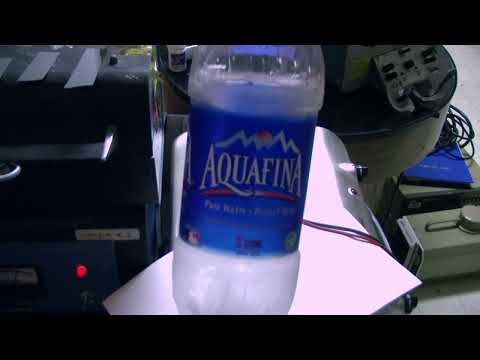
Making Microchips at Home - Cooking with Jeri Part1
296K views • 15 years ago
Jeri Ellsworth
Jeri Ellsworth shows early steps of making microchips at home: cleaving wafers, removing native oxide, testing dopant type with a hot probe, and loading the furnace.