the knowledge
 33:26
On Mathematical Maturity (1) Thomas Garrity
172K views • 9 years ago
IAS | PCMI Park City Mathematics Institute
Thomas Garrity discusses mathematical maturity, a concept mathematicians use for professional development, and how it can inform teaching, mentoring and careers. It was given at the IAS/PCMI Park City Mathematics Institute.
 46:46
Category Theory 1.1: Motivation and Philosophy
394K views • 10 years ago
Bartosz Milewski
The first lecture in Bartosz Milewski's category theory series for programmers. It covers the motivation and philosophy behind category theory and why composition matters for handling complexity.
 1:01:51
Lecture 1: Introduction to Information Theory
411K views • 12 years ago
Jakob Foerster
The first lecture of David MacKay's Cambridge course on information theory, pattern recognition and neural networks. It introduces the core ideas of his book Information Theory, Inference, and Learning Algorithms.
 57:32
Five Stages of Accepting Constructive Mathematics - Andrej Bauer
34K views • 10 years ago
Institute for Advanced Study
Andrej Bauer's IAS talk introduces constructive mathematics and what it feels like to do mathematics without excluded middle. It is framed as a tour for classical mathematicians.
 1:04:39
Gauge Theory and Inflation: Enlarging the Wu-Yang Dictionary
38K views • 12 years ago
Tom Henderson
A talk by Eric Weinstein on gauge theory and its possible application to economics and inflation. It proposes extending the Wu-Yang dictionary into a geometric tool beyond physics.
 1:00:18
Quantum Fields: The Real Building Blocks of the Universe - with David Tong
6.9M views • 9 years ago
The Royal Institution
David Tong, a Cambridge theoretical physicist, explains at the Royal Institution that the fundamental building blocks of nature are quantum fields rather than particles. He covers what we know about these fields and how they fit into the Standard Model.
 1:52:48
Sir Roger Penrose & Dr. Stuart Hameroff: CONSCIOUSNESS AND THE PHYSICS OF THE BRAIN
889K views • 6 years ago
The Qualcomm Institute
A 2020 UC San Diego event with Roger Penrose and Stuart Hameroff presenting their Orch OR theory that consciousness arises from quantum processes in brain microtubules, followed by a conversation with Roger Bingham.
 33:47
Why is Life the Way it Is? with Nick Lane
102K views • 11 years ago
The Royal Institution
Nick Lane's Royal Institution lecture on the origin of life and why it is the way it is. It draws on his book The Vital Question and the alkaline hydrothermal vent theory of abiogenesis.
 1:45:38
The Unanswered Question 1973 1 Musical Phonology Bernstein Norton
742K views • 12 years ago
cagin
Leonard Bernstein's 1973 Norton Lectures at Harvard, starting with Musical Phonology. He draws analogies between music and linguistics, including references to Chomsky.
 1:31:54
Noam Chomsky - "The machine, the ghost, and the limits of understanding"
472K views • 14 years ago
Andy80o
Noam Chomsky's 2011 University of Oslo lecture on Newton's contributions to the study of mind. He argues Newton abandoned mechanical explanation and lowered the bar for scientific intelligibility, with consequences for the limits of human understanding. Q&A starts at 45:33.
 55:55
Richard Feynman - The.Character.of.Physical.Law - Part 2 (full version)
638K views • 15 years ago
Tinkerin' Thinkers
Part 2 of Richard Feynman's Messenger Lectures at Cornell, The Character of Physical Law, on the relation of mathematics to physics. He explains why understanding nature requires mathematics.
 10:20
Feynman: 'Greek' versus 'Babylonian' mathematics
377K views • 14 years ago
TehPhysicalist
A clip of Richard Feynman contrasting the Greek and Babylonian traditions of mathematical reasoning. It compares the axiomatic approach of mathematicians with how physicists use mathematics.
 1:11:48
Math Encounters -- Five Balls, Two Hands: The Patterns of Juggling -- Colin Wright (Presentation)
33K views • 14 years ago
National Museum of Mathematics
Mathematician Colin Wright demonstrates juggling and explains the mathematics of juggling patterns, including notation that led to new throwing patterns. It is a public presentation at the Museum of Mathematics aimed at a general audience.
 56:30
How to Invent the Future II - Stanford CS183F: Startup School
26K views • 9 years ago
Stanford Online
Part two of Alan Kay's Stanford Startup School lecture on inventing the future. He draws on his time at Xerox PARC and elsewhere to discuss how to think about new technology and what makes ideas useful.
 1:37:55
Particles, Fields and The Future of Physics - A Lecture by Sean Carroll
1.8M views • 13 years ago
Fermilab
Sean Carroll's 2013 Fermilab Users Meeting lecture on particles, fields and the future of particle physics. He explains that particles are vibrations in underlying quantum fields and touches on the Higgs, neutrinos and dark matter.
 55:27
Leonard Susskind on The World As Hologram | TVO Docs
4.1M views • 15 years ago
TVO Docs
Stanford physicist Leonard Susskind gives a public lecture on the holographic principle, the indestructibility of information and the nature of black holes. It asks whether the world could be a hologram.
 44:30
Prof. Thomas Seyfried - 'Cancer as a Metabolic Disease: Implications for Novel Therapies'
193K views • 6 years ago
Low Carb Down Under
A lecture by Prof. Thomas Seyfried arguing that cancer is primarily a metabolic disease rather than a genetic one. It covers the Warburg effect, mitochondrial damage and implications for therapies.
 1:46:33
Lecture 1 | The Theoretical Minimum
969K views • 14 years ago
Stanford
Leonard Susskind opens Stanford Continuing Studies' Theoretical Minimum series with an introduction to quantum mechanics, a course for people who want real physics rather than popularization. It assumes some calculus and linear algebra.
 58:30
What if Current Foundations of Mathematics are Inconsistent? | Vladimir Voevodsky
57K views • 14 years ago
Institute for Advanced Study
Vladimir Voevodsky's IAS lecture starts from Godel's second incompleteness theorem to explore whether first-order arithmetic could be inconsistent. It motivates his vision of univalent foundations and computer-checked proofs.
 26:05
Identity After Authenticity: Abigail Thorn's Profile
219K views • 5 years ago
Carefree Wandering
A philosophy lecture by Professor Moeller on the philosophy of identity. It builds on a discussion of Abigail Thorn's video and covers authenticity, sincerity and how online profiles reshape identity.
 14:10
Richard Dawkins demonstrates the evolution of the eye
238K views • 14 years ago
poejavlo
An excerpt from Richard Dawkins's lecture on Climbing Mount Improbable demonstrating how a complex eye can evolve through incremental steps. It answers the creationist irreducible complexity argument.
 1:07:10
Brian Beckman: Don't fear the Monad
415K views • 13 years ago
jasonofthel33t
Microsoft's Brian Beckman gives an hour-long, whiteboard-style walk through monads, building from function composition and monoids using school-level math. It is aimed at practicing programmers rather than category theorists.
 54:54
The Physics and Philosophy of Time - with Carlo Rovelli
1.4M views • 8 years ago
The Royal Institution
Physicist Carlo Rovelli gives a public lecture at the Royal Institution on how our understanding of time has changed, from Boltzmann and Einstein to quantum theory and loop quantum gravity. He blends physics, philosophy and art to argue that time is stranger than everyday intuition suggests.
 58:19
Irving Finkel | The Ark Before Noah: A Great Adventure
5.1M views • 10 years ago
The Institute for the Study of Ancient Cultures
Irving Finkel of the British Museum tells how a 4,000-year-old cuneiform tablet came to him for examination. It revealed the oldest known account of Noah's Ark and led to a book and a documentary.
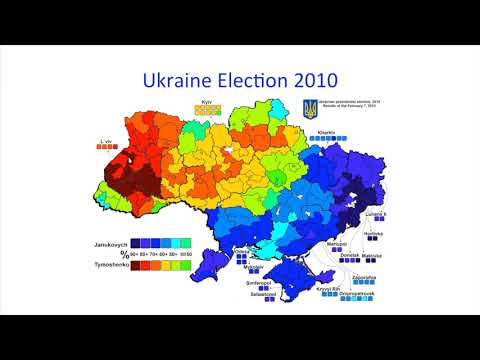 1:14:16
Why is Ukraine the West's Fault? Featuring John Mearsheimer
30.4M views • 11 years ago
The University of Chicago
University of Chicago lecture in which John Mearsheimer argues the West, through NATO and EU expansion, bears primary responsibility for the Ukraine crisis. He also discusses how to end it and its consequences.
 1:00:26
Colossus - The Greatest Secret in the History of Computing
1M views • 6 years ago
The Centre for Computing History
Chris Shore of the Centre for Computing History explains how Colossus was built, how it worked, and how it affected the course of World War II. It is an hour-long museum lecture on the codebreaking computer.
 1:12:19
Kursk: The Epic Armored Engagement (2013)
535K views • 12 years ago
The National WWII Museum
A panel at The National WWII Museum on the Battle of Kursk, moderated by Keith Huxen with historians Robert Citino and John Parshal. The discussion covers the armored engagement and the German, Soviet and US approaches to tank production.
 1:47:54
Leonard Susskind | "ER = EPR" or "What's Behind the Horizons of Black Holes?" - 1 of 2
986K views • 12 years ago
Stanford Institute for Theoretical Physics
Stanford physicist Leonard Susskind gives the first of two mini-lectures on "ER = EPR", the idea that quantum entanglement and wormholes are related. It covers what lies behind black hole horizons.
 52:19
Eric Cline | 1177 BC: The Year Civilization Collapsed
290K views • 11 years ago
The Institute for the Study of Ancient Cultures
Eric Cline presents the thesis of his book 1177 BC on the collapse of the interconnected Late Bronze Age Mediterranean civilizations. The talk covers the Egyptians, Mycenaeans, Hittites, Canaanites and their trade networks.
 55:59
How the Krebs cycle powers life and death – with Nick Lane
389K views • 4 years ago
The Royal Institution
Biochemist Nick Lane gives a Royal Institution lecture arguing that the Krebs cycle is central to what makes cells alive, not just genetic information. He draws on the themes of his book Transformer to link metabolism to the origin of life, death, and aging.
 1:56:10
Sunlight: Optimize Health and Immunity (Light Therapy and Melatonin)
4.2M views • 4 years ago
MedCram - Medical Lectures Explained CLEARLY
Dr. Roger Seheult of MedCram reviews the benefits of sunlight beyond vitamin D, covering the solar spectrum, circadian rhythm, melatonin and infrared light. The lecture runs nearly two hours with timestamps.
 58:02
How to Invent the Future I - Stanford CS183F: Startup School
40K views • 9 years ago
Stanford Online
Alan Kay's Stanford Startup School lecture covers his career at Xerox PARC and how to think about inventing the future. He goes through what came out of PARC and why companies fail to capitalize on such ideas.
 2:04
Admiral Grace Hopper Explains the Nanosecond
163K views • 14 years ago
funbury
Admiral Grace Hopper holds up a length of wire to show how far light travels in a nanosecond, about 11.8 inches. She explains how she made the idea concrete to people who could not picture a billionth of a second.
 44:09
Lec 1 | MIT 6.042J Mathematics for Computer Science, Fall 2010
2.8M views • 13 years ago
MIT OpenCourseWare
The first lecture of MIT 6.042J Mathematics for Computer Science, taught by Tom Leighton, introducing mathematical proofs. It covers propositions, implication and basic proof methods.
 1:00:14
The Neuroscience of Consciousness – with Anil Seth
1.9M views • 9 years ago
The Royal Institution
Neuroscientist Anil Seth gives a Royal Institution lecture on the science of consciousness. He separates conscious level, content and self, and argues that experience arises from the brain's predictive inference.
 1:16:22
If Brains are Computers, Who Designs the Software? - with Daniel Dennett
873K views • 9 years ago
The Royal Institution
Daniel Dennett's Royal Institution lecture on whether the brain is a computer and where its software comes from. He argues that minds are built by evolution and culture, with competence arising without comprehension.
 4:13:49
Jorge Luis Borges: This Craft of Verse Lectures - thepostarchive
159K views • 9 years ago
thepostarchive
The six Norton Lectures Jorge Luis Borges gave in 1967-68, titled This Craft of Verse, on topics including the riddle of poetry, metaphor, storytelling, translation and a poet's creed. The recording runs over four hours.
 47:26
Have the Boomers Pinched Their Children’s Futures? - with Lord David Willetts
1M views • 6 years ago
The Royal Institution
Lord David Willetts argues at the Royal Institution that the post-war baby boomers gained wealth and security at the expense of younger generations. He draws on his book The Pinch, covering housing, wealth and social policy in the UK.
 55:50
Dan Britt - Orbits and Ice Ages: The History of Climate
883K views • 14 years ago
TheIHMC
Dan Britt lectures on the history of climate, covering orbital cycles, ice ages and conditions millions of years ago. It frames current climate debate with deep-time context.
 9:02
Why hierarchy creates a destructive force within the human psyche (by dr. Robert Sapolsky)
322K views • 14 years ago
TheSymposionNights
A short clip of Robert Sapolsky on how social hierarchy generates chronic stress, drawing on baboon research. It links rank-related stress to heart health and life expectancy.