time
 10:09
RSA ANIMATE: The Secret Powers of Time
4.4M views • 16 years ago
Royal Society of Arts
An RSA Animate illustrating a lecture by psychologist Philip Zimbardo on how people's perspectives on time (past, present, future) shape work, health and well-being.
 8:55
Are Space and Time An Illusion?
3.3M views • 11 years ago
PBS Space Time
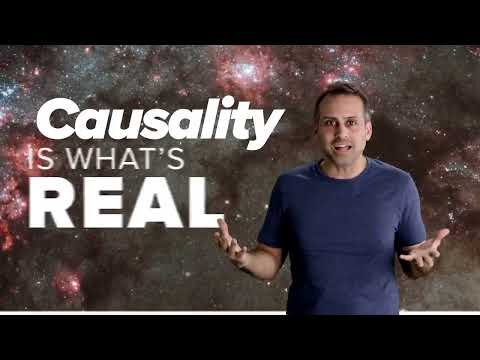
A PBS Space Time episode hosted by Gabe Perez-Giz on the nature of spacetime and whether space and time are fundamental. It builds up reference frames and causality in a short, dense format.
 14:40
How the Quantum Eraser Rewrites the Past | Space Time | PBS Digital Studios
2.9M views • 10 years ago
PBS Space Time
PBS Space Time explains the quantum eraser experiment, in which erasing which-path information appears to reverse causality in a double-slit setup. It discusses what this means for quantum mechanics.
 9:32
The Higgs Mechanism Explained | Space Time | PBS Digital Studios
2.7M views • 10 years ago
PBS Space Time
PBS Space Time explains the Higgs field and how the Higgs mechanism gives particles mass within quantum field theory. It is a ten-minute overview for a lay audience.
 10:13
The Problem with Time & Timezones - Computerphile
4.4M views • 12 years ago
Computerphile
Tom Scott explains for Computerphile why handling time and timezones in code is so hard, walking through a simple web app that computes how long ago something happened. It covers the quirks of timezones and calendars and ends in an exasperated rant.
 15:29
How Time Becomes Space Inside a Black Hole | Space Time
2.5M views • 9 years ago
PBS Space Time
A PBS Space Time episode explaining how space and time swap roles inside a black hole's event horizon. It is part of the channel's black hole series.
 13:34
Did Time Start at the Big Bang?
2.5M views • 7 years ago
PBS Space Time
A PBS Space Time episode asking whether time began at the Big Bang. It explains that the Big Bang is not what most people were taught and what 'start' of the universe really means.
 16:32
Pilot Wave Theory and Quantum Realism | Space Time | PBS Digital Studios
1.9M views • 9 years ago
PBS Space Time
A PBS Space Time episode introducing de Broglie-Bohm pilot wave theory, an interpretation of quantum mechanics that avoids much of the strangeness of the mainstream views. It is aimed at curious lay viewers.
 14:03
Quantum Entanglement and the Great Bohr-Einstein Debate | Space Time | PBS Digital Studios
2.6M views • 10 years ago
PBS Space Time
PBS Space Time explains the Bohr-Einstein debate over quantum mechanics and how quantum entanglement settled it. It covers the weirdness of measurement and nonlocal correlations.
 10:48
The True Nature of Matter and Mass | Space Time | PBS Digital Studios
1.8M views • 10 years ago
PBS Space Time
A PBS Space Time episode asking what matter, mass, and energy really are, starting with inertial versus gravitational mass and what mass-energy equivalence means.
 10:00
Is The Alcubierre Warp Drive Possible? | Space Time | PBS Digital Studios
2.5M views • 11 years ago
PBS Space Time
PBS Space Time introduces Miguel Alcubierre's warp drive, explaining how spacetime itself could be warped rather than moving a ship through it, and whether it is physically possible.
 19:59
What Happens at the Event Horizon? | Space Time | PBS Digital Studios
3.2M views • 9 years ago
PBS Space Time
PBS Space Time explains what happens as you approach and cross a black hole's event horizon, using Penrose diagrams and light cones as the tool for understanding spacetime there.
 11:48
Superluminal Time Travel + Time Warp Challenge Answer
1M views • 9 years ago
PBS Space Time
A PBS Space Time episode explaining why faster-than-light travel is equivalent to travelling back in time, using relativity and Minkowski diagrams for different observers.
 11:51
Does Time Cause Gravity?
3M views • 5 years ago
PBS Space Time
PBS Space Time explores whether time causes gravity, explaining that gravity does not truly warp the flow of time but arises from time gradients. It revisits how gravitational time dilation works in general relativity.
 18:31
The LED Traffic Light and the Danger of "But Sometimes!"
4.2M views • 8 years ago
Technology Connections
Technology Connections explains how LED traffic lights, which do not melt snow, drew complaints and were blamed for accidents. He uses it to illustrate the 'but sometimes' fallacy against new technology.
 13:37
Times Tables, Mandelbrot and the Heart of Mathematics
2.8M views • 11 years ago
Mathologer
Mathologer shows how times table diagrams on a circle produce cardioids and other curves connected to the Mandelbrot set. He explains the patterns and links to a tool for making your own diagrams.
 18:15
So... the minute hand shows progression — apparently we think of time in wildly different ways
706K views • 4 years ago
Technology Connextras
A Technology Connections video essay on how analog and digital clocks shape different mental models of time, with the minute hand acting as a progress indicator.
 0:51
Sample Breakdown: Daft Punk - One More Time
2.2M views • 6 years ago
TRACKLIB
A short Tracklib video visualizing the disco sample that Daft Punk's One More Time is built from. It shows how the track is composed from the original material.
 7:21
How to Cure Aging – During Your Lifetime?
8M views • 9 years ago
Kurzgesagt – In a Nutshell
A Kurzgesagt animated explainer on whether aging could be cured within our lifetimes, made with Lifespan.io and the LEAF foundation. It introduces the idea of treating aging as a medical problem.
 7:37
Satoshi Kon - Editing Space & Time
4M views • 12 years ago
Every Frame a Painting
A video essay from Every Frame a Painting on animator Satoshi Kon and his editing style, which distorts and warps space and time. It draws on his four features and one TV series.
 28:28
What is PLUS times PLUS?
2.2M views • 1 year ago
2swap
2swap explores lambda calculus using John Tromp's lambda diagrams, with animated beta-reductions, asking what PLUS times PLUS gives. It touches on Church encodings and the equivalence of Turing machines and lambda calculus.
 43:57
Civilizations at the End of Time: Iron Stars
2.1M views • 9 years ago
Isaac Arthur
An Isaac Arthur episode on civilizations in the far future, past the Black Hole Era. It covers iron stars, Boltzmann brains, reversible computing and the idea of reversing entropy.
 36:06
Civilizations at the End of Time: Black Hole Farming
934K views • 10 years ago
Isaac Arthur
An Isaac Arthur episode on civilizations in the dark, post-stellar universe, including black hole farming, accretion disks and the Penrose process as energy sources.
 12:44
Rapping, deconstructed: The best rhymers of all time
16.3M views • 10 years ago
Vox
Vox breaks down how great rappers build rhymes, from Kurtis Blow's simple bars to Biggie's smooth flow and Kendrick Lamar's dense, fast delivery. It uses on-screen visualizations of rhyme structure.
 12:55
Humanity was born way ahead of its time. The reason is grabby aliens.
1.7M views • 5 years ago
Rational Animations
Rational Animations explains Robin Hanson's grabby aliens model, which argues that humanity looks suspiciously early in cosmic history. Expanding civilizations set a deadline that explains our timing and bears on the Fermi paradox.
 4:31
why typing like this is sometimes okay.
5.4M views • 7 years ago
Tom Scott
Tom Scott makes a short descriptivist argument that language keeps changing and that casual internet writing conventions, like lowercase typing and dropped full stops, are legitimate. It is part of his Language Files series, written with Gretchen McCulloch.
 20:28
The Most COMPLEX Pop Song of All Time
8.3M views • 5 years ago
Rick Beato
Rick Beato analyzes a pop song he argues is among the most harmonically complex ever, breaking down its chords and key changes. It is a music theory deep dive aimed at general music fans.
 19:47
Why There are Now So Many Shortages (It's Not COVID)
7.8M views • 5 years ago
Wendover Productions
Wendover Productions explains the wave of supply shortages in 2021, arguing the causes go beyond COVID. It covers how just-in-time manufacturing was applied, container imbalances and the chip shortage.
Topic match · Ships, submarines & maritime 18:04
How the Higgs Mechanism Give Things Mass
1.9M views • 4 years ago
PBS Space Time
A PBS Space Time episode on how the Higgs mechanism gives particles mass, prompted by Fermilab's heavier-than-expected W boson measurement. It goes beyond the usual pop-science treatment without heavy math.
Topic match · Quantum physics 12:06
Hawking Radiation
1.3M views • 8 years ago
PBS Space Time
PBS Space Time explains Stephen Hawking's prediction of Hawking radiation and how black holes can emit radiation and slowly evaporate. It goes beyond the common particle-antiparticle analogy.
Topic match · Quantum physics 18:24
The Holographic Universe Explained
3.5M views • 7 years ago
PBS Space Time
A PBS Space Time episode explaining the holographic principle: the idea that our 3+1 dimensional universe may be described by information on a lower-dimensional boundary. It walks through black hole entropy and the AdS/CFT correspondence.
Topic match · Quantum physics 15:30
The Black Hole Information Paradox
1.1M views • 8 years ago
PBS Space Time
PBS Space Time episode on the black hole information paradox, covering how black holes seem to destroy information, the no-hair conjecture and the proposed role of the event horizon. It is part of a series on black holes.
Topic match · Quantum physics 12:36
Why the Muon g-2 Results Are So Exciting!
1.5M views • 5 years ago
PBS Space Time
A PBS Space Time episode explaining the Fermilab Muon g-2 results and why a discrepancy with the Standard Model prediction could point to new physics.
Topic match · Quantum physics 19:19
Was Penrose Right? NEW EVIDENCE For Quantum Effects In The Brain
1.1M views • 2 years ago
PBS Space Time
PBS Space Time examines Roger Penrose's idea that consciousness arises from quantum processes in the brain, and reviews new evidence about microtubules. It ends with an estimate of what replicating consciousness would demand.
Topic match · Quantum physics 16:29
Are Black Holes Actually Fuzzballs?
1.3M views • 4 years ago
PBS Space Time
A PBS Space Time episode on fuzzballs, the string-theory proposal for black holes that replaces the singularity with a tangle of strings. It explains why black holes seem to both have to exist and break known physics.
Topic match · Quantum physics 6:30
You Lose an Hour of Sleep to Save $4
12.6M views • 15 years ago
CGP Grey
CGP Grey explains the mess of Daylight Saving Time, including its dubious energy savings and the odd cases like Arizona that opt out. It is a short, simple explainer.
 3:54
The moiré effect lights that guide ships home
3.1M views • 8 years ago
Tom Scott
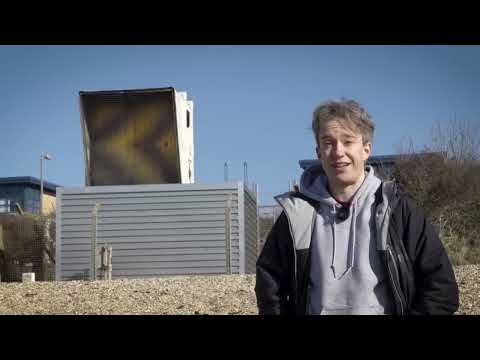
Tom Scott investigates moire-effect beacons, called Inogon leading marks, a Swedish invention from the 1980s that shows different patterns depending on the viewer's position. He visits one used to mark an undersea cable and tracks down its history.
Topic match · Ships, submarines & maritime 4:17
AI Learns Noise Filtering For Photorealistic Videos | Two Minute Papers #215
65K views • 8 years ago
Two Minute Papers
A Two Minute Papers episode on NVIDIA's recurrent denoising autoencoder, which cleans up noisy Monte Carlo path-traced image sequences. It shows how a neural network can produce usable renders from very few samples.
Topic match · Computer graphics & rendering 16:07
The Geometry of Causality
1.8M views • 9 years ago
PBS Space Time
PBS Space Time explains how spacetime geometry and light cones determine the order of events and what can cause what. It visualizes causality in special relativity.
 13:02
Noether's Theorem and The Symmetries of Reality
1.1M views • 8 years ago
PBS Space Time
PBS Space Time explains Noether's theorem: conservation laws such as energy and momentum are consequences of deeper symmetries. It also covers why those laws hold only under certain conditions.
Topic match · Quantum physics