two-party system
 6:31
Why Your Vote Doesn't Count
7.9M views • 15 years ago
CGP Grey
CGP Grey explains first-past-the-post voting and why it pushes elections toward two dominant parties. It is the first in his series on electoral systems.
 4:29
The Voting System That Gives You Two Votes
3.1M views • 15 years ago
CGP Grey
CGP Grey explains Mixed-Member Proportional representation, the system used in New Zealand where voters get two votes. It covers how it differs from first-past-the-post.
 10:48
How The Immune System ACTUALLY Works – IMMUNE
26.2M views • 5 years ago
Kurzgesagt – In a Nutshell
A Kurzgesagt animation giving a big-picture tour of the human immune system, its organs, transport network, and the cells it produces every day. It accompanies their IMMUNE book.
 7:49
The Immune System Explained I – Bacteria Infection
54.7M views • 12 years ago
Kurzgesagt – In a Nutshell
A Kurzgesagt animation of how the immune system responds to a bacterial infection, depicting immune cells as an army defending the body.
 14:03
Simulating alternate voting systems
4.5M views • 6 years ago
Primer
Primer uses simulations to compare voting systems such as first-past-the-post, approval, ranked choice and others. It shows how each system behaves and can be manipulated, with links to further voting theory resources.
 5:26
Neural Network Learns The Physics of Fluids and Smoke | Two Minute Papers #118
209K views • 9 years ago
Two Minute Papers
Two Minute Papers covers a paper on speeding up fluid and smoke simulation with convolutional networks. It contrasts the approach with earlier regression forest methods.
 8:14
The Lightning Network Explained (Litecoin/Bitcoin)
119K views • 9 years ago
Franklyn
An 8-minute explainer on the Lightning Network and how it relates to Segwit, Bitcoin and Litecoin. It covers how off-chain payment channels route payments to scale blockchain transactions.
 18:40
But what is a neural network? | Deep learning chapter 1
25.1M views • 9 years ago
3Blue1Brown
3Blue1Brown's first chapter on deep learning explains what neurons and layers are and the math underlying a basic neural network, using handwritten digit recognition with visual animations.
 6:47
The Voting System That's Actually Too Good for Politicians to Allow
10.4M views • 12 years ago
CGP Grey
CGP Grey explains the Single Transferable Vote, a proportional ranked-ballot system, and why politicians have little incentive to adopt it. It is a short animated explainer of how multi-winner ranked voting works.
 14:25
China is erasing its border with Hong Kong
14.8M views • 8 years ago
Vox
A Vox Borders episode with Johnny Harris explaining how China is gradually erasing the line between mainland China and Hong Kong since the 1997 handover. It describes the one country, two systems arrangement and its expiration date.
 9:14
Your Body Killed Cancer 5 Minutes Ago
10.3M views • 3 years ago
Kurzgesagt – In a Nutshell
A Kurzgesagt animation about how the immune system constantly detects and kills cells that are turning cancerous. It explains what cancer cells are and why stopping them is so hard.
 6:02
OpenAI Plays Hide and Seek…and Breaks The Game! 🤖
11M views • 7 years ago
Two Minute Papers
Two Minute Papers covers OpenAI's multi-agent hide-and-seek experiment, in which agents learned emergent tool use and found ways to break the game's rules. It summarizes the 'Emergent Tool Use from Multi-Agent Interaction' paper.
 4:17
AI Learns Noise Filtering For Photorealistic Videos | Two Minute Papers #215
65K views • 8 years ago
Two Minute Papers
A Two Minute Papers episode on NVIDIA's recurrent denoising autoencoder, which cleans up noisy Monte Carlo path-traced image sequences. It shows how a neural network can produce usable renders from very few samples.
 11:10
Why Japan's Conviction Rate is 99% (Actually Explained)
82K views • 6 years ago
That Japanese Man Yuta
Yuta explains what Japan's 99% conviction rate actually means, noting that prosecutors drop cases unless confidence is very high. He argues that the number is widely misunderstood and cites his sources.
 6:18
Animated Voting Methods
16K views • 9 years ago
Unify The Vote
An animated simulation comparing single-winner voting methods such as plurality, instant runoff and STAR. Colored regions show which candidate wins as a randomized electorate shifts across a two-dimensional political space, building on Ka-Ping Yee's earlier diagrams.
 14:06
Testing 432 Hz Frequencies (and temperaments)
4M views • 7 years ago
Adam Neely
Adam Neely tests the claims for tuning to A=432 Hz by trying the unusual tuning systems that its proponents' numerology requires. He compares how they sound against standard tuning and temperaments.
 9:07
Which key is the saddest?
1.3M views • 9 years ago
Adam Neely
Musician Adam Neely examines whether certain keys sound sadder than others, looking at the history of tuning systems and temperaments and at how instrument timbre shapes the emotional character we hear. It draws on historical aesthetics writing and audio examples.
 10:15
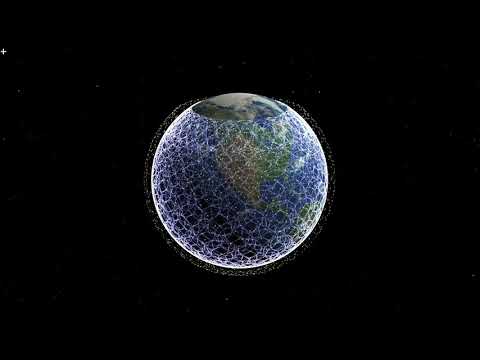
Using ground relays with Starlink
506K views • 6 years ago
Mark Handley
Mark Handley of UCL explains, with simulation visualizations, how early Starlink satellites without inter-satellite links could still give low-latency wide-area communication by hopping via ground relays. He shows it can beat fibre on many long paths.
 11:46
You Are Immune Against Every Disease
20M views • 5 years ago
Kurzgesagt – In a Nutshell
Kurzgesagt's animated explainer on the human immune system, describing the body as an ecosystem and how immune defenses cope with the variety of invaders. It promotes their book Immune.
 16:00
The Iroquois Confederacy
1.5M views • 8 years ago
Historia Civilis
Historia Civilis explains the origins and governing system of the Iroquois (Haudenosaunee) Confederacy. It covers the Great Law and the league's surprisingly intricate legal and political structure.
 18:14
The US Military’s Massive Global Transportation System
3.2M views • 4 years ago
Wendover Productions
Wendover Productions explains how the US military moves people and materiel worldwide, including prepositioned equipment, sealift and airlift. It shows the scale of the logistics system behind US force projection.
 16:29
Why Sony's Beta Videotape System Failed--and failed hard (Part 1)
1.5M views • 9 years ago
Technology Connections
Part one of Technology Connections' account of the VHS versus Betamax format war. It argues Sony was caught off guard by JVC's cheaper, more practical VHS system.
 6:23
How We Should Vote (Range Voting)
43K views • 10 years ago
Undefined Behavior
A six-minute explainer from Undefined Behavior on range (score) voting. It follows an earlier video on Arrow's Theorem and shows how range voting seems to satisfy the criteria Arrow's Theorem says no ranked system can.
 9:37
Can Japanese People Read Chinese? (Kanji)
691K views • 7 years ago
That Japanese Man Yuta
Yuta, a Japanese YouTuber, explains whether Japanese speakers can read Chinese text. He shows how shared kanji let people guess meanings while the two languages remain completely different.
 12:27
Mach-E Thermal System Part 2: A Detailed Comparison to the Model Y
225K views • 5 years ago
Munro Live
Munro Live's team breaks down the thermal management system of the Ford Mustang Mach-E and compares it with the Tesla Model Y. They look at parts count, coolant loops and heating approaches.
 15:50
Can YOU Fix Climate Change?
14.3M views • 5 years ago
Kurzgesagt – In a Nutshell
Kurzgesagt examines what individuals can do about climate change, covering lesser-known carbon sources and why systemic and political change matter more than personal footprints.
 4:27
The Voting System That Should Replace Every Election
4.7M views • 15 years ago
CGP Grey
A short CGP Grey explainer on the alternative vote (instant runoff voting) versus first past the post, made around the 2011 UK referendum. It shows how ranked ballots are tallied and why they avoid spoiler effects.
 4:34
How Wolves Change Rivers
46.2M views • 12 years ago
Sustainable Human
George Monbiot narrates how reintroducing wolves to Yellowstone after about 70 years set off a trophic cascade. The wolves changed deer behavior, vegetation recovered, and rivers changed course.
 12:47
Backpropagation, intuitively | Deep Learning Chapter 3
6.4M views • 9 years ago
3Blue1Brown
3Blue1Brown's third deep learning chapter gives a visual, intuitive account of backpropagation and what happens to a neural network as it learns. A follow-up video covers the underlying calculus.
 6:47
Starlink revisions, Nov 2018
173K views • 8 years ago
Mark Handley
Mark Handley of UCL looks at how SpaceX's November 2018 revisions to the Starlink constellation affect network behavior. The video visualizes the orbits and routing and estimates latencies, building on his earlier video and research paper.
 4:30
Watching This Video Disqualifies You From Jury Duty for Life
21.2M views • 12 years ago
CGP Grey
CGP Grey explains jury nullification, a juror's power to acquit despite the law, and why mentioning it can get you struck from jury selection.
 6:31
You Can Win the Presidency With 22% of the Vote
8.2M views • 15 years ago
CGP Grey
A short CGP Grey animation showing how the US electoral college lets a candidate win the presidency with as little as about 22 percent of the popular vote. It lays out the arithmetic of winning states by narrow margins.
 5:29
How to Fix America's Corrupt Political System
479K views • 10 years ago
RepresentUs
A short RepresentUs explainer on how money corrupts American politics and what an anti-corruption act could do about it. It covers lobbying, super PACs and campaign finance, and pitches the group's proposed reforms. The video was later superseded by an updated version.
 8:25
Large Language Models from scratch
375K views • 4 years ago
Graphics in 5 Minutes
A short cartoon explaining how language models like ChatGPT work, from autocomplete and conditional probabilities to neural networks, gradient descent and backpropagation. It shows how networks act as universal function approximators.
 4:12
How Wolves Change Rivers [REMASTERED HD] - George Monbiot
356K views • 4 years ago
Sustainable Human
A short narrated video describing how reintroducing wolves to Yellowstone triggered a trophic cascade that changed wildlife, vegetation and even river courses. This is a remastered HD version of George Monbiot's viral piece.
 10:18
Backpropagation calculus | Deep Learning Chapter 4
4M views • 9 years ago
3Blue1Brown
3Blue1Brown's chapter 4 on deep learning gives a more formal, symbol-based account of backpropagation calculus, connecting the intuition from the previous chapter to the math found in textbooks and code.
 8:26
AT&T Archives: The Step-By-Step Switch
774K views • 15 years ago
AT&T Tech Channel
A 1951 Bell System training film showing how telephone calls are routed through a step-by-step (Strowger) switching office.
 9:12
Base 12 - Numberphile
2.3M views • 13 years ago
Numberphile
Numberphile's James Grime makes the case for base 12 (dozenal) over base 10, showing how twelve's many divisors make arithmetic and everyday fractions easier.
 12:10
The Science of Thinking
9.3M views • 9 years ago
Veritasium
A Veritasium explainer on how the brain works and how we learn. It is inspired by Kahneman's Thinking, Fast and Slow and covers System 1 and System 2 thinking and why harder learning builds skill.
 5:50
You Need to Be Bored. Here's Why.
17.9M views • 1 year ago
Harvard Business Review
Harvard professor Arthur Brooks explains why boredom is useful rather than something to avoid. He describes how a wandering mind engages the brain's default mode network, which supports creativity and curiosity, and suggests it may protect against depression.