variable steering ratio
 14:28
How Lexus Fixed Tesla's Bad Idea: Steer-By-Wire Yoke
7M views • 3 years ago
Engineering Explained
Engineering Explained compares Lexus's steer-by-wire yoke on the RZ 450e with Tesla's yoke. It covers how steer-by-wire works and how variable steering ratios address the yoke's flaws.
 6:08
Immigration, World Poverty and Gumballs
6.8M views • 16 years ago
NumbersUSA
Roy Beck's short gumball presentation using World Bank and Census data to argue that letting people immigrate to the US cannot solve world poverty because the numbers are so large. It is made by NumbersUSA, an immigration-restriction advocacy group.
 15:13
The Golden Ratio (why it is so irrational) - Numberphile
3.9M views • 8 years ago
Numberphile
Numberphile's Ben Sparks shows why the golden ratio is the most irrational number, using seeds, continued fractions and rational approximations. He also explains why plants use it for spacing leaves and seeds.
 7:15
A Selfish Argument for Making the World a Better Place – Egoistic Altruism
11.4M views • 8 years ago
Kurzgesagt – In a Nutshell
Kurzgesagt makes a selfish case for improving the world, arguing that helping people far away raises prosperity and innovation for everyone, including yourself. The animated video frames this as egoistic altruism and positive-sum cooperation.
 15:27
Why Not Just: Think of AGI Like a Corporation?
163K views • 7 years ago
Robert Miles AI Safety
Robert Miles asks whether corporations can be thought of as artificial general superintelligences and how far the analogy holds. He argues the differences, such as being limited by employees' capabilities, matter for AI safety.
 13:29
Infinite fractions and the most irrational number
658K views • 10 years ago
Mathologer
Mathologer uses continued fractions to show why the golden ratio is the most irrational number, comparing it with root 2, e and pi and pointing to where this shows up in nature.
 11:22
Most People Don't Know How Bikes Work
24.9M views • 4 years ago
Veritasium
Veritasium explains why bicycles are stable, arguing that gyroscopic effects are not the answer. The video shows countersteering and an experiment where riders blocked from steering the opposite way cannot turn.
 9:31
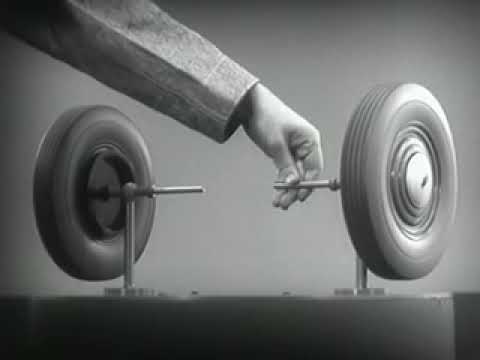
Around The Corner - How Differential Steering Works (1937)
22.3M views • 17 years ago
US Auto Industry
A 1937 GM-produced film explaining how the automobile differential lets wheels turn at different speeds around a corner. It uses clear animations and cutaway demonstrations to build the idea from first principles.
 12:07
Why Are 96,000,000 Black Balls on This Reservoir?
112.9M views • 7 years ago
Veritasium
Veritasium rides a boat across the Los Angeles reservoir covered in 96 million black plastic balls. He explains why they were really introduced, which was not primarily to reduce evaporation.
 9:16
Quantum Entanglement & Spooky Action at a Distance
4.5M views • 11 years ago
Veritasium
Veritasium explains quantum entanglement and spooky action at a distance, walking through Bell's inequality and the experiments that rule out hidden variables, in under ten minutes.
 18:48
Connecting Solar to the Grid is Harder Than You Think
2.4M views • 2 years ago
Practical Engineering
Practical Engineering explains why connecting solar and other inverter-based generation to the grid is hard. It covers grid stability, load balancing and the behind-the-scenes engineering challenges of renewables.
 7:23
How Trees Bend the Laws of Physics
5M views • 14 years ago
Veritasium
Veritasium explains how trees lift water from roots to the top of tall trunks, using transpiration pull and the negative pressure that liquid water can sustain. It explains why trees do not need pumps or valves.
 19:07
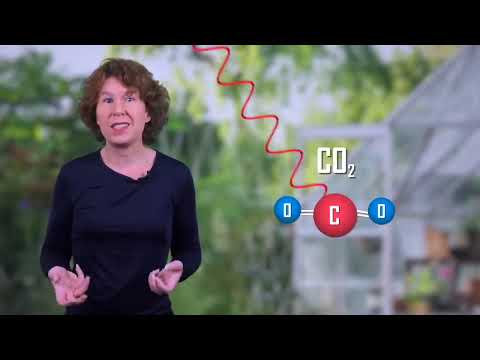
I Misunderstood the Greenhouse Effect. Here's How It Works.
989K views • 3 years ago
Sabine Hossenfelder
Sabine Hossenfelder explains how the greenhouse effect actually works, given that infrared is mostly absorbed low in the atmosphere already. She walks through why more CO2 still warms the surface.
 17:35
Bell's Theorem: The Quantum Venn Diagram Paradox
8.1M views • 9 years ago
minutephysics
MinutePhysics, with 3Blue1Brown, explains Bell's theorem using a Venn diagram paradox and polarizing filters. It shows why no local hidden variable theory can reproduce quantum correlations.
 14:28
Superpositions, Sudoku, the Wave Function Collapse algorithm.
764K views • 6 years ago
Martin Donald
Martin Donald explains the Wave Function Collapse algorithm using Sudoku-like constraint solving and shows how he implemented it with Blender and Godot. It links demos and reference articles.
 4:13
Social Inequalities Explained in a $100 Race - Please Watch to the End. Thanks.
5M views • 9 years ago
Peter D
A short animated explainer that stages a $100 footrace in which contestants start at different distances from the line, depending on the advantages or disadvantages they inherited. It uses the race as a metaphor for how unequal starting points shape outcomes, citing US census income and poverty figures.
 14:20
Reveal Invisible Motion With This Clever Video Trick
2.8M views • 6 years ago
Steve Mould
Steve Mould explains motion amplification and video magnification, techniques that find tiny changes in video invisible to the eye and exaggerate them. He covers the MIT research and industrial uses such as diagnosing vibrating machinery.
 12:55
Humanity was born way ahead of its time. The reason is grabby aliens.
1.7M views • 5 years ago
Rational Animations
Rational Animations explains Robin Hanson's grabby aliens model, which argues that humanity looks suspiciously early in cosmic history. Expanding civilizations set a deadline that explains our timing and bears on the Fermi paradox.
 17:06
What Is A Black Start Of The Power Grid?
3.1M views • 3 years ago
Practical Engineering
Practical Engineering explains what a black start is: restarting a power grid after total collapse. It shows why most plants need outside power to start and why rebuilding a synchronized grid is delicate and high-stakes.
 12:02
Nintendo - Putting Play First
997K views • 10 years ago
Game Maker's Toolkit
Game Maker's Toolkit examines Nintendo's design approach of starting from a core play mechanic, making it fun, and building around it. Examples include Mario's jump and Luigi's Mansion's vacuum.
 7:42
Triangle of Power
812K views • 10 years ago
3Blue1Brown
3Blue1Brown presents the Triangle of Power, an alternate notation that unifies powers, logarithms and roots in a single triangular symbol. The video shows how the inverse operations relate and how the notation could help.
 18:32
The world depends on a collection of strange items. They're not cheap
12.6M views • 3 years ago
Veritasium
Veritasium visits NIST to explain Standard Reference Materials, the carefully characterized items such as peanut butter used to calibrate instruments and keep measurements consistent. It covers why they exist and why they are expensive.
 4:34
How Wolves Change Rivers
46.2M views • 12 years ago
Sustainable Human
George Monbiot narrates how reintroducing wolves to Yellowstone after about 70 years set off a trophic cascade. The wolves changed deer behavior, vegetation recovered, and rivers changed course.
 16:32
Pilot Wave Theory and Quantum Realism | Space Time | PBS Digital Studios
1.9M views • 9 years ago
PBS Space Time
A PBS Space Time episode introducing de Broglie-Bohm pilot wave theory, an interpretation of quantum mechanics that avoids much of the strangeness of the mainstream views. It is aimed at curious lay viewers.
 17:56
A Physics Professor Bet Me $10,000 I'm Wrong
26.3M views • 5 years ago
Veritasium
Veritasium recounts a $10,000 bet with a UCLA physics professor over whether a vehicle can travel downwind faster than the wind. He presents the professor's reasoning and demonstrations, including one without aerodynamics.
 7:53
Sand Castle Holds Up A Car! - Mechanically Stabilized Earth
5M views • 10 years ago
Practical Engineering
Practical Engineering explains Mechanically Stabilized Earth, where layers of reinforcement make soil strong enough to hold heavy loads, shown with a sand structure supporting a car. It notes that MSE walls are everywhere in infrastructure.
 7:40
The Original Double Slit Experiment
10.2M views • 13 years ago
Veritasium
Veritasium revisits Thomas Young's original double slit experiment with light, showing how interference supports the wave nature of light. It uses a pond-wave demonstration to explain the pattern.
 17:39
The EV Detroit is Dying to Benchmark - BYD Seagull
319K views • 2 years ago
Autoline Network
Autoline's John McElroy and Caresoft president Terry Woychowski look at the BYD Seagull, an electric hatchback that sells in China for about $11,500. Woychowski points out the cost-saving design and manufacturing choices, and McElroy takes it for a short test drive.
 12:22
Is Most Published Research Wrong?
6.2M views • 10 years ago
Veritasium
Veritasium explains why a large share of published research findings may be false, covering p-values, p-hacking, publication bias and low replication rates. It draws on John Ioannidis's well-known paper and describes reforms such as preregistration.
 16:48
What Really Happened During the Texas Power Grid Outage?
3.7M views • 5 years ago
Practical Engineering
Practical Engineering's explanation of the February 2021 Texas winter storm and the resulting power grid outage. It lays out the facts about ERCOT, the grid's isolation, and how generation across fuel types failed in the cold.
 13:30
Cities: Skylines | Power, Politics, & Planning: Episode 1: Parking
136K views • 8 years ago
donoteat01
The first episode of a Cities: Skylines series on urban politics and planning, focused on parking. It uses the game to show how parking minimums shape cities, drawing on Donald Shoup's book The High Cost of Free Parking.
 8:39
How to Move the Sun: Stellar Engines
19.5M views • 6 years ago
Kurzgesagt – In a Nutshell
Kurzgesagt explains stellar engines such as the Shkadov thruster and Caplan thruster, which could move the Sun and solar system across the galaxy over millions of years to avoid hazards and reach new regions.
 14:27
Why is TV 29.97 frames per second?
2.2M views • 10 years ago
Stand-up Maths
Matt Parker explains the history behind NTSC television running at 29.97 frames per second rather than 30, tracing it to the backward-compatible addition of color. He walks through the arithmetic behind the odd ratio.
 13:31
Randomness is Random - Numberphile
893K views • 7 years ago
Numberphile
Numberphile with Simon Pampena on how humans misunderstand randomness, including coin-flip sequences, run lengths and the gambler's fallacy.
 14:25
China is erasing its border with Hong Kong
14.8M views • 8 years ago
Vox
A Vox Borders episode with Johnny Harris explaining how China is gradually erasing the line between mainland China and Hong Kong since the 1997 handover. It describes the one country, two systems arrangement and its expiration date.
 12:04
Anagrams, but where you can break apart letters: "Anagraphs"
256K views • 8 years ago
suckerpinch
Tom Scott-style exploration by suckerpinch (Tom7) of generalized anagrams where letters can be broken into pieces, called anagraphs, with a whimsical computational approach.
 4:10
Where Do Trees Get Their Mass?
2.5M views • 14 years ago
Veritasium
Veritasium asks people where a tree's mass comes from, then explains that most of a dry tree's mass originates from carbon dioxide in the air. It combines street interviews with a short explanation of photosynthesis.
 5:06
How secure is 256 bit security?
3.7M views • 9 years ago
3Blue1Brown
3Blue1Brown illustrates how enormous the 256-bit search space is, showing how infeasible it is to find a hash or key by guessing and checking.
 15:07
The most mind-blowing concept in music (Harmonic Series)
1.3M views • 6 years ago
ANDREW HUANG
Andrew Huang explains the harmonic series, which he calls the foundation of almost all music. He builds the idea up step by step, with demonstrations of overtones and how harmonies derive from them.
 4:20
Why Snow and Confetti Ruin YouTube Video Quality
10.4M views • 10 years ago
Tom Scott
Tom Scott explains why confetti and snow wreck video quality, using interframe compression and bitrate. He demonstrates it live by changing the quality on screen.