Triangle of Power
3Blue1Brown5 HN recommenders · recommended in 4 months, 2016-2023
812K views · 10 years ago · explainer · evergreen
3Blue1Brown presents the Triangle of Power, an alternate notation that unifies powers, logarithms and roots in a single triangular symbol. The video shows how the inverse operations relate and how the notation could help.
HN points to it in notation debates as a clean visual demonstration that exponents, logs and roots are three views of one relationship.
 24:28
Euler's formula with introductory group theory
3Blue1Brown
2.8M views • 9 years ago
 17:05
The essence of calculus
3Blue1Brown
11.9M views • 9 years ago
 5:09
Essence of linear algebra preview
3Blue1Brown
2.8M views • 10 years ago
 48:55
Pythagoras' theorem (a) | Math History | NJ Wildberger
Insights into Mathematics
517K views • 15 years ago
 21:58
Group theory, abstraction, and the 196,883-dimensional monster
3Blue1Brown
3.8M views • 6 years ago
 1:01:08
1. A strange determinant
Timothy Gowers
30K views • 5 years ago
 15:08
What does it feel like to invent math?
3Blue1Brown
4.6M views • 11 years ago
 4:08
e^(iπ) in 3.14 minutes, using dynamics | DE5
3Blue1Brown
3.4M views • 7 years ago
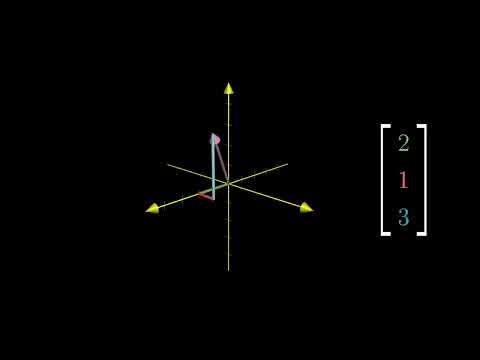 9:52
Vectors | Chapter 1, Essence of linear algebra
3Blue1Brown
13M views • 10 years ago
 29:43
Pi hiding in prime regularities
3Blue1Brown
2.8M views • 9 years ago
 51:16
What is Euler's formula actually saying? | Ep. 4 Lockdown live math
3Blue1Brown
1.7M views • 6 years ago
 17:16
Eigenvectors and eigenvalues | Chapter 14, Essence of linear algebra
3Blue1Brown
6.4M views • 10 years ago
 22:21
Why do prime numbers make these spirals? | Dirichlet’s theorem and pi approximations
3Blue1Brown
7.6M views • 7 years ago
 31:51
Visualizing the 4d numbers Quaternions
3Blue1Brown
5.6M views • 8 years ago
 44:23
A Swift Introduction to Geometric Algebra
sudgylacmoe
1.1M views • 6 years ago
 13:37
Times Tables, Mandelbrot and the Heart of Mathematics
Mathologer
2.8M views • 11 years ago
 19:42
But what is the Fourier Transform? A visual introduction.
3Blue1Brown
12.6M views • 8 years ago
 8:29
The Uncracked Problem with 33 - Numberphile
Numberphile
2M views • 11 years ago
 24:47
But what is a Fourier series? From heat flow to drawing with circles | DE4
3Blue1Brown
19M views • 7 years ago
 21:36
Fractals are typically not self-similar
3Blue1Brown
4.6M views • 9 years ago
11 comments from Hacker News
I opened the video in the background and immediately recognized the person: the author behind the 3Blue1Brown YouTube channel. It has a long series of video regarding various mathematical topics which are rather accessible. My favorite by far is a "proposal" for an alternate notation which makes much more sense and, if adopted, would make mathematics way less intimidating (Triangle of Power (2016), 3Blue1Brown - ▶ this video ). I'd give him a Fields medal (or at least an honorary mention of some sort) :-]
A similar idea was put forth on the math stack exchange [1], which I found through this 3blue1brown video [2]. Worth a read/watch! [1] link [2] ▶ this video
Bad/Confusing/Complex notation can absolutely ruin a learner's attempt to grok a piece of math, it's not a trivial issue at all, and it comes up in all levels of math. But good notation doesn't necessarily mean easy understanding. It's just like language. If I speak a different language, forget about communication in any deep way. But even if I'm speaking the same language, it's still not guaranteed we can communicate well or at all. Absence of shared language guarantees the impossibility of communication, but it's presence guarantees nothing. The author is correct about one thing : Notation is incredibly under-appreciated and under-discussed by mathematicians, although it has immense power to shape thinking. Some visionaries like Charles Babbage, Kenneth Iverson or Stephan Wolfram might talk about it every 50 year or so, but that's it. It's mind boggling how the primary tool of communication is just developed ad-hoc on a whim with only minimal explanation and formalization. >But is there some book or dictionary that lays this out in a novel way What do you mean by "this"? is it specifically the overbars-and-underbars notation used in the article? as far as I know, that's the first time I encountered it. But the idea that exponentials, logarithms and roots all basically say the same thing and that notations should reflect that is discussed a lot, 3blue1brown has a very well known video that explains it in a visual way. ▶ this video
> Mathematics is by far the biggest and longest running open source project on this planet and we are absolutely able to traverse it by centuries or millenia. This works across languages and cultures. This goes against what I understand about mathematics. I've tried to break it into a few sections. Open source: Things in mathematics once defined, tend not to change, even when changing would be beneficial. Open source software tends to be a bit more malleable, but even long running things that can't change for fear of breaking things like POSIX or the X Window System end up getting alternatives that the industry slowly turns towards. But mathematics just stays stuck. Multiple subfields will end up using the same glyph to mean two different things and when those subfields intersect it gets very bad very fast. Even small quality-of-life fixes never end up getting accepted into use. Here's a great example by 3Blue1Brown: ▶ this video Another example (if you're interested in going down a bit of a rabbit hole) is the history of vector algebra vs quarternions. We ended up going with vector algebra, then learned that quarternions were actually better, but we continued to teach / and be taught vector algebra. > we are absolutely able to traverse it by centuries or millenia Well, this seems easy to disprove since knowledge does get lost and things keep getting rediscovered. For example, Calculus was rediscovered multiple times: - Archimedes (at least part of it with his method of exhaustion
"This is the corrected version of the one I put out a month or so ago, in which my animation for all the inverse operations was incorrect": ▶ this video .
Reading about the usefulness of logs reminded me of another spatial math tool: The Triangle of Power! ▶ this video
3Blue1Brown has a YouTube video called the "Triangle of Power" which uses a clever bit of notation to unify exponents and logarithms: ▶ this video A bit lowbrow, perhaps (you'd want Penrose notation or such things in that case).
3Blue1Brown made a video about math notation for power/logarithms/roots: ▶ this video It's messy to actually draw a triangle, but there are alternative notations for it.
My favorite new math notation is the triangle of power: ▶ this video I slightly modified it to avoid subscript and keep it closer to existing notation for powers: link
In addition, the choice of algorithms in use for arithmetics are a bit counterproductive. Then, notation in some cases is inconsistent and weird. ▶ this video
The creator of the Triangle of Power ( ▶ this video ) and the Essence of Linear Algebra ( link ). He is now trying to focus full time on online math education.